Online Reporter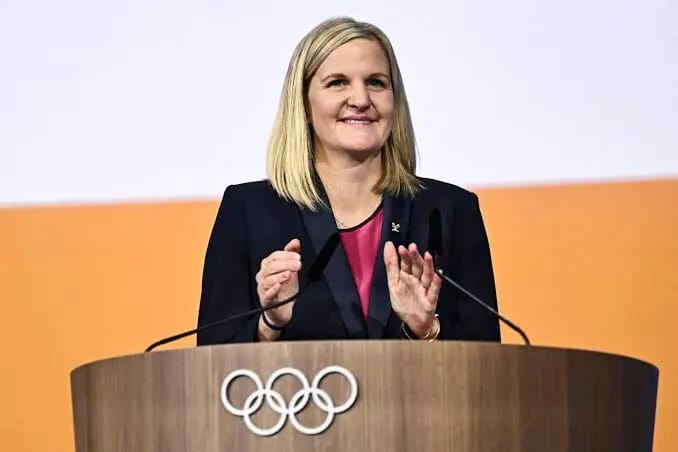
Gibson Nyikadzino-Zimpapers Politics Hub
IN international politics, there are only two ways through which states secure and defend their interests and survival: war or diplomacy.
War and diplomacy are the principal instruments at the disposal of states. They are the vehicles through which nations ensure that what they possess is protected and what they lack is attained.
Russia’s Special Military Operation (SMO) in Ukraine, the United States’ war against Iran and Israel’s war in Lebanon are examples of how war, as a continuation of policy, is operationalised to achieve desired outcomes. Great powers use force because they believe they have key roles to play in international politics and often have overlapping interests, making war a convenient means of advancing their objectives. Such is the ambit of war.
On the other hand, diplomacy, a strategy through which states seek to win over enemies, rivals and friends so that their interests are aligned while preserving their core values, has been a key instrument employed by Zimbabwe.
For a long time, the country lived with various labels that were meant to undermine its sovereignty. Some countries labelled it a “pariah State” and a “failed State”.
These were disingenuous strategies intended to push the country out of the community of nations and isolate it. This alienation was also driven by the belief that Zimbabwe was becoming increasingly radical and combative, which explains why the United States and Britain at one point sought to justify the deployment of troops to Zimbabwe through South Africa.
This demonstrated how great powers were prepared to pursue their interests through war. However, since the advent of the Second Republic on November 24, 2017, Zimbabwe has viewed itself as a country on the periphery that needed to move to the centre, gain recognition and co-exist with others in the community of nations. To achieve this, Zimbabwe chose diplomacy rather than war-like behaviour, combativeness or radical rhetoric.
From periphery to centre
Under the Second Republic, Zimbabwe has acted as a rational actor, making rational choices under the “friend to all and enemy of none” mantra without sacrificing its interests.
This approach has been reflected in Zimbabwe’s foreign policy, where commitments to dialogue, diplomacy and the upholding of international law and values have reignited interest from international political actors, forming part of the country’s engagement and re-engagement agenda.
Zimbabwe first signalled its intention to seek re-admission to the Commonwealth, helping to initiate a thaw in relations with Britain. While the issue of re-admission has yet to yield a positive outcome, the country has continued to open lines of communication with Britain, resulting in cordial soft-power efforts towards re-engagement.
This also led to Zimbabwe’s reaffirmation of its commitment to compensate white former commercial farmers for improvements made on land that was acquired by the Government during the land reform programme.
Within the ambit of diplomacy, efforts to realign and reconcile the interests of Zimbabwe and Britain were also evident last year when the two nations played a Test match for the first time since 2003, when Britain was still a member of the European Union (EU).
For Zimbabwe, sport has also served as an effective soft-power instrument, drawing attention to the country’s potential in international sports leadership following the election of former Sports Minister Kirsty Coventry to the presidency of the International Olympic Committee.
Additionally, Zimbabwe made history at the Paris 2024 Olympic Games when two sprinters, Makanakaishe Charamba and Tapiwanashe Makarawu, reached the 200m final.
The journey from the periphery to the centre has been driven by both the Government and Zimbabweans excelling in different sectors.
Among those who have contributed to this rise are Dr Tatenda Shopera, a senior scientist at Pfizer who played a key role in developing the Pfizer-BioNTech Covid-19 vaccine, and Dr James Manyika, senior vice-president for technology and society at Google and Alphabet.
United Nations Secretary-General António Guterres also honoured Major Winnet Zharare with the 2021 Military Gender Advocate of the Year Award for her pioneering work in South Sudan. With its abundance of natural resources, particularly minerals critical to the global energy transition, and its strategic location in Southern Africa, Zimbabwe has also attracted the attention of major powers.
The United States, Russia, China, France and South Korea have all shown interest in Zimbabwe’s critical minerals, resulting in increased engagement and giving the country leverage in how it interacts with key international partners.
As part of its drive to attain upper-middle-income economy status by 2030, Zimbabwe has also engaged with the Bretton Woods institutions.
The country has successfully presented its reform agenda and debt arrears clearance plan under a process championed by former Mozambican president Joaquim Chissano.
In the tourism sector, Forbes magazine ranked Zimbabwe among the world’s leading travel destinations in 2025, reinforcing its departure from the “pariah State” and “failed State” labels that had previously been imposed on it.
Taken together, these developments show that Zimbabwe’s strength as a rational actor under President Mnangagwa lies in its ability to advance its interests without being combative or radical, but through deliberate and strategic engagement that preserves its values while safeguarding its long-term survival.
Sadc, UNSC, Comesa
At a time when international politics increasingly appears to favour the Global South, Zimbabwe might not have achieved its current successes had it pursued a path characterised by political radicalism and inflammatory rhetoric.
International reputations are fragile. Had Zimbabwe not pursued a policy of co-operation, it would likely have faced difficulties securing overwhelming support from Sadc and the African Union (AU) in its bid for a non-permanent seat on the United Nations Security Council (UNSC).
The country’s relevance was affirmed by the 182 United Nations member states that voted for its candidature out of 191, representing an overwhelming expression of confidence in Zimbabwe’s international standing.
The same principle applies to Zimbabwe’s expected assumption of the Comesa chairmanship next month. This development reflects the confidence that regional and international partners have in Zimbabwe. These achievements underscore the importance of diplomacy over war in securing national interests and advancing a country’s strategic objectives.