
Tichaona Mapfoche
The warning signs are once again unmistakable.
CLIMATE scientists have confirmed high chances of an El Niño event, expected to emerge in mid-2026 and persist into 2027.
For Southern Africa, this means suppressed rainfall, prolonged dry spells and heightened risk of disruption to agricultural production systems, particularly rain-fed cropping.
For Zimbabwe, the memory of the 2023/2024 El Niño-induced drought season remains fresh.
The country spent close to US$1 billion importing grain and oilseeds to stabilise food supplies.
That experience should not be viewed as a distant crisis, but as a clear policy lesson: Food security cannot be improvised after a drought begins.
It must be built in advance.
The central question today is not whether El Niño will affect us, but whether we have done enough to protect the production gains achieved in recent years and convert them into a resilient, climate-proof food system. The answer lies in how effectively we act now.
Encouragingly, Zimbabwe is entering this period from a stronger agricultural position than in previous climate shock cycles.
The latest assessments project total cereal production of approximately 2,74 million tonnes for the 2025/2026 season, rising to nearly 2,88 million tonnes when carry-over stocks are included.
With national cereal requirements estimated between 1,94 million tonnes and 2,35 million tonnes, the country is potentially facing a surplus ranging from 551 000 tonnes to 965 000 tonnes.
This marks a significant shift.
Zimbabwe is no longer operating purely in a chronic deficit environment.
However, surplus alone does not guarantee resilience.
Without proper storage, planning, irrigation expansion and market stability, gains can be quickly reversed by a single poor season.
That is why the Strategic Grain Reserve (SGR) system, combined with coordinated production frameworks, becomes central to national resilience.
Our role as large-scale farmers is not only to produce, but to support the architecture that ensures food remains available, affordable and accessible during climate shocks.
Under the Agricultural and Rural Development Authority (ARDA)–SGR partnership, we have seen tangible progress in strengthening traditional grain production.
For the 2025/2026 summer season, ARDA supported smallholder farmers with inputs covering approximately 17 000 hectares (ha), benefitting about 500 farmers, with expected yields averaging four tonnes per hectare.
In response to climate risks and the looming El Niño threat, this programme is now being expanded, with plans to double the hectarage under traditional grains in the next cycle.
This is a rational response to climate reality.
Traditional grains such as sorghum, millet and rapoko are not simply alternatives; they are strategic crops for resilience in dry regions.
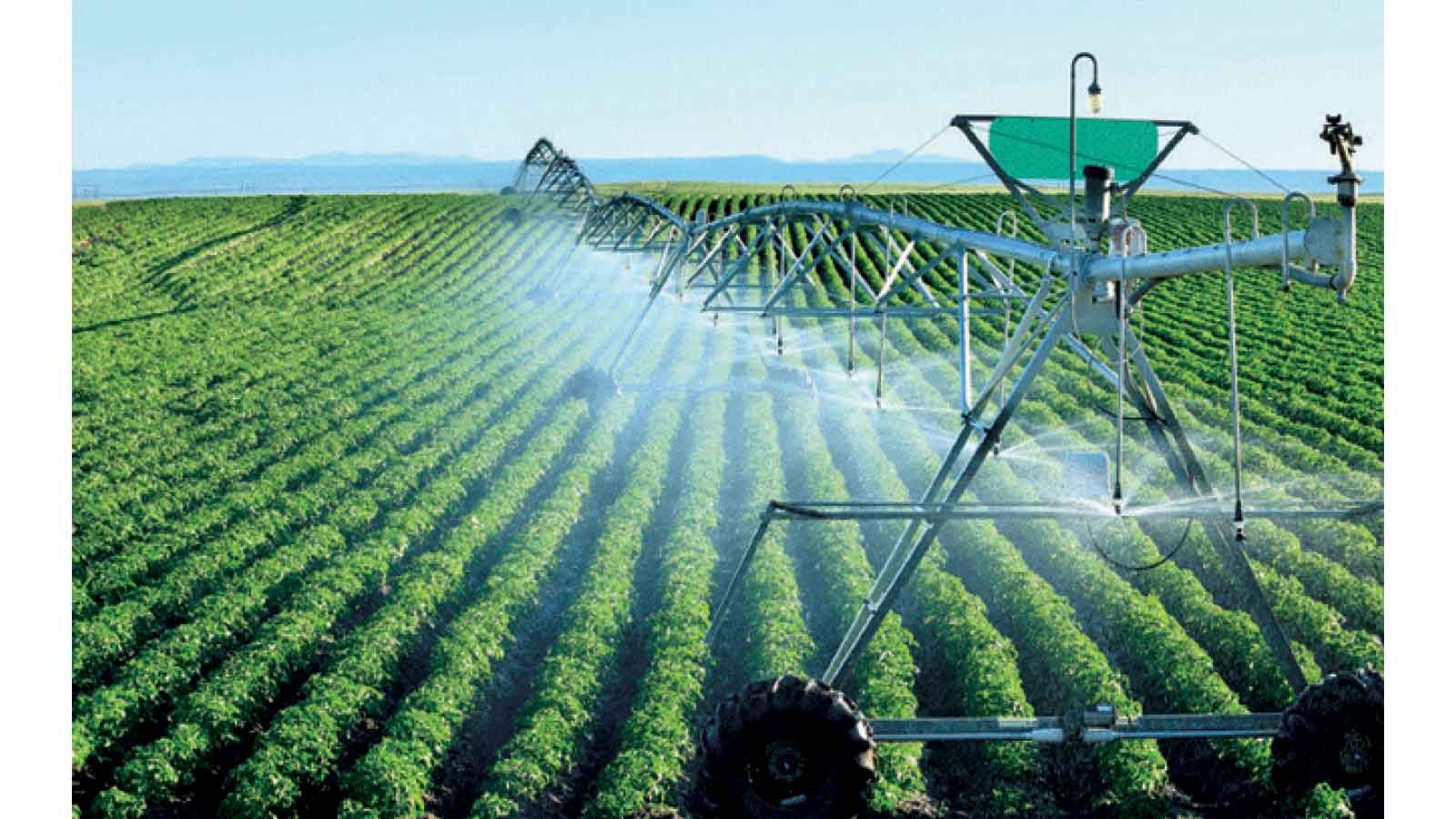
Alongside this, Zimbabwe is also accelerating irrigation development as a key countermeasure to rainfall variability.
Current irrigation capacity stands at approximately 257 000ha, with national plans targeting expansion towards nearly 496 000ha by 2030.
This shift is critical.
A country that relies solely on rain-fed agriculture remains permanently exposed to climate volatility.
Irrigation transforms that vulnerability into predictability.
However, infrastructure alone is not enough.
Production systems require markets that reward farmers for investing in productivity.
This is where policy instruments such as Statutory Instrument (SI) 87 of 2025 become critical.
SI 87 is not merely a regulatory framework.
It is a market confidence mechanism designed to ensure that local grain producers have guaranteed demand from domestic processors, millers and stockfeed manufacturers.
Under its provisions, local procurement thresholds are expected to rise progressively, strengthening domestic value chains and reducing dependency on imports.
Critically, this policy also introduces a financing mechanism through levies on grain imports, which are channelled into the Agricultural Revolving Fund.
This fund supports irrigation development, farmer support programmes and expansion of local production capacity.
In this way, SI 87 links market behaviour directly to investment in production.
It is important to recognise that agricultural investment responds to certainty.
When farmers are assured of stable, predictable and fair markets, they invest in inputs, irrigation and technology.
When markets are flooded with cheaper imports during uncertain periods, local production incentives weaken.
SI 87 is, therefore, not an obstacle to trade; it is a framework for stabilising domestic production systems.
At the same time, Zimbabwe must accelerate its transition away from over-reliance on a single staple crop.
The 2023/2024 El Niño drought demonstrated the vulnerability of maize-dependent systems, where more than 60 percent of the population was affected by food insecurity following crop failure.
The solution lies in strengthening drought-tolerant traditional grains.
Sorghum, millet, rapoko and other indigenous crops have consistently demonstrated resilience in marginal rainfall regions.
These crops require fewer inputs, are better adapted to local ecological conditions and provide a stable production base in dry years.
The ongoing agro-ecological tailoring strategy recognises this reality by guiding farmers in drier regions to prioritise traditional grains over maize.
This is not a theoretical shift; it is already visible in production patterns, with traditional grain output reaching hundreds of thousands of tonnes in recent seasons.
To support this transition, institutional demand must also be strengthened.
Initiatives such as school feeding schemes and structured procurement by agencies like the World Food Programme are already contributing to stable markets for sorghum and millet.
This must be expanded further through guaranteed pricing mechanisms and improved seed systems.
Within this broader framework, Zimbabwe’s Strategic Grain Reserve remains the ultimate buffer against climate shocks.
The national plan to build a multi-season reserve of approximately 450 000 tonnes through coordinated contributions from wheat, summer cereals and winter production cycles is both realistic and necessary.
This buffer is not an abstract policy target.
It is the difference between stability and crisis during drought years.
It is what allows the country to avoid emergency imports, stabilise prices and protect vulnerable households.
However, achieving this goal requires discipline across the entire agricultural value chain.
Input integrity is non-negotiable.
The distribution of fake or substandard seed and fertiliser undermines national food security efforts and must be treated with the seriousness it deserves, as it directly threatens production outcomes at scale.
Ultimately, Zimbabwe’s food security future will not be defined by declarations, but by execution.
It will depend on whether irrigation expansion is implemented on schedule, whether SI 87 is enforced effectively, whether farmers receive inputs timely and whether climate-smart cropping decisions are made at field level.
The coming El Niño is not a distant threat.
It is a near-term test of systems already in motion.
But unlike previous cycles, Zimbabwe now has stronger policy tools, better coordination structures and growing production capacity.
The task ahead is to ensure these gains are not only protected but consolidated into a permanent foundation for food sovereignty.
Food security is not achieved in moments of crisis. It is built in seasons of preparation.
Tichaona Mapfoche is chairperson of the SGR 200ha+ Club.