Online Reporter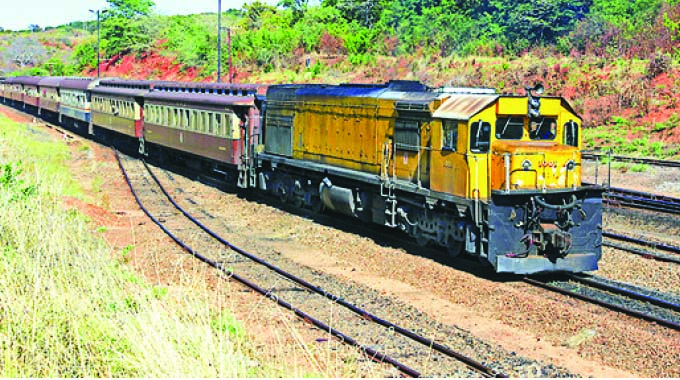
THE commissioning of three refurbished locomotives and 100 wagons by the National Railways of Zimbabwe (NRZ) this week is the kind of development that may not immediately grab headlines in the way a major investment announcement or a new industrial project would.
Yet its significance should not be underestimated. Beneath the steel, engines and railway carriages lies a much bigger story about economic recovery, infrastructure renewal and Zimbabwe’s determination to rebuild the foundations needed to support long-term growth.
For years, the country’s railway system has struggled under the weight of ageing equipment, inadequate investment and declining operational capacity. As rail services weakened, freight that would ordinarily move efficiently across the country by train increasingly shifted to road transport.
The consequences became visible everywhere. Heavy trucks placed enormous pressure on major highways, businesses faced rising transport costs and the movement of goods became less efficient.
What was once one of the region’s most respected rail networks gradually lost its ability to play the central role it had historically occupied.
Against that backdrop, the refurbishment of locomotives and wagons represents much more than a maintenance exercise. It signals a deliberate effort to restore a key piece of national infrastructure.
A functioning railway system remains vital to any economy that depends on moving large volumes of goods. For Zimbabwe, where mining, agriculture and manufacturing continue to be important drivers of economic activity, reliable rail transport is not a luxury. It is a necessity.
The mining sector, in particular, stands to benefit significantly. Large quantities of minerals must be transported from production sites to processing centres and export markets. Rail offers a safer, cheaper and more efficient solution than long-distance road haulage. The same applies to agricultural products and industrial goods. When transport costs fall, businesses become more competitive, exports become more attractive and investment becomes easier to attract.
Equally important is the manner in which this latest achievement has been realised. The partnership between NRZ and Zimasco demonstrates the value of collaboration between the public and private sectors. At a time when governments across the world face competing demands on limited resources, innovative financing arrangements have become increasingly important. In this case, the arrangement allows NRZ to expand its operational capacity while enabling Zimasco to secure a more reliable transport solution for its products. It is a practical example of how partnerships can deliver benefits for both parties while advancing national development objectives.
The development also points to something equally encouraging: growing confidence in the future of Zimbabwe’s rail sector. Plans to refurbish hundreds more wagons, acquire additional locomotives and secure further investment suggest that authorities are thinking beyond short-term fixes. The involvement of the Mutapa Investment Fund and ongoing discussions around additional financing indicate that rail modernisation is being approached as a long-term undertaking rather than a one-off intervention.
A stronger rail network delivers benefits that extend well beyond transport. Fewer heavy trucks on the roads mean reduced damage to critical road infrastructure, lower maintenance costs and improved road safety. Efficient logistics support industrial growth, encourage trade and create opportunities for employment. Towns and communities connected by reliable rail services become more attractive destinations for investment and economic activity.
Zimbabwe’s railways were once the backbone of regional trade and commerce. Restoring that status will take time, patience and sustained investment. There will be challenges along the way, and no single project will solve decades of underinvestment. Nevertheless, every locomotive returned to service and every wagon restored to operation represents another step forward.
What matters now is consistency. Momentum has been created and it must not be lost. If the current drive to revitalise the rail sector is maintained, the rewards will reach far beyond the railway tracks themselves. They will be felt across industries, communities and the wider economy. That is why the revival of NRZ is not merely a transport story. It is a national development story, and one that deserves continued support.