Online Reporter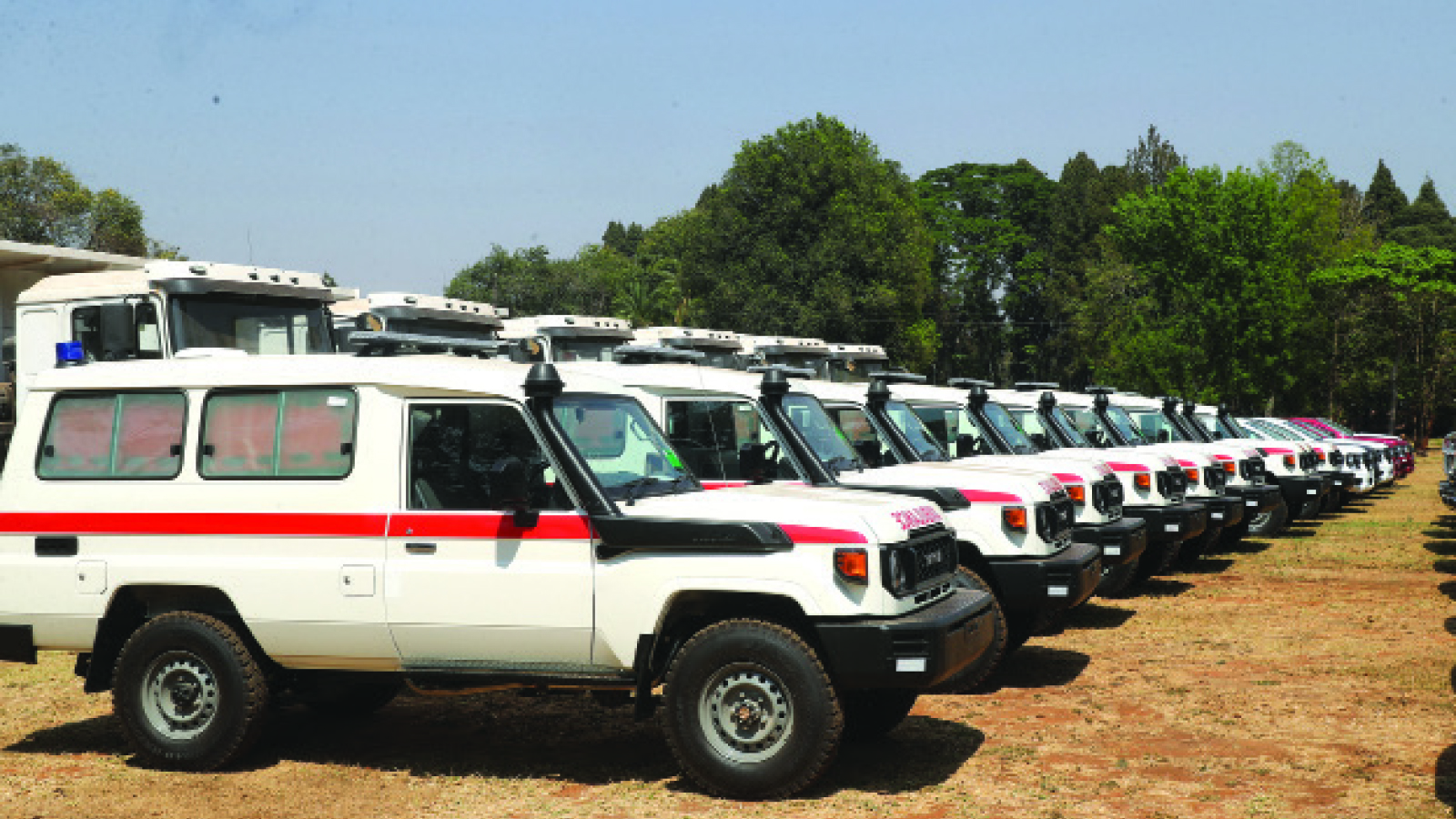
THE allocation of 10 fully equipped state-of-the-art Toyota Land Cruiser ambulances to provincial hospitals has come at the most opportune time when Government is working on a programme to transform and modernise the health sector.
The programme involves upgrading of infrastructure, equipping health facilities and improving drug supply and other consumables. This follows an agreement signed between Zimbabwe and Belarus during President Mnangagwa’s State visit to Belarus this year.
The two countries agreed to start the modernisation programme with the reconstruction of Parirenyatwa Group of Hospitals in Harare before the programme is cascaded across the country targeting mainly provincial and district hospitals.
On Wednesday President Mnangagwa handed over the 10 state-of-the-art ambulances that are fitted with delivery packs for pregnant women, resuscitation equipment, masks, intravenous lines for drips and oxygen tubes among other emergency equipment, to the Ministry of Health and Child Care.
President Mnangagwa said the Second Republic was doing its best to ensure health facilities have the required equipment to attend to emergencies.
“I understand this is the high-tech medical ambulance available on the market and we have it here in Zimbabwe,” he said.
The fully equipped ambulances which were donated by businessman and philanthropist, Wicknell Chivayo to celebrate President Mnangagwa’s 83rd birthday, can transport even the critically ill patients from one place to the other.
The programme to upgrade infrastructure and equip health facilities is meant to ensure citizens across the country receive quality health care.
Work to upgrade infrastructure has already started at Parirenyatwa Group of hospitals.
Government had, before the agreement with Belarus to revamp the health sector, already started working on increasing resources allocated to the health sector in line with the Abuja Declaration.
The Abuja target is for countries to allocate 15 percent of their annual budgets to the health sector.
Government announced recently that its allocation towards health had increased from 9,8 percent of the national budget in 2024 to 13,01 percent this year as it moves towards the 15 percent Abuja target.
In a bid to mobilise the required resources, Government adopted a number of innovative ways to raise revenue as opposed to waiting for donor funding. This included levies on alcohol, cigarettes, fast foods and sugary beverages commonly known as “sin taxes”.