
AS the drumbeats of the 2026 National Culture Month commemorated in Bulawayo on Thursday fade into the gentle winter air, and as our nation stands shoulder to shoulder with the continent to celebrate Africa Day tomorrow, a sobering truth must unsettle our festivities.
We have donned our traditional regalia, recited the poetry of our ancestors and paid lip service to the giants who freed our land.
Yet, if we are brutally honest with ourselves, Africa, Zimbabwe included, remains tethered to the colonial project.
The flag is in our hands, but the mind, the economy and the cultural lens are often still in the hands of the departed empire.
We should, therefore, shoulder our generational responsibility to complete the decolonial project — not through rhetoric, but by aggressively promoting national values that drive endogenous development.
Political independence without economic emancipation is clearly not enough.
Total liberation means total control over our resources.
The State must move decisively beyond mere ownership stakes to generating full, local beneficiation capacity.
The Africa Day slogan must shift from “unity” to “industrialisation”.
We need punitive measures against the export of unprocessed strategic minerals and a sovereign wealth fund that aggressively invests in local smelting, refining and manufacturing.
Happily, the journey to total economic emancipation has begun under the Second Republic.
However, economics is only half the battle.
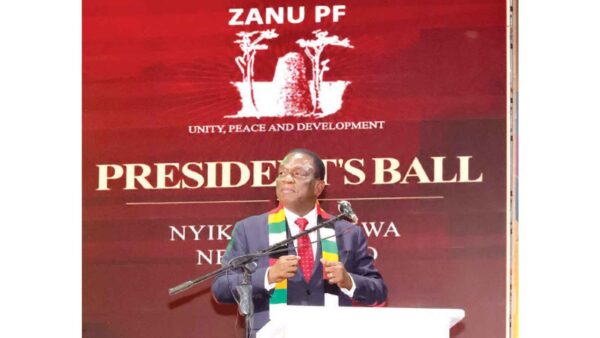
President Mnangagwa, speaking during the culture celebrations in Bulawayo on Thursday, struck a necessary chord: We must actively promote our culture.
For decades, we have been colonised softly via the screen.
Our youth know more about the ganglands of Los Angeles than the history of our people.
Our children can recite lyrics of a London drill rapper but struggle to articulate the proverbs of our elders.
We have allowed foreign films and cultural products to insidiously promote Western individualism over our cherished unhu/ubuntu.
Yes, we must consume foreign content, but only as guests, not as subjects.
Clearly, we need a 21st-century cultural policy that taxes foreign content providers to subsidise local productions that celebrate our heroes, our landscapes and our languages.
The symbolism of space also matters.
We commend the Government for renaming barracks, cantonments and local roads after our national heroes.
As Primary and Secondary Education Minister Torerayi Moyo recently rightly noted, this project must continue into our schools.
It is an absurdity and an insult that in 2026, our kids learn in schools named after our colonialists.
A school is a factory of identity.
If that factory bears and exalts the name of a coloniser, it produces confusion.
The renaming exercise is not an erasure of history; it is the correction of a forced baptism.
So, renaming these institutions is imperative.
Similarly, decolonising the language still remains unfinished business.
While English remains the global lingua franca of commerce and technology, to continue its sole use as a language of instruction in our learning institutions is to perpetuate cognitive colonialism.
Research is unequivocal: A child learns complex concepts best in their mother tongue.
We need to commit to make local languages — Shona, isiNdebele, Tonga, Kalanga, Nambya, Venda, Sotho, Chewa, among others — critical, non-negotiable mediums for teaching in our schools.
Let our universities stop treating African languages as relics for the humanities department and start treating them as tools for mass literacy and innovation.
As we continue the struggle, it is critically important to prioritise the teaching of Zimbabwean heritage in learning institutions.
There is also need to weaponise our traditional knowledge.
Zimbabwe needs a fierce intellectual property regime that protects our genetic resources and cultural expressions.
For example, if a foreign company uses our indigenous knowledge to make a skin cream, they must pay a royalty to the community of origin.
Our citizens in the diaspora are our cultural ambassadors who have been deracinated.
They should culturally contribute to their ancestral home.
So, the struggle continues for Africa.
As we celebrate Africa Day, let us not mistake the commemorations for victory.
The colonialist left through the door, but his ghost sits at the table, influencing our tastes, our economics and our self-worth.
Total liberation is our generational duty.
The real celebration will only come when we control our own destiny — economically, culturally and psychologically.
Happy Africa Day!