Online Reporter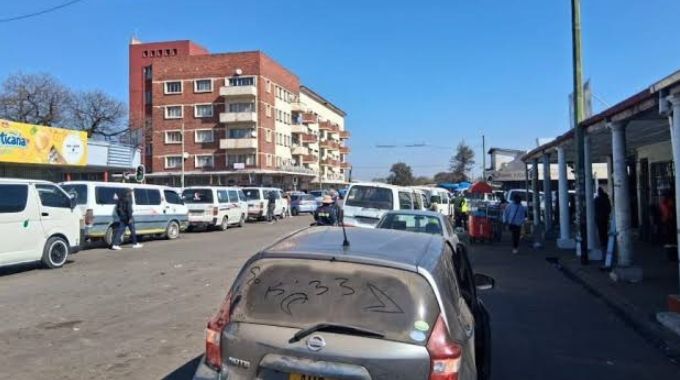
There comes a point when a problem stops being a temporary inconvenience and becomes a failure to enforce council by-laws and such is the case in Bulawayo where the continued operation of illegal taxi ranks and the conduct of some commuter omnibus crews and illegal transport operators have been allowed to persist for far too long.
What should be a regulated public transport system has, in some parts of the city, such as 6th Avenue and Herbert Chitepo, 3rd Avenue and Joshua Mqabuko Street, and Fort Street and 10th and 11th Avenues, become an environment in which operators appear able to determine for themselves where they will load and offload passengers.
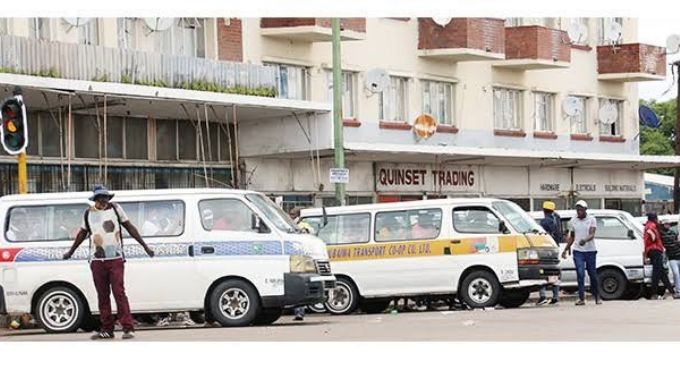
Transporters have also set up illegal pick-up points on either side of Eveline High School, deepening the crisis of lawlessness in the city.
Because of lawlessness by public transporters, some roads have become no-go zones for other motorists, with kombis picking up and dropping off passengers wherever their crews choose, often obstructing traffic, contributing to congestion and creating informal trading points in areas never designated for such activities.
The concerns raised at the 2026 Bulawayo City Council Budget Review Consultation meeting at the Large City Hall in the city on Wednesday should therefore receive more than another round of discussion.
Residents made an important connection that vendors, another issue plaguing the city, naturally follow kombis because they congregate where passengers are picked up and dropped off, highlighting that where large numbers of passengers gather, traders will follow because that is where potential customers are found.
This means the debate about vending cannot be separated from the enforcement of transport regulations and the city needs to demonstrate that its regulations are enforceable.
While it is easy to focus on the vendors because they are the most visible presence on pavements and other public spaces, removing them while allowing illegal transport operators to continue establishing informal ranks would only deal with one part of the problem.
If the transport activity remains, the commercial activity around it will continue to emerge and the same principle applies to commuter omnibus operators.
Bulawayo has already designated facilities such as Egodini Taxi Rank, among others, and council must consistently enforce the use of designated ranks because a regulation that is routinely ignored loses its practical authority, while operators who comply with it can end up carrying costs and inconveniences that their competitors simply avoid.
Council has demonstrated elsewhere that enforcement can be undertaken despite difficult circumstances, with its rangers working with Umzingwane and Insiza rural district councils to protect catchment areas from illegal mining, arresting illegal gold miners and handing them over to the Zimbabwe Republic Police and we believe the same determination is needed in dealing with illegal transport operations.
Law-abiding transport operators pay the costs associated with operating from designated facilities and following the rules, and allowing others to load passengers wherever they want effectively rewards non-compliance.
Ordinary residents also pay the price through congestion, obstruction of roads, unsafe loading points and the deterioration of public spaces.
This, however, is not an argument for arbitrary or heavy-handed enforcement, but council must operate within the law, communicate the applicable regulations clearly and ensure that enforcement is consistent.
Operators should know what is required of them and what consequences follow deliberate non-compliance, but after years of complaints, warnings and consultations, enforcement cannot remain largely aspirational.
The city cannot designate formal transport facilities while simultaneously allowing competing illegal ranks to operate with apparent impunity, nor can it seek to control urban vending without also addressing the transport activity that attracts traders to particular locations and it cannot expect residents and businesses to comply with municipal regulations when compliance appears to be optional for some operators.
Bulawayo needs a co-ordinated enforcement operation involving council, the police and other relevant authorities, backed by adequate manpower and clear procedures, while illegal ranks should be removed, designated facilities should be actively managed and repeat offenders should face the consequences provided for under the law.
Bulawayo has tolerated transport lawlessness for too long and the city now needs sustained enforcement to restore order, protect legitimate operators and ensure that public spaces serve the wider community rather than becoming territories controlled by whoever is prepared to ignore the rules.