Chronicle Editor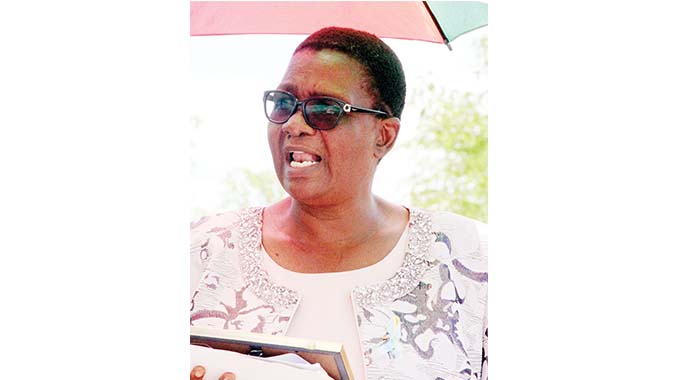
Our education system is respected worldwide for producing students who know what they do.
As a result, most graduates from local schools and institutions of higher learning are much sought-after worldwide not only for advanced learning but also in the job market. Also, as a result of the same, many governments, parents and guardians from a number of African countries send their children to learn at local schools, colleges and universities.
The Government has set out to further strengthen the education system by rolling out the competence-based education system as recommended by the 1999 commission of inquiry into the local education sector. An integral part of that system is an examination system which draws from a child’s other abilities in addition to the existing emphasis on one’s performance over two or three hours of the final examination.
The Government has said starting from this year, all examination classes will be subjected to the new model which will combine marks for continuous assessment and final examinations.
The Zimbabwe School Examinations Council examinations and the Continuous Assessment Framework will now comprise the weighted contribution to learner performance results in Grade Seven, Form Four and Form Six public examinations.
The system recognises that pupils have different abilities, knowledge bases, skills, values and other achievements in class, which counted for nothing in the past yet are critical in defining who a person is and can be in future.
A learner’s talents, disabilities, socio-economic background will be taken into consideration, together with ability to engage information communication technology (ICT) enhanced platforms, and the unhu/ubuntu philosophy.
Thirty percent of a Grade Seven kid’s final marks will be continuous assessment while at Form Four, 40 percent will be theory, 30 percent continuous assessment and another 30 percent practical.
We are with the Government in this because we recognise that God blessed His people differently. We have seen many people who could not do well in their final examinations but went on to become successful cricketers, footballers, farmers, builders, metal workers and craftspeople; in some cases more successful in life than those that had good final examination results. The old system did not recognise these various abilities as much as they should have been.
Indeed the country’s examination system, while being among the best in the world, tended to be too linear and simplistic yet life isn’t linear, life is complex.
The Government’s drive to recognise that we are abled differently is to be applauded.
It is good that authorities have, in recent weeks, been training educators on how the competence-based assessment system would be executed. This will ensure that the new structure is implemented as smoothly as it should be.
It is unfortunate that there have been dissenting voices from the usual quarters – Amalgamated Rural Teachers Union of Zimbabwe and Progressive Teachers Union of Zimbabwe. They want the Government to defer implementing the Continuous Assessment Framework, citing the adverse impact on teaching and learning posed by Covid-19.
We agree with them that Covid-19 had been disruptive. However, that must not be a reason to defer the new assessment system.
Primary and Secondary Education Permanent Secretary Mrs Tumisang Thabela made it clear on Friday that there is no going back.
She said continuous assessment is a holistic assessment that tracks a child’s potential in class and through various skills adding that education is not all about sitting in a classroom.
“There are a number of children who have failed external exams because the day before the exam they lost a mother or a father but with a combination of formative and summative performance will then indicate what were the strengths of the child and we can see how we can rescue the child,” she said.
“The new assessment framework which is now complete and which we are starting in 2021 has both continuous assessment element and a summative or end of syllabus cycle assessment. It is then imperative that all schools implement the continuous assessment through the continuous learning assessment activities as a policy directive and move towards implementing fairer way of determining what a child can do or make in addition to what a child can remember.”
We totally agree with her.
We want our education system to afford equal opportunities to all our children not to condemn some of them on the basis of a two-hour examination they write once in seven years, in four years and in two years of learning. As we have said earlier, different kids have different capabilities which must all be recognised and rewarded.
We are sure that with more emphasis on competence-based education of which continuous assessment is a big part, the respect that our education system already commands globally would grow and grow.



 Online Reporter