Online Reporter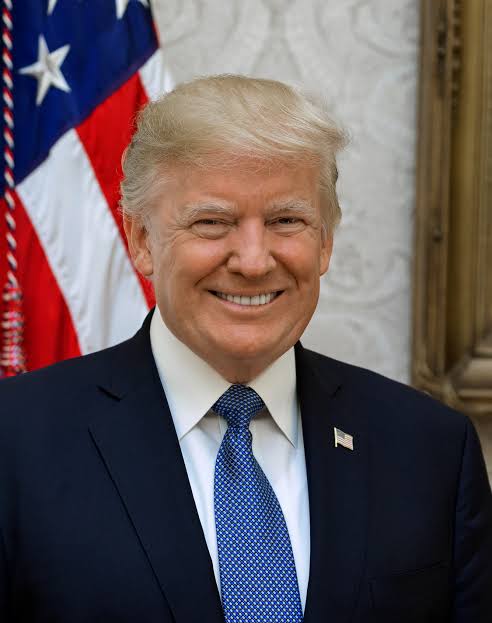
Christopher Rhodes
FOR many years before becoming president, Donald Trump openly criticised the George W Bush administration over its decision to launch the war on Iraq. Yet today, in his second term as president, he finds himself presiding over a military debacle that bears an uncomfortable resemblance to Bush’s.
Trump has ordered a military intervention aimed at removing an antagonistic foreign leader, justified by a flimsy national security argument and driven, in part, by the prospect of accessing that country’s oil.
In both cases, there is an underlying, and ultimately misplaced, confidence that the United States can simply impose its will through regime change. America’s intervention in Venezuela carries the same sense of hubris that surrounded the Iraq invasion two decades ago.
There are, however, important differences worth considering.
The most striking feature of the operation in Venezuela is its lack of any coherent or overarching vision. On Saturday last week, after Trump concluded an hour-long news conference alongside his secretaries of defence and state, it remained unclear what the plan for Venezuela actually was — or whether a plan existed at all.
His subsequent statements threatening further attacks in the days ahead did little to clarify matters.
Historically, US-led regime change has been driven by broader ideological frameworks shaped by the worldview of the commander-in- chief at the time.
In 1823, President James Monroe declared the Western Hemisphere off limits to European colonial powers. As the United States consolidated its influence across the Americas throughout the 20th century, the Monroe Doctrine was repeatedly invoked to justify interventions in Latin America and the Caribbean.
The Cold War introduced new rationales, as Washington overthrew leftist governments and installed friendly regimes across the region.
As the Cold War drew to a close, President George H W Bush sought to act as custodian of a “new world order” in which the United States had emerged as the world’s sole superpower.
When Bush sent troops to Somalia in 1992, and when his successor Bill Clinton reversed a military coup in Haiti in 1994, those actions were framed within the doctrine of “humanitarian intervention”.
George W Bush’s invasion of Iraq, by contrast, was prosecuted under the post 9/11 banner of the “war on terror”. When President Barack Obama intervened against the forces of Libyan leader Muammar Gaddafi in 2011, his administration drew on the doctrine of the “responsibility to protect” civilians under threat.
In the case of the US attack on Venezuela, however, no such ideological justification has been coherently articulated. Trump and his advisers have instead advanced a scattershot mix of arguments, ranging from humanitarian concerns to counterterrorism, in an effort to rationalise the intervention.
The president even resurrected the Monroe Doctrine. But just as it appeared he might be anchoring his foreign policy in some form of ideological continuity — albeit one dating back two centuries — he undercut it with a joke.
“The Monroe Doctrine is a big deal,” Trump explained on Saturday. “But we’ve superseded it by a lot, by a lot. They now call it the Donroe Doctrine.”
Trump did not coin this pun himself; the New York Post used it a year ago to characterise his aggressive foreign policy rhetoric as he issued threats to annex Canada, Greenland and the Panama Canal.
By embracing the tongue in cheek term, the president underscored a troubling reality of his foreign policy: the idea that he is advancing any serious ideological vision is itself a punchline.
In truth, Trump’s second term has been marked by an increasingly aggressive and militarised foreign policy, not because he seeks to impose a grand strategic vision, but because he has discovered there are few consequences for doing so.
Launching strikes against assorted foreign “bad guys” with limited capacity to fight back — from ISIL (ISIS) affiliates in Nigeria accused of “persecuting” Christians, to alleged “narcoterrorists” in Latin America — plays well with elements of Trump’s political base.
After referencing the Venezuelan gang Tren de Aragua during Saturday’s news conference, the president veered into a lengthy digression boasting about his military interventions inside US cities.
For critics concerned about Trump’s health and mental fitness, his inability to stay on topic may be alarming. Yet the detour into domestic affairs was not entirely irrelevant to the Venezuelan intervention, at least in Trump’s own framing. His increasingly militarised campaign against drugs and crime abroad is used to justify an increasingly militarised approach to drugs and crime at home.
Previous US presidents deployed American power in pursuit of various ideologies and principles. Trump, by contrast, appears content to borrow selectively from past doctrines to legitimise the use of force. Often, the supposedly “good” intentions of earlier administrations led to devastating consequences for those subjected to US intervention.
Those intentions nonetheless introduced a degree of predictability and coherence into American foreign policy across successive administrations.
Trump, however, seems motivated almost exclusively by short-term political gain and immediate prospects for glory or profit.
If there is any limited consolation in such an unprincipled approach, it lies in the fleeting nature of interventions conducted without a guiding vision. The absence of ideological commitment may prevent the kind of long term entanglements seen in conflicts such as the Iraq occupation.
At the same time, that very absence opens the door for Trump to deploy military force to resolve virtually any international dispute or to pursue any ostensibly profitable venture — including, hypothetically, attempting to seize control of Greenland from Denmark.
Last year, Trump decided tariffs were a powerful tool for advancing his interests and began deploying them almost indiscriminately against allies and adversaries alike. Now that he has grown comfortable using the US military to pursue goals ranging from profit and gunboat diplomacy to distraction from domestic scandals, the risk is that his use of force will become equally impulsive.
That prospect bodes ill for both the United States and the wider world. At a time when overlapping global crises — from climate change to conflict and widespread impoverishment — demand careful leadership, the last thing the world needs is a trigger-happy superpower operating without a clear strategy or a plan for the day after. — Al Jazeera