Chronicle Editor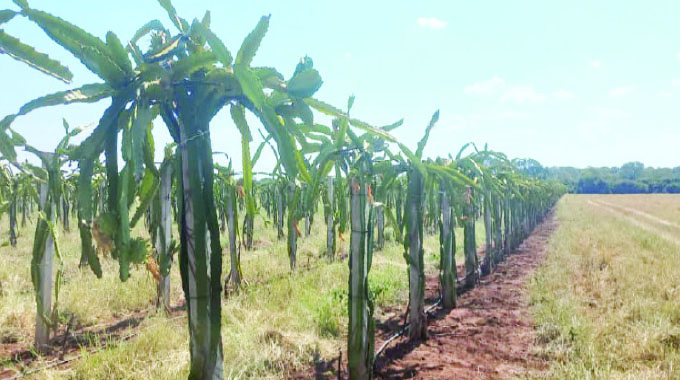
Dragon fruit, also known as pitaya, is a vibrant and exotic fruit with a striking appearance.
Its succulent flesh, speckled with tiny black seeds and ranges from white to pink or red. While dragon fruit is native to Central America, it has found a welcoming home in various tropical and subtropical regions worldwide.
Zimbabwe, with its favourable climate and agricultural expertise, can capitalise on this unique fruit to boost its economy and enhance its global trade footprint.
Mrs Elani Watson, a farmer in Makhado, Beitbridge District in Matabeleland South, has ventured into the first-ever production of dragon fruit in the country at her Double O Ranch, popularly known among locals as Magwamazi Farm.
Mrs Watson’s farm, which sits on 2 000-hectares, boasts of 1 000 hectares of dragon fruit that is destined for export markets, 10 hectares of tomatoes, 60 hectares of potatoes, and a herd of 500 cattle.
Dragon fruit requires minimal water and can thrive in arid conditions. Zimbabwe’s climate is conducive to its cultivation, making it an environmentally friendly choice.
There is a huge demand for the fruit as consumers worldwide are increasingly drawn to healthy and nutritious foods.
Dragon fruit is rich in antioxidants, vitamins, and fiber, making it a sought-after superfood.
If more farmers join Mrs Watson, Government agencies like Zimtrade can help identify potential export markets. China, the United States and Europe are major importers of dragon fruit.

Zimbabwe can tap into these markets by understanding their preferences and regulations.
It will be important to maintain high-quality standards throughout the supply chain. Proper post-harvest handling, packaging, and transportation are crucial.
In line with the Government’s beneficiation policy, farmers can explore value-added products like dragon fruit juice, dried slices, or jams. These can enhance export opportunities and reduce dependence on fresh fruit sales.
Public-private partnerships can motivate policies that incentivise dragon fruit cultivation. Provide training, subsidies, and infrastructure support to farmers, while joint efforts with private companies, research institutions and export associations can strengthen the entire value chain.
Daring farmers like Mrs Watson are leading the way. Like-minded farmers can contribute significantly to food security for the nation in line with the Agriculture and Food System Transformation Strategy (2020-2025) whose thrust is to see Zimbabwe achieve a US$8,2 billion agriculture economy by 2025.
Zimbabwe has the potential to become a significant player in the global dragon fruit market.
By adopting smart cultivation practices, strategic export approaches, and effective branding, the country can turn this exotic fruit into a sweet success story



 Online Reporter