Online Reporter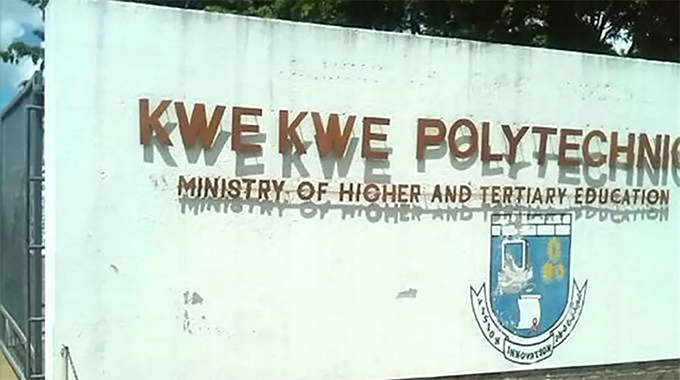
SINCE the adoption of Education 5.0, institutions of higher learning students are playing a leading role in finding solutions to challenges facing communities.
Last year, a Mr Shora.student developed a portable grinding mill that is set to transform grain processing for communities across the country.
The grinding mill, which is mounted on wheels, can easily be transported from one place to another, thereby bringing services close to communities.
The grinding mill uses diesel and as such provides a dependable alternative for rural communities who at times are affected by the non-availability of electricity.
Kwekwe Polytechnic media and publicity officer Mr Bruno Shora said the portable grinding mill was one of several ongoing projects aimed at empowering students with practical skills.
“We are proud of our students who are finding solutions to challenges facing our communities,” said Mr Shora.
Kwekwe Polytechnic, like other institutions of higher learning, has responded to President Mnangagwa’s call for graduates to produce tangible goods and services.
President Mnangagwa has said on many fora that students from universities and colleges should no longer pride themselves in having paper qualifications but should be able to produce something tangible which demonstrates the knowledge acquired.
He has said the education system should adequately empower graduates to be self- sustaining to enable them to contribute to national development.
According to President Mnangagwa, paper qualifications can be futile if graduates cannot produce something tangible and as such, the nation should not celebrate paper qualifications but goods and services produced by graduates.
Early this year, we reported that the Midlands State University (MSU) had started test runs at its US$11 million coal tar plant in Zvishavane, and full-scale production is expected before the end of the year.
The university is working jointly with the Ministry of Transport and Infrastructural Development and the Research Council of Zimbabwe (RCZ).
The tar, which is made of crude oil from Hwange coking ovens and recycled chrysotile from Shabanie-Mashava will substitute bitumen, which the country is importing.
The local product will cost U$0,70 per litre compared to US2,50 per litre which the country is paying for bitumen.
The Zvishavane project is expected to create about 2 500 jobs and reduce the country’s expenditure on imported bitumen by about 40 percent.
This is definitely a game-changer for the country’s road construction as it will drastically reduce costs.
The coal tar is an environmentally friendly road binder which is expected to substitute the costly imported bitumen once the country starts producing enough quantities to meet demand.
What is encouraging is that universities and colleges across the country are coming up with ground-breaking innovations that are benefitting communities, and in some cases, substituting imports, thereby saving the country the much-needed foreign currency.
The institutions of higher learning are not only churning out graduates that meet societal demands but are also establishing innovation hubs and constructing industrial parks. The universities and colleges are therefore leading the nation’s industrialisation programme.
The National University of Science and Technology (Nust) is driving Bulawayo’s re-industrialisation, Chinhoyi University of Technology (CUT) is doing the same in Mashonaland West province, while MSU is playing a leading role in the Midlands province.