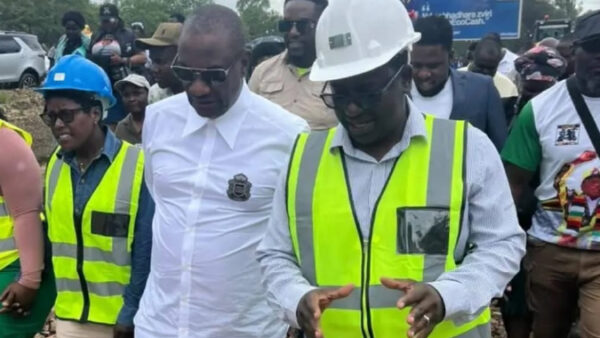
Zimbabwe’s decision to establish a $63mn equipment financing facility for small-scale miners deserves support.
For too long, operators sitting on productive mineral claims have struggled to turn those resources into viable businesses because they cannot afford the machinery required to mine efficiently and safely.

The scheme, launched on Wednesday, brings together the Minerals Marketing Corporation of Zimbabwe (MMCZ), FBC Bank and BancABC. A $5mn commitment by MMCZ has helped unlock potential equipment financing of $30mn from FBC Bank and $33mn from BancABC.
This partnership shows how public resources can be used to attract considerably greater private-sector lending.
It is also a welcome departure from financing models that too often leave emerging producers dependent on middlemen, equipment rentals and costly informal credit arrangements.
The intervention is particularly important for miners outside the gold sector, starting with chrome producers.
Small operators frequently depend on hired machinery, manual labour or costly arrangements with equipment owners.
These constraints limit production, erode earnings and make it difficult to honour supply contracts. Reliable access to excavators, loaders and trucks could change that equation.
Mechanisation should help miners work more efficiently, improve mineral recovery and reduce avoidable operational risks. Higher, more consistent output can strengthen export earnings, support downstream processing and generate business for transporters, mechanics and equipment suppliers.
Mining communities stand to benefit from additional jobs and local spending.
There are encouraging signs that implementation has begun. Twenty-three machines have already arrived in the country, while three miners received six machines under an initial pilot. But the $63mn is financing capacity, not money already disbursed. The difference matters. Success must be measured by equipment actually reaching productive mines, rather than the size of the facility announced at its launch.
Accessibility will be crucial. A scheme intended to empower smaller operators would fail if collateral demands, interest rates and repayment terms excluded precisely those miners it was designed to assist. Banks must apply sound lending standards while recognising the realities of mining cash flows. Transparent eligibility rules, clear application procedures and fair consideration for women and young miners are equally important.
However, equipment alone will not guarantee profitable operations. Beneficiaries need training in maintenance, financial management, mine planning and workplace safety. They also need dependable markets, reasonable transport costs and timely payment for their minerals. Without these, a promising loan can become an unsustainable debt burden.
Environmental responsibility must not be sacrificed in pursuit of higher production. Mechanisation can accelerate land disturbance unless accompanied by proper rehabilitation, waste management and regulatory oversight. Mining communities must share in the benefits rather than bear the costs.
Authorities and lenders should publish regular figures on approved applications, equipment delivered, repayment performance, jobs sustained and additional mineral output.
Such reporting would build confidence and identify problems before they undermine the scheme.
Zimbabwe possesses abundant mineral resources, but resources buried underground create little prosperity.
The real opportunity lies in helping small miners become efficient, responsible enterprises. If implemented fairly and monitored closely, this facility can turn mineral potential into lasting economic value.