AS Zimbabwe stands on the precipice of the 2026/2027 summer cropping season, the air is thick with a familiar, yet increasingly ominous, tension. The Meteorological Services Department has sounded the alarm: A projected “super El Niño” is poised to unleash a season characterised by normal to below-normal rainfall, punctuated by frequent and punishing dry spells.
This is a test of national resilience.
In this high-stakes gamble against the elements, the difference between a bountiful harvest and a devastating failure will hinge on one critical factor: the farmer’s willingness to listen to the advice of the army of agricultural extension workers deployed across the nation.
The Government has not left farmers to navigate this treacherous path alone.
With a staggering 5 057 agricultural business advisers — formerly Agritex officers — stationed three to every ward, the technical support network is robust.
These officers, equipped with motorbikes, tablets and a sophisticated e-extension system, are the frontline soldiers in this drought mitigation battle.
Their message is clear.
Farmers must not be seduced by early, scattered showers; they must wait for the “first effective rains” of 20-40mm.
They must tailor their crop selection to their agro-ecological region, prioritising traditional grains like sorghum and pearl millet in the drier Regions III, IV and V, where maize distribution will be absent.
This is life-saving counsel.
To ignore the extension worker this season is to gamble with one’s livelihood and the nation’s food security.
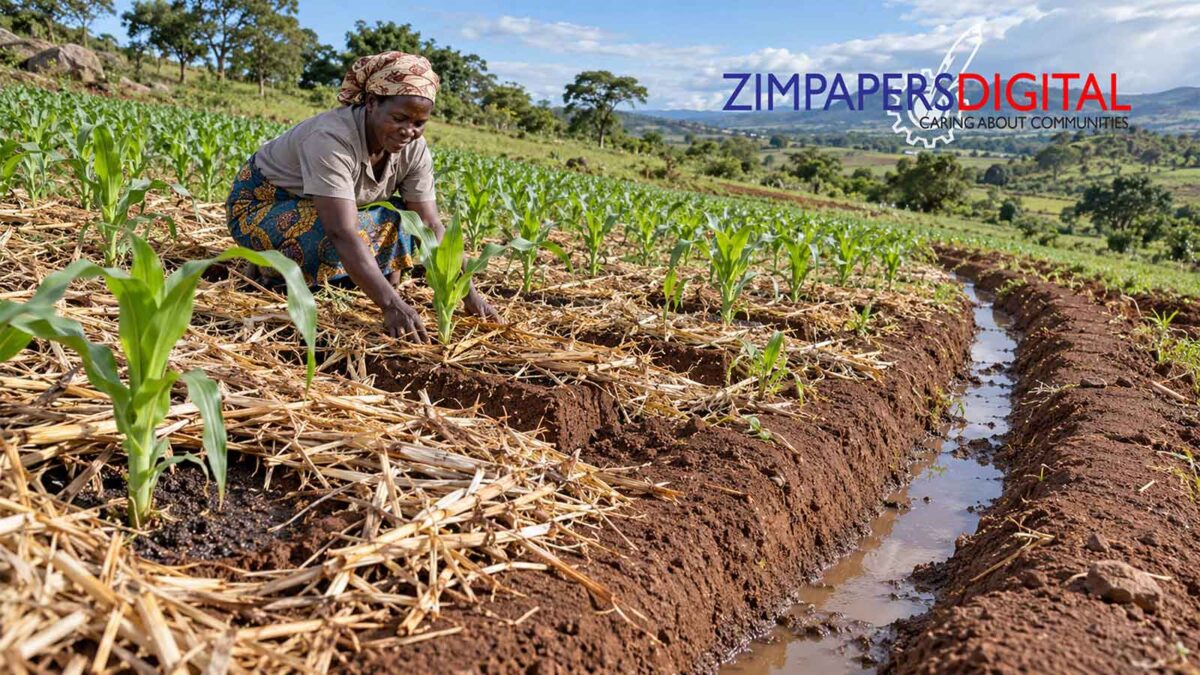
At the heart of this advisory is the Pfumvudza/Intwasa programme, a revolutionary climate-smart intervention that has been restructured for the challenges ahead.
It is rightly regarded as “farming using God’s way”, a methodology that mimics the natural survival instincts of plants.
By focusing on minimal disturbance, mulching and precise water harvesting through potholing, Pfumvudza conserves the scarcest resource — moisture.
The Government’s foresight in reducing fertiliser application by 50 percent and promoting 100 percent liming, alongside organic matter and water retention enhancers like hydrogel, is a masterstroke.
It acknowledges a fundamental truth: In a dry year, the binding constraint is not nitrogen, but water.
With over 2,7 million farmers having already prepared the minimum three plots, the foundation for a climate-proofed harvest is being laid, brick by painstaking brick.
Yet, while the farmer toils in the field, the Government has been equally industrious in building a formidable national buffer.
The commendable effort to bolster the Strategic Grain Reserve to over 355 373 tonnes, with a trajectory towards 600 000 tonnes, is a declaration of intent.
It is a safety net designed to catch the nation should the skies fail to deliver. This buffer is further reinforced by a record winter wheat harvest of 670 981 tonnes, a feat that will significantly substitute imports and insulate the local population from crippling cereal shortages.
This is resilience in action, a tangible demonstration that Zimbabwe is not a passive victim of climate change but an active architect of its own survival.
Perhaps the most bold and historic declaration of this intent is the unprecedented expansion of the country’s irrigation infrastructure.
The development of 67 129 hectares of irrigation in 2026 — the highest annual increase in history — is a game-changer.
With national dam levels at a healthy 83,1 percent, the Government is strategically moving from merely storing water to using it as an engine for economic growth.
The “dam-to-hectare” reconciliation process ensures that every drop is accounted for and matched to realistic planting targets.
This is a testament to a Government that is planning for a future where rainfall is a bonus, not a guarantee.
However, complacency is a luxury we cannot afford.
Drought and adverse weather are becoming the new normal, a bitter fruit of climate change.
While Zimbabwe has laid the foundations of resilience — through strategic reserves, climate-smart agriculture and irrigation — it must now double down on implementation.
The “last mile” delivery of inputs, the timely provision of fertiliser and the constant engagement with farmers must continue with unrelenting vigour.
The systems are already in place. It is now up to every farmer, guided by the extension officer, to plant with the first effective rains and turn this season’s treacherous potential into a triumph of Zimbabwean tenacity.