

 Online Reporter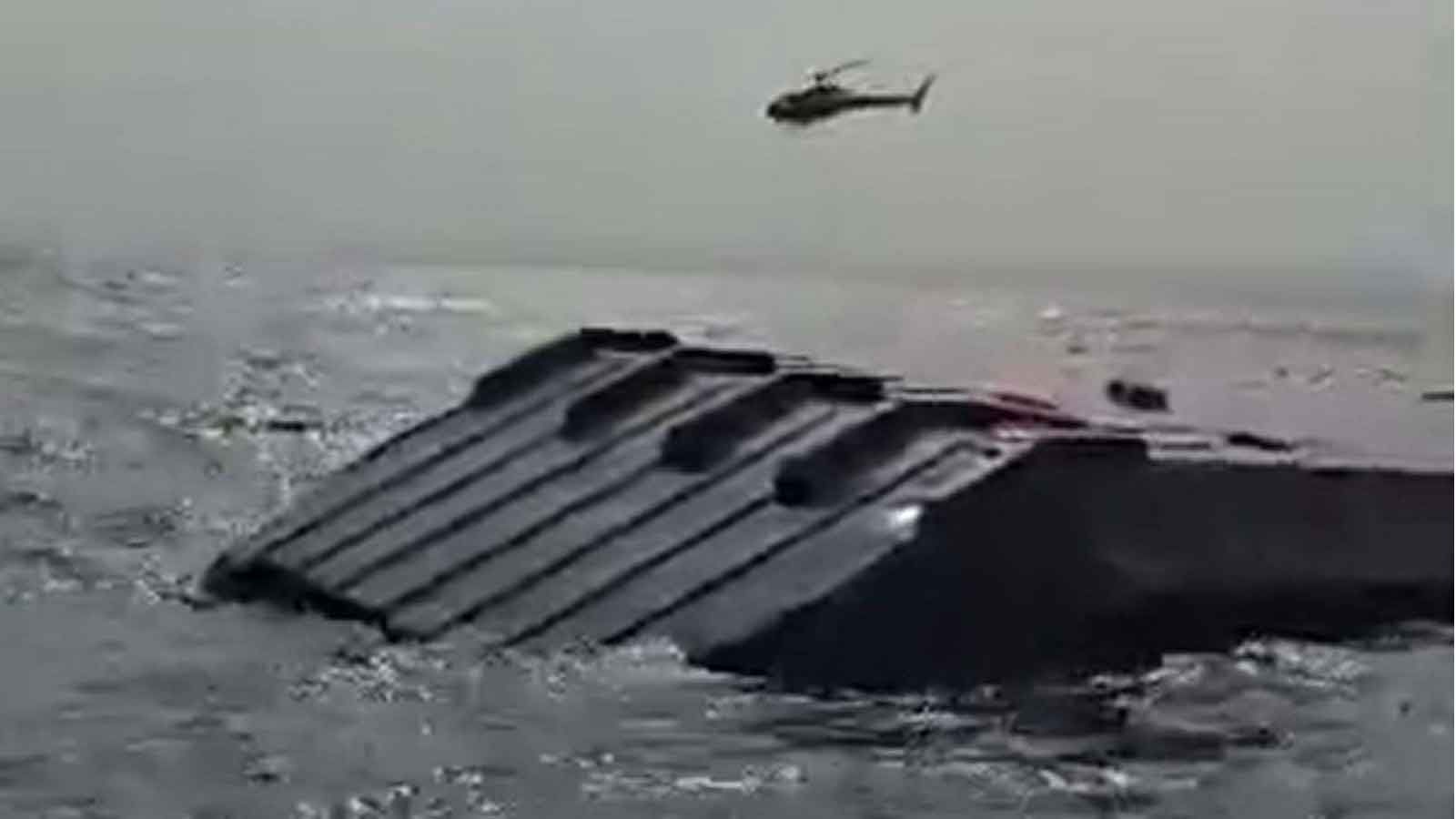
With the death toll in the Lake Kariba ferry disaster reaching 84 last night as bodies continue to be recovered, investigators are continuing their work to find the cause of what seems to be an overloaded ferry capsizing after years of service, and a preliminary technical report wanted for tomorrow’s Cabinet meeting.
At the same time emergency support is being given, with more on the way, to the fairly small communities along the lake shore, with some families being devastated with multiple deaths. This is one of those disasters which have a huge effect on communities, going beyond the deaths to the large rents in the social fabric.
The State of Disaster promptly proclaimed by President Mnangagwa the next day allows not just emergency funding for the rescue and recovery operations, but also the medical and funeral expenses and emergency support for devastated families.
Some of the emergency work cannot be instant. Emergency transport alternatives are needed quickly. The ferry was not just the passenger service along the lake shore, supplying the service done by buses in other areas, but was also the cargo carrier for the many village shops near the shore, filling in for the trucks.
The main west-east road along the southern shore of Lake Kariba, usually several kilometres inland, needs rapid upgrade in places. The western half, running to the Binga turn-off, has always been in far better condition and far easier to repair thanks to the easier terrain.
The eastern half to Karoi has always been far more difficult, with far tougher terrain in places and passing through wilderness and wildlife areas along a good part of its route. This was the section that the ferry of the Rural Infrastructure Development Agency served in particular.
Some of the communities cut off by the disaster can be reached from the Binga end of this road, but even emergency work will take a while to get the full link for normal commercial traffic to Karoi and even then there will be a slew of small communities a long way from the road, but near the shore who have become accustomed to the lake being their main road and the ferry the transport service.
President Mnangagwa has already directed that the emergency work needed on the road starts very quickly and already there is talk of a replacement ferry.
The investigation into the accident will almost certainly find that there was no single cause of the disaster, but rather a number of factors reinforcing each other.
A single cause would be a major collision damaging and holing the hull, but it is already clear that the integrity of the hull was not the problem. It is still floating, upside down, and the bottom of the hull shows it was well maintained.
The overturned hull was in fact the essential life raft for the 77 survivors, with the first rescue boats finding many clinging to the hull allowing maximum priority to rescuing the living floating or swimming in the water.
It is also clear that while there were lifebelts aboard the ferry no one, or hardly anyone, was able to use one in time. The empty belts were seen floating around the overturned hull.
There are concerns that the ferry may have been overloaded. With 77 survivors and 84 bodies so far recovered, there were at least 157 people aboard. Besides the five crew, 114 passengers had bought tickets.
But children under four, or who can pass for under four, do not need a ticket and they must be a good proportion of the dead since there are already 38 dead over the 119 crew and ticketed passengers. It is here that the uncertainty comes, over just how many people were aboard. This is for a ferry rated for five crew and 90 passengers.
Overloading is not necessarily a cause, since a lot depends on the total mass of people and cargo, and more critically how balanced the load is. It has been pointed out that there were almost certainly passengers who had no seat and were standing or sitting on the deck and in a sudden list would slide towards the listing side, making the list worse until the boat flipped. That original list could be caused by anything from freak gust, a freak wave, poor navigation or just bad conditions.
There have been suggestions that the listing could have caused engine room flooding, making it almost impossible to power out of the emergency.
The weather has been brought up, and the water was choppy, but the captain was highly experienced and had made this trip many times so knew what his ferry could cope with, especially under power.
So it is likely that the disaster was the result of a series of causes, each reinforcing each other, and that makes the task of the investigators a lot harder.
But we can still have the preliminary report to be followed by a final report later, and can start assembling the revised safety regulations, starting with a full manifest, that are needed for all our large water bodies.
Suggestions have been made that as traffic rises along the lake there should be designated rescue boats at critical points, or there should be a boat on the next ferry.
A boat on the ferry would need to be backed by life rafts, something that was invented many decades ago, which automatically inflate when dumped in the water since the boat would be totally unable to carry more than a tiny fraction of those aboard, but could be critical for rescuing those in the water and bringing them to the rafts.



This reads less like journalism and more like a government damage-control manual dressed up as an editorial. Eighty-four people are dead, the passenger count is uncertain, possible overloading is acknowledged, and yet the piece races to praise emergency directives and future projects instead of asking the brutal question: who failed before people died? “Lessons will be learned” is meaningless when oversight failures may have helped create the disaster. The endless focus on what Mnangagwa directed after the tragedy cannot erase what government agencies were supposed to prevent before it. A state newspaper should scrutinise power, not polish it. Zimbabweans need names, accountability, safety reforms and answers—not paragraphs engineered to make incompetence look like unfortunate fate. Stop hiding behind the pen. Eighty-four families deserve truth, not propaganda.