Online Reporter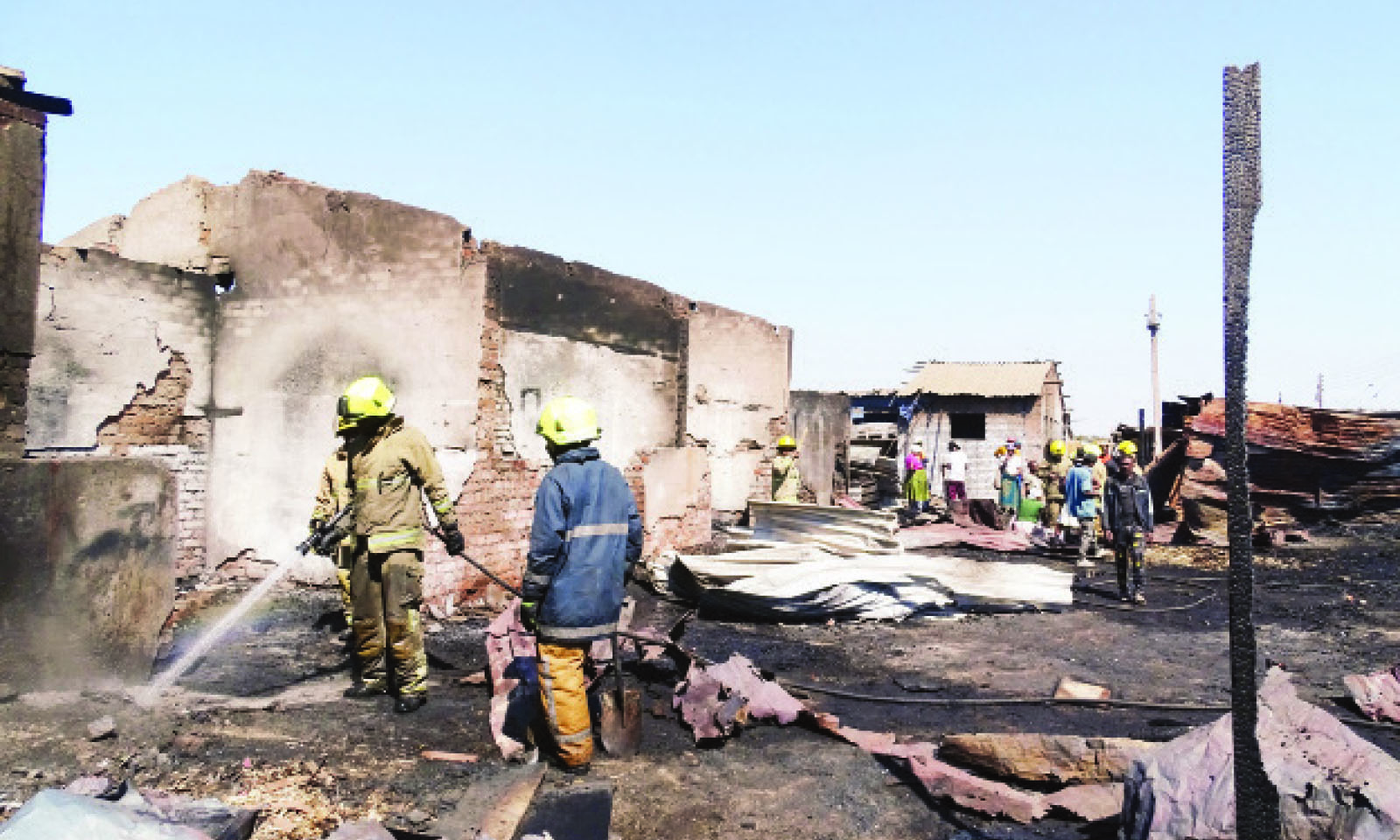
THE Glen View 8 Home Industry suffered early Sunday morning its 15th major fire since it opened just over a quarter century ago, with this time the warehouse storing the furniture that the small manufacturers make at the centre of the blaze.
The fire comes less than a year after the last fire, which destroyed workshops.
Users of the complex, many being skilled carpenters, quickly rebuilt their little workshops, in wood. It appears that this continuous use of wood as a building material, coupled with power tools and even heaters for some processes, is simply asking for trouble.
There are other businesses in the complex besides carpenters and furniture makers, although these dominate, but all involve some sort of manufacture or processing. They are not shops but rather mini-industries.
There is general agreement that a properly designed complex built with masonry, bricks or concrete or both, is required for a permanent solution, along with the sort of fire safety standards and equipment that any furniture factory is required to follow and install.
That this complex groups a lot of smallscale carpenters and furniture makers should not exempt them from the laid-down standards that all industrialists, large or small, should follow. As it is a complex there is obviously need for a great deal of co-operation between these small-scale manufacturers and carpenters.
There is also the need for external finance to build a safe complex, and that means the small businesses might have to rent space or workshops, but as safety is the priority, rather than luxury, the rents should be kept within bounds.
The little businesses should be able, in any case, to find the money for rent if the complex is secured and they can deal directly with their customers and potential customers. A secondary problem, after the fire hazards, is the invasion by touts who have pushed the furniture makers aside when it comes to dealing with the public. These touts negotiate a price, grab their large cut and then hand the change over to the makers.
A decent complex with guarded parking should allow those interested to come to the complex, walk around until they see something they like, and then deal directly with the furniture maker to either buy what is on offer or have something similar made up, but perhaps in another colour for the textiles.
After last year’s fire action was promised, and is taking place. Apparently we are now at the stage of feasibility studies and design. While we would agree that the design cannot be haphazard, especially as it needs to ensure each workshop space is fireproof, so if there is a fire in one it cannot spread. And obviously, the fire safety standards should be followed from the beginning as retrofitting is an expensive option.
But at some point the designs and feasibility studies have to be completed and the actual building started.
This time some things are different. Government and the Harare City Council want to get moving on the new complex and accelerate progress. One important factor is that the furniture makers and other mini-industrialists are to be located temporarily to a nearby site so they can continue in business and earn a living, but they are not being allowed to move back into the actual complex until the necessary modern workshops are ready.
It is fairly obvious by now that rebuilding what was there using the same materials is not a solution and that the site needs to be clear, or at least a large portion of it needs to be clear, so that the real work of a permanent masonry solution can be built with all services included.
While the complex is being properly built a respectable management and administrative structure must be crafted, one that closely involves the actual users of the complex rather than just being imposed by someone who thinks they know better.
Presumably experts from Civil Protection and Harare Fire Brigade can be drafted in to help lay down safety standards and train people how to prevent fires in the first place. One major advance in having better premises and proper safety standards means insurance companies, who so far want to keep well away from Glen View 8 as it is so high risk, will be willing to offer normal factory insurance.
Generally speaking we, and the business people in the complex, want fire number 15 to be the last fire, so direct action is now needed. The usefulness of the complex is obvious from the hundreds who gather there; now we just need to make sure they have the premises and standards that make the complex safe, as well as highly useful.