

 Online Reporter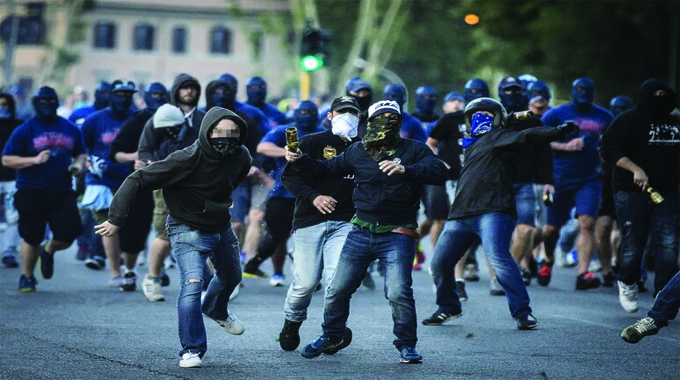
WHAT has become of this planet? The civilised world has become more violent and disorderly than the ‘‘Dark Continent’’.
The recent Champions League final celebrations in France, following Paris Saint-Germain’s historic victory over Inter Milan, were marred by significant incidents of hooliganism.
The French interior ministry reported that more than 500 people were arrested, with two deaths and 192 injuries recorded. How do football celebrations result in death?
The provisional assessment as of Sunday morning indicated that 559 individuals had been detained, including 491 in Paris, leading to 320 people being placed in police custody, 254 of them in the capital.
These reports remind us of Thomas Hobbes’s concept of the “state of nature,” where individuals act purely out of self-interest, leading to a life that is “solitary, poor, nasty, brutish, and short.”
According to Hobbes, the state of nature is a hypothetical condition where there is no government or social contract to maintain order.
Applying Hobbes’s theory to contemporary events — especially the recent Champions League final celebrations in France — one might argue that the breakdown of social norms and the rise in violent behaviour reflect a regression towards this state of nature in the West.
This is contrary to the general portrayal of Africa as the harbinger of chaos and violence.
But on a serious note, hooliganism, often associated with sports events, is a troubling phenomenon that can occur in any country, including those considered to be “first world”.
Despite the advanced infrastructure and law enforcement capabilities in these nations, instances of unruly behaviour and violence during major sporting events can still arise. The celebrations in France are a stark reminder of this issue.
We are all human after all!
Several factors contribute to the occurrence of hooliganism. High emotional stakes are a primary driver, as fans invest significant passion and energy into supporting their teams. The intense excitement and disappointment that accompany major victories or losses can sometimes lead to aggressive behaviour.
Alcohol consumption is another significant factor, as it can impair judgment and exacerbate aggressive tendencies, leading to confrontations and disorderly conduct.
Group dynamics also play a crucial role in hooliganism. The presence of large crowds can create a sense of anonymity, emboldening individuals to act out in ways they might not otherwise.
This phenomenon is often seen in the aftermath of major sporting events, where the collective energy of the crowd can lead to chaotic situations. Cultural factors, such as long-standing rivalries and competitive spirit, can further fuel aggressive behaviour.
While Paris Saint-Germain’s victory is a cause for celebration, it is essential to remember the importance of maintaining order and safety during such events. The joy of sports should unite people and create positive experiences, rather than leading to violence and disorder.
By addressing the root causes of hooliganism and implementing effective strategies, we can work towards ensuring that future celebrations are marked by joy and camaraderie, rather than chaos and conflict.




 derick.khumalo