Online Reporter
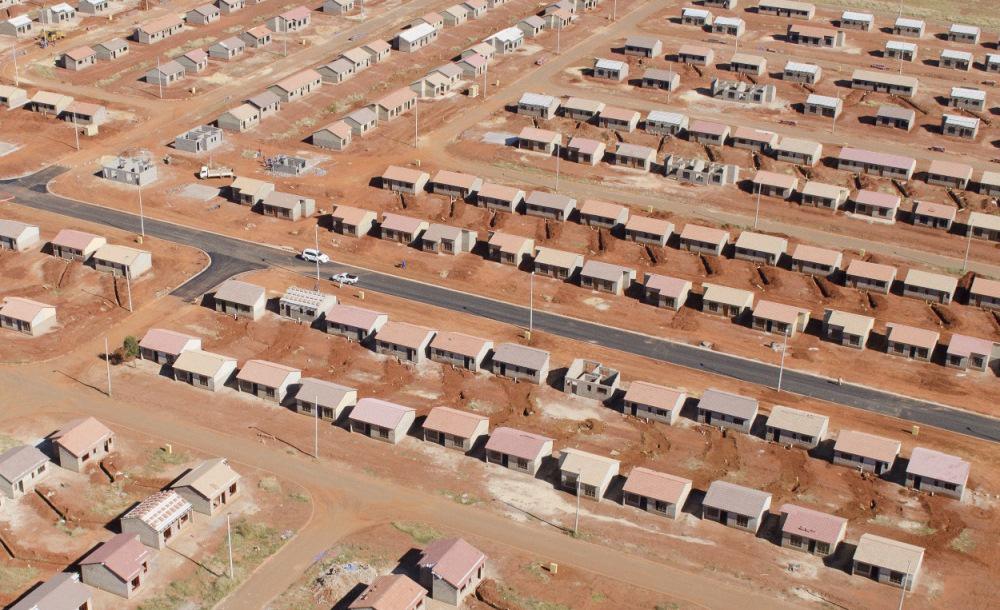
THE Government’s decision to overhaul the 1977 Model Building By-Laws could prove to be one of the most consequential reforms in Zimbabwe’s quest to provide decent and affordable housing for its people.
For nearly half a century, these regulations have provided an important framework for ensuring that buildings are safe, habitable and properly serviced.
But a regulatory framework designed for a very different colonial Rhodesia cannot indefinitely be expected to respond adequately to the realities of a rapidly urbanising population, changing construction technologies, climate pressures and an enormous housing backlog.
The proposed review, therefore, should not be viewed merely as a technical exercise involving building dimensions, planning approvals and construction standards.
It should be understood as a fundamental economic and social reform capable of determining how quickly Zimbabwe can close its housing deficit and how affordably ordinary citizens can obtain a place they can call home.
The Government deserves credit for recognising that housing delivery cannot be accelerated while citizens, developers and local authorities remain constrained by regulations that may not adequately accommodate contemporary construction methods.
Alternative building technologies offer enormous possibilities. Prefabricated components, modular construction, locally produced building materials, compressed earth technologies and other innovative systems can reduce construction time, minimise waste and, in appropriate circumstances, lower costs.
The regulatory system must, therefore, be sufficiently flexible to accommodate innovation without compromising structural integrity, public health, fire safety or environmental standards.
The central principle should be simple: Regulation must protect people, not unnecessarily make housing unaffordable. But this does not mean lowering standards.
The Government must guard against the temptation to interpret affordability as permission to construct substandard houses.
The objective should instead be to eliminate unnecessary regulatory costs, while retaining the standards that genuinely protect life and property. The review should consequently distinguish between essential standards and inherited requirements that may no longer serve a compelling public purpose.
Where modern technologies can achieve the same or better outcomes at lower cost, regulations should allow them. But reforming building by-laws is only one part of the solution.
The Government should simultaneously establish a national affordable housing construction framework that brings together the central Government, local authorities, financial institutions, pension funds, developers, technology providers and communities.
Housing delivery has for too long been approached primarily as a construction challenge when it is, in reality, a financing, land, infrastructure, planning and economic development challenge.
Local authorities should be encouraged and supported to identify and service land specifically for low- and middle-income housing before it is allocated.
The availability of serviced land, with roads, water, sewerage systems, drainage and electricity, can substantially reduce the final cost of a house.
The Government should also make greater use of land already located within established urban areas rather than allowing cities to sprawl indefinitely into agricultural and environmentally sensitive areas.
This makes the Government’s focus on densification particularly important.
Urban renewal in Mbare, Makokoba, Sakubva and other older settlements should become models for a new approach to urban development.
Well-designed redevelopment can provide more homes on existing urban land while bringing residents closer to employment, schools, hospitals, public transport and other services.
However, densification must not simply mean putting more people into smaller spaces. It must mean creating better-serviced, better-connected and more liveable communities.
High-density housing should be accompanied by adequate green spaces, recreation facilities, schools, clinics, public transport and commercial amenities.
The Government must also rethink how housing finance is structured.
Mortgage products in Zimbabwe must become more accessible to people with modest and irregular incomes, including informal-sector workers who are economically active, but often excluded from conventional mortgage arrangements.
There is scope for innovative financing models, including incremental housing finance, rent-to-buy schemes, cooperative housing, community savings schemes and guarantees that reduce lending risks for financial institutions.
The Government should also explore ways of making building materials cheaper through local production.
Policies should encourage the manufacture of affordable cement alternatives, roofing materials, bricks, doors, windows, sanitary ware and other components locally. Such an approach would do more than reduce housing costs; it would create jobs, stimulate manufacturing and keep more value within the domestic economy.
The one-million-unit target should, therefore, be regarded not simply as a numerical housing target, but as an opportunity to build an entire domestic housing economy. There is also a compelling case for standardised designs for different income categories.
Government, in collaboration with architects, engineers and universities, could develop a catalogue of safe, attractive and adaptable house designs that citizens can select from at significantly reduced design and approval costs.
Technology should be used to make approvals faster as well. A national digital building-plan approval platform could reduce unnecessary delays, improve transparency and enable applicants to track applications without repeatedly visiting council offices.