Southern Africa is now in its cyclone season. Yes, most of us are happy that the rainy season has been really rainy — filling up dams, lifting the water table, regenerating pastures and providing the ideal conditions for crops to thrive.
But this is also the time for storms, cyclones and floods and the accompanying possibility of property damage, displacements, injury and loss of life.
Cyclone Eline hit in February 2000 with large amounts of rainfall, above gale-force winds and flooding, which damaged property worth US$9 million, displaced 10 000 and killed about 136 people and 20 000 livestock in Manicaland, the eastern half of Masvingo and parts of Mashonaland East provinces.
Cyclone Dineo hit in February 2017. It destroyed up to 20 000 homes and directly affected 130 000 people.
Cyclone Idai arrived in March 2019 with wind speeds of up to 215km per hour and 200mm of rainfall in 24 hours. The resulting flooding killed 634 people in our country, left 257 missing, affected 270 000 and wrought property damage amounting to $274mn.

Indeed, this Zimbabwe-named cyclone ranks as the southern hemisphere’s second deadliest since 1973. Contrary to its name, “idai”, which is Shona language for “love or like something or someone,” in the plural or honorific sense, there was nothing to love or like about it.
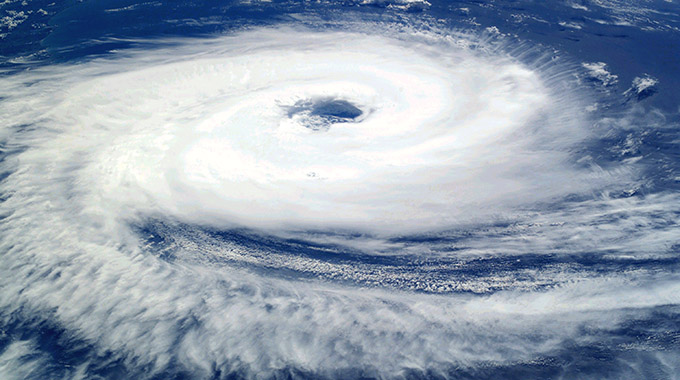
By 5pm yesterday, yet another Zimbabwe-named cyclone was tearing through the Indian Ocean, trekking westward with wind speeds peaking at 204km per hour towards Madagascar, with a risk it could reach the mainland as did the foregoing three.
The Meteorological Services Department (MSD), together with its regional peers, is tracking it, as we reported yesterday.
MSD spokesperson Mr James Ngoma said:
“We are currently monitoring the fifth system of the season, named Dudzai. Our technical teams are working around the clock with regional counterparts to model its behaviour and provide accurate, timely updates to the nation.”
He added:
“Based on current projections, it is expected that Dudzai will not reach Madagascar, let alone the mainland of Africa, and is therefore not anticipated to affect Zimbabwe.”
We are encouraged by the prognosis, but recognise that humanity has no capacity to create or stop weather events like these.
For this reason, we encourage our experts and people to maintain vigilance.
We are sure that the weather people will continue monitoring the cyclone and breaking down its behaviour and likely trajectory for everyone.
With the tools many of us have — the internet, television and all — citizens can take it upon themselves to gather as much information about this phenomenon as possible and act accordingly if Cyclone Dudzai “clearly expresses” itself, as its name indicates, on the mainland and deeper into our country.
But as we noted earlier, we are in the cyclone season, thus Cyclone Dudzai might not be the last to occur. Therefore, the message remains — weathermen must continue monitoring any events that might arise up to the end of this wet season around March and advise the public accordingly.
The people must update themselves on weather conditions using available tools so that they are not taken by surprise if an event occurs.