Online Reporter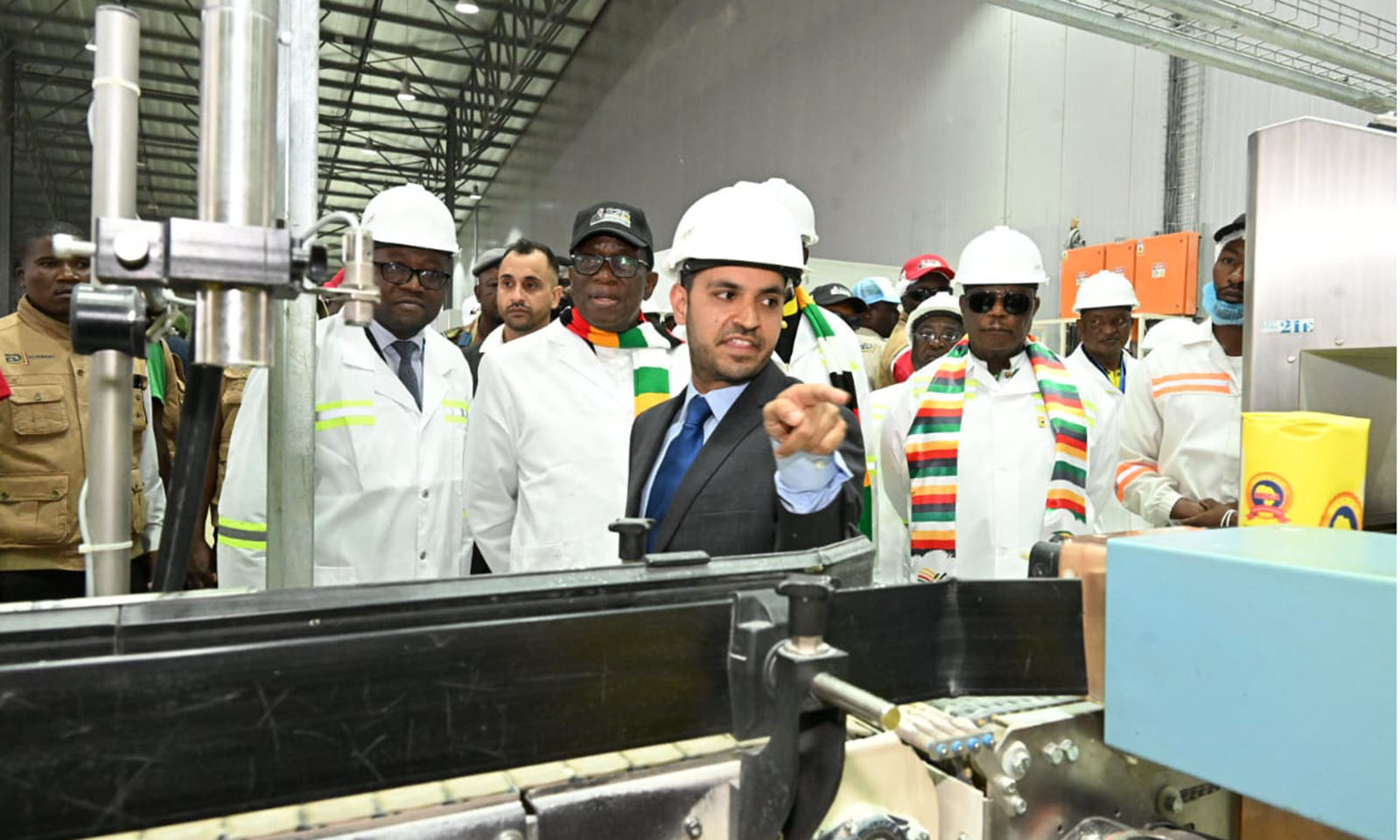
Economic growth has been a cornerstone of the Second Republic’s agenda, with a 6 percent-plus annual increase in gross national product now considered normal and even positive growth of 2 percent in the year suffering the worst drought for decades.
But while all economic growth is welcome, we get a large multiplying effect when this growth involves adding value to local raw materials or when we upgrade the complexity and sophistication of infrastructure and social investments as well as pure commercial investment.
So, while in Mutare for the 22nd Zanu-PF National People’s Conference, where the need and parameters for national social and economic growth were laid out, President Mnangagwa commissioned major investments in both areas: the US$23 million new flour mill for growing agro-industrial giant Mega Market and a US$6,96 million state-of-the-art warehouse for NatPharm.
The NatPharm warehouse not only upgrades the health infrastructure of Manicaland by ensuring that adequate medicines, vaccines, and medical consumables are readily available, but a substantial solar array of 320 kW ensures that the cold chains and other requirements can be met independent of the grid.
At the beginning of the Second Republic, there were a lot of problems with the health infrastructure and some reluctance by development partners to become involved, considering what were seen as administrative and accounting weaknesses.
One major advance by the Second Republic has not just been getting a lot of the required essential infrastructure into place, but also fixing the administration and ensuring that the accounts can pass stiff audits without any problems.
This has impressed development partners who have been prepared to step into public health, knowing that their support not only makes a difference, but also includes zero waste.
The new Mutare warehouse was built by the Ministry of Health and Child Care, showing Zimbabwe is accepting its responsibilities, but the United Nations Development Programme and the Global Fund both chipped in, showing that when you are responsible, are doing a proper job, and have decent accounts, you can accelerate progress.
As the President noted, a proper public health system is a precondition and a base for the sort of development we need to become an upper-middle-income economy and country.
A more developed country not only has more income and more assets but also has better social development, with social assets, such as health assets, being as important as factories.
Mega Market is one of the newest agro-industrial industries in Zimbabwe and has spent a large part of its commercial life as a private sector company in the Second Republic.
Starting off as a distribution company, it has been building up its local content and production side and transforming into an increasingly industrial company, converting local raw materials into products and adding value.
Its latest major investment is the US$23 million flour mill that the President was pleased to commission, bringing a major factory to Mutare.
The flour mill makes extreme economic sense when we consider that Zimbabwe now grows all the soft bread wheats it can eat, with surpluses for export.
It has always been assumed that one reason why Mega Market wanted to set up in Mutare was to be closer to imported supplier lines, and as it builds up its productive and manufacturing positions, that also means it is well-placed for exports.
A gateway works in both directions.
Agro-industries were the original industrial base of colonial Zimbabwe, which is why the first brewery is celebrating its 130-year anniversary.
But while import substitution remained the main direction for so long, it is becoming more and more obvious that with farmers producing surpluses, the processing industrialists have the opportunities to add significant value to the exports.
The build-up of crop reserves, so that Zimbabwe and its industrialists do not have to shut down in a bad year, also means we can become a regular and assured supplier.
The growth in local processing of local raw materials also provides the essential competition that so much of our business world requires.
The days when consumers sought price controls and businesses sought protection are over.
What we need now are efficient farmers producing quality crops that efficient industrialists convert into quality products desired by Zimbabwean households and foreign markets.
When all the bits are in place, and we are getting there, we will have an expanding and sustainable economy, creating wealth and jobs and building a modern industrial country.