admin
admin
President Mnangagwa put it all into perspective. The place was bare ground only five years ago. Now it is a buzzing edifice of cement, steel, coal, fire, smoke and life.
“On behalf of the Second Republic and indeed on behalf of the people of Zimbabwe, I want to say, today we are witnessing the commissioning of Unit 7 and 8 here in Hwange because of our good relations with China,” he said on Thursday.
“The journey began in April 2018 when I visited China and I had a meeting with the President of China, my brother Xi Jinping. In that discussion, I had a list of over 10 projects, which I was shopping for his assistance and he chose to make a political decision to support us. Energy is a critical enabler for our industrialisation and modernisation. So today, I’m wondering because when I came here in 2018 for groundbreaking, this was just plain and now I can’t remember where I was standing.”
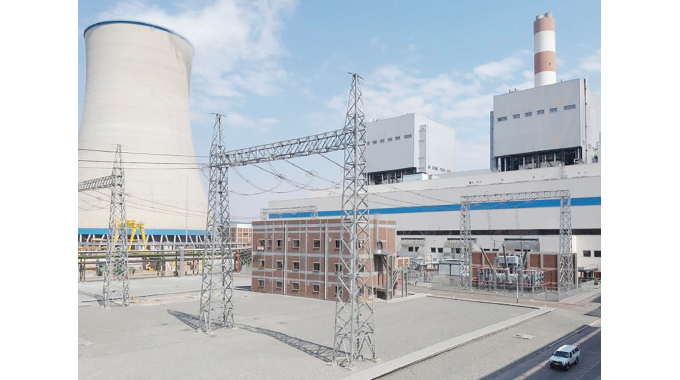
About US$1,5 billion has been invested over the past five years on that formerly bare ground and now the country has 600MW more electricity which has helped Zesa to meet national demand.
The addition of 600MW on 920MW that the Hwange Thermal Power Plant used to generate five years ago is indeed, a highlight of the transformation of the country’s energy sector. A country that had gotten used to up to 18 hours of load shedding daily to one that has enough to meet demand.
We commend the Government for that signature project. It will complement the other older units at Hwange Power Station and the hydro plant in Kariba to ensure greater national energy security and economic growth.
Industries that were being forced to close during times of load shedding, households that were resorting to using firewood to cook and warm themselves, traffic lights that went off, snarling traffic and hospitals that had to defer lifesaving procedures now have the confidence to operate smoothly.
But the investment that was put into units seven and eight — US$1,5 billion in five years — tells us the enormity of the work the country still has to do to grow its energy production to meet the demand of an upper middle-income economy in the next seven years.
So, while we celebrate the coming on stream of 600MW of power, we must actually have started building one or two more power generation, transmission and distribution facilities.
The Government forecasts that the country must be producing about 11 000MW by 2030. At this time, the maximum that local facilities can produce is around 2 850MW. The gap between the maximum that the country can produce, versus the projected demand by 2030 is huge and demands authorities and independent producers to, yes, celebrate the switching on of Hwange Unit 7 and 8 on Thursday, but not get carried away.
The planned floating solar farm on Lake Kariba must be expedited so it adds the planned 1 000MW to the grid.
We expect many more projects of that scale and bigger over the next seven years so that the power shortages of the past five years do not recur by 2030.


 Online Reporter