


 peter
peter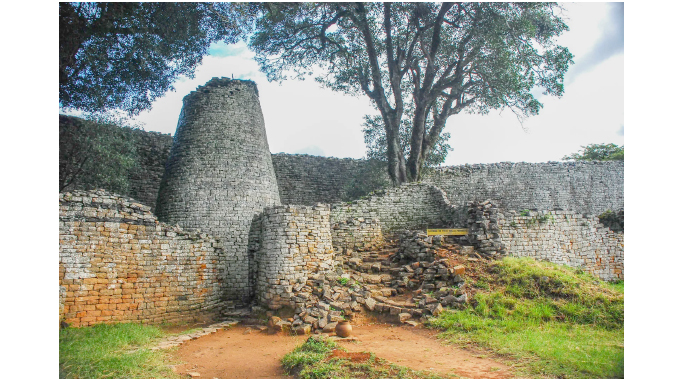
Question 1: Great Zimbabwe was built by the Shona for defensive purposes. Discuss.
Answer guideline: It was built for defensive purposes; it was a symbol of power and emblem of prestige, honour and privacy; it was built as a religious centre; it was an expression of fertility and success; it was a trade centre. NB: Use archaeological evidence to support their arguments
Question 2: What caused Great Zimbabwe’s decline as a centre of political power and wealth during the 15th century?
Answer guideline: There are a number of possible factors that could safely account its demise. They include; Environmental catastrophes like drought and aridity. This really affected their economy based on farming – crop cultivation and livestock keeping.
Civil wars – It should be stressed that neither written records nor archaeology has been of much help in understanding the demise of Great Zimbabwe, but what is clear is that from 15th century there was productive reduction following the emergence of new centres elsewhere on the Zimbabwe plateau in the north.
Perhaps the rise of polities elsewhere challenged the authority of Great Zimbabwe, like Ingombe Illede, Torwa and Mutapa. Civil war is a practical possibility but remains poorly documented or completely unremembered in oral traditions. It must be noted that there is divergence of explanations regarding its decline both as a town and centre of a powerful state.
Change in the environmental conditions; environmental degradation, siltation, exhaustions of resources like salt, firewood and pastures.
Its fall is closely linked to the change in the environment which occurred sometime in the 15th century.
Thus, ecological upheaval caused considerable stress to the people at Great Zimbabwe and its immediate periphery. However, this explanation remains largely inconclusive because neither archaeological nor historical records are of much in telling us what led to the fall of the state. Oral tradition refer to fall of Great Zimbabwe to critical shortage of salt.
This salt should be seen as an environmental factor rather than taking it literally. Oral traditions have overemphasise to severe shortage of salt but it alone could not have led to the fall of Great Zimbabwe.
Salt must be seen as an important item in the ways of life of people as well as trading.
It has been suggested that salt shortage mentioned by oral tradition may indicate shortage of good pastures and food supply.
Thus, the general shortage of salt may have disrupted people’s way of life and trade. This explains why Mutota decided to move away due north in search of salt in the Dande valley.
It must be noted that the general reduction of natural resources must have been a gradual process which reached dangerous levels.

It is important to highlight the importance of trade and environmental factors towards the downfall of the state.
Loss of control of external trade/change of traded routes. If the status of the town of Great Zimbabwe resulted from surplus wealth from trade, one can argue that Great Zimbabwe had lost the ability to control trade to the north e.g. the gold and ivory trade to the Sofala coast had shifted north from Sub-Lundi valley towards the Zambezi valley in the north, just as it had previously shifted from Shashe-Limpopo valley to the Save valley marking the downfall of Mapungumbwe State. This could have caused some people to move due north.
Internal revolts/succession disputes: One may speculate that competition within the ruling families may have caused dispersion of people from Great Zimbabwe, Mutota and other small groups of people. He was an ambitious ruler who wanted to form his own state.
Succession disputes forced Mutota to move north with his followers where he built a new state just similar to Great Zimbabwe in terms of stone works at Chitakochangonya hill.
Political size of the state: Great Zimbabwe became too vast – that it was unable to supply the basic necessities of life to the people, e.g. food, wood, good pastures – overpopulation thus causing environmental degradation.
Challenges of new states e.g. Mutapa, Torwa or rise of new states: As fewer and fewer goods moved through their hands (Gumanye culture people), they were no longer able to channel benefits to their clients where possible, their followers sought benefits elsewhere, e.g. Mutapa.
Thus, the rise of Mutapa and Torwa states diverted and disrupted the long standing markets of the people of Great Zimbabwe, e.g. by 15th century Great Zimbabwe ceased to have commercial significance as this was verified by the early Portuguese sources which were silent about the state in the early 16th century.
More study questions: Account for the fall of Great Zimbabwe by the mid-15th century. To what extent can the decline of Great Zimbabwe civilisation be attributed to ecological factors.
Guideline: Ecological factors like siltation, exhaustions of resources – salt, woodlands, cultivatable land, grazing pastures. Other factors; Political and Social factors like rise of rival states, change of trade routes and failure of kings to maintain peace leading to succession disputes.
n Manners Msongelwa is the president of History Teachers of Zimbabwe and Association of History Teacher’s and Lecturers in Africa. Follow All his lessons on YouTube channel Manners Msongelwa



 Bongani Ndlovu
 Online Reporter