


 peter
peter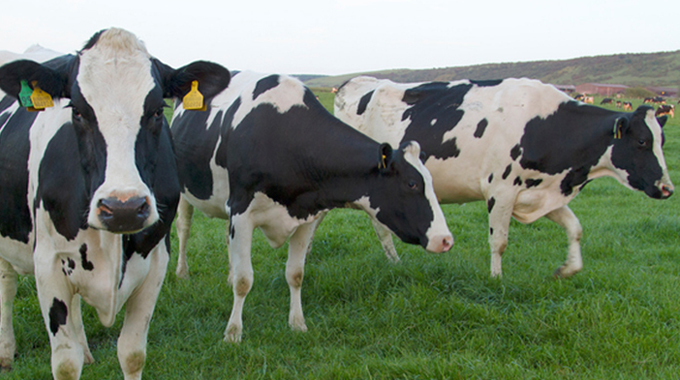
Judith Phiri, Business Reporter
THE Department of Livestock Research has partnered with the Zimbabwe Association of Dairy Farmers (ZADF) on a heifer multiplication programme whose objective is to ensure local farmers produce adaptable dairy cross-breeds to improve national milk production.
The programme will be carried out at the Matopos Research Institute Agricultural Centre of Excellence (MACE). The project is utilising genetics of indigenous dam lines and exotic sires and to avail cross-bred heifers to farmers on a cost recovery basis as part of efforts to close the milk deficit gap in the country.
In an interview, MACE Cattle Production Section research officer Mr Bruce Tavirimirwa said 300 indigenous cows would be inseminated, with the programme having kicked off.
“ZADF procured and supplied the institution with consumables to inseminate 300 indigenous cows for the programme. Sexed semen is yet to be delivered to commence activities. The strategy adopted is in sync with the Livestock Growth Plan which seeks to increase national herd, tackle human nutrition challenges, increase market profitability, diversify investments of income from livestock and improve animal health,” said Mr Tavirimirwa.

He said they were working with a veterinarian from the Department of Veterinary Services (DVS) in Matobo district on the programme to ensure that they produce dairy cross-breeds for local farmers so that they can improve milk production.
Mr Tavirimirwa said the other benefits of the programme was utilising climate resilient animals that could maintain optimal milk yields on a low plane of nutrition. “The programme has started with the insemination of 300 animals to produce filial generation one cross-bred indigenous dairy heifers.
The inseminations are being conducted on animals at Matopos Research Institute which compromise of breeds such as Tuli, Afrikanders and some indigenous crossbred cows. Jersey, Red Dane and Holstein semen is being used to inseminate the cows,” he added.
He said calving of progeny (heirs) was expected in November to December, while the progeny would be kept at the institute for two and half years then distributed to ZADF beneficiary farmers as in-calf heifers.
Mr Tavirimirwa said ZADF committee would determine on the number of beneficiaries and also the selection criteria. Matobo District veterinarian Dr Mqhubi Nyathi said as DVS their role as technical personnel was to ensure proper reproductive health of the cattle, pregnancy diagnosis before the insemination process and ensuring delivery of healthy progeny or offspring.



 Bongani Ndlovu
 Online Reporter