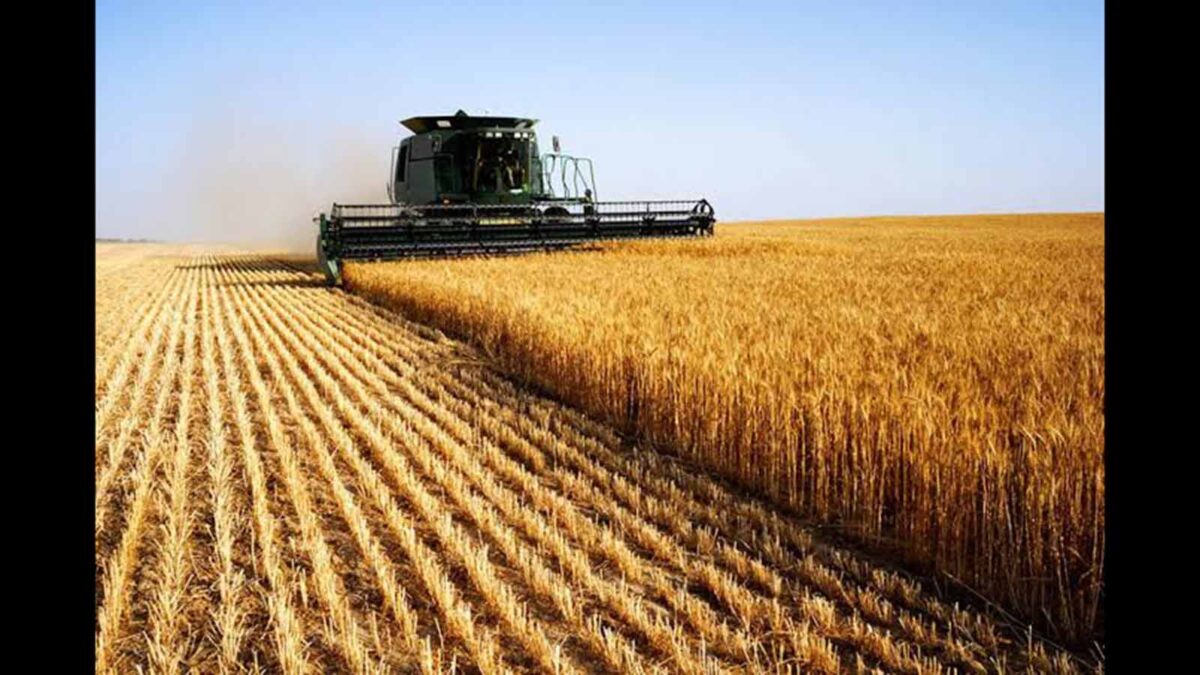
ONCE again, Zimbabwe, has broken wheat production records, with the harvest reaching 670 981 tonnes by last week, and with only trivial amounts now expected to meet the rapidly rising domestic demand as Zimbabweans widen their diet.
There will also be a modest surplus that can be used as part of the mix of grains the Government will probably need as it copes with the social implications of reduced rainfall under the predicted El Nino.
Because wheat is 100 percent irrigated, carryover stocks are not needed to balance out year to year harvest variations; the harvest can be accurately estimated well in advance.
Domestic wheat demand has been rising rapidly under the Second Republic, both because of the greater availability of wheat as the country reaches self-sufficiency for soft wheats and the rising incomes allowing for a more varied diet.
The local milling industry, a mainstay of the agro-industrial sector, has been coping with the growing demand and past shortages are a faint memory for Zimbabweans.
Farmers have made it clear that the rising harvest is not just more wheat being planted. The farmers have been increasing their productivity, harvesting more tonnes of wheat on the same hectares.
Part of their rising productivity has been the result of a continuous supply of electricity, so they can run their irrigation pumps when they wish, with stored water readily available.
Farmers have become very accurate in assessing water needs in advance and can thus plan accurately when approaching the authorities.
There was easy access to fertiliser, seed and other inputs, so they could plan their production and plant when they needed to.
Mechanisation programmes have also ensured that the right machinery is available at the right time and farmers can bring in the combine harvesters onto their farms roughly when they need them. When everything works properly a record crop is guaranteed.
Zimbabwe still imports hard wheats, needed to blend into bread flours, and durum wheat, used for pasta production. But already varieties of harder wheats have been found and are being grown, so imports of these varieties are falling at long last.
When Zimbabwe still imported most of its wheat there was little pressure to organise domestic production of all needed varieties. As we reached self-sufficiency in the soft wheats which make up the bulk of bread flours and all cake and household flours, efforts were stepped up to start filling the gaps.
Durum wheat, a separate species from bread and cake wheat, should soon be grown in Zimbabwe, a useful addition to our range of agricultural crops since pasta consumption is rising significantly as part of that growing variety of diet.
Durum wheat is grown in warm drier climates, so Zimbabwe fits in, but since its main production area has winter rainfall it will still need some irrigation to match the climate of its native range.
Among other grains the traditional grains are finally being given the priority they require and deserve, rather than just being seen as emergency food and the raw material for stock feeds.
Efforts have been made to reclaim traditional recipes forgotten in the near total switch to maize more than a century ago and to develop new ones.
Millers are starting to work out how to mass produce the variety of new flours now possible, joining the speciality food makers who pioneered a lot of the up-market products reliant on processed traditional grains.
The other major grain eaten in Zimbabwe, rice, is still almost all imported. Rice consumption has risen to around 300 000 tonnes a year, and just under one percent of that is grown locally.
However, other African countries now routinely grow large harvests, especially in West Africa, and Zimbabwe is seeking full membership of the African Rice Centre, allowing us to be included in the research efforts.
Already African and Japanese agricultural scientists have found several promising hybrids of the African and Asian rise species, giving the high yields of the Asian species, but retaining the African adaptations to our continental climate.
Diversifying our food crops and ensuring we grow a variety of the grains we all eat at some stage means we are less vulnerable to climate change since each grain demands different conditions.
Already the huge success of the national wheat crop, and of still maintaining a surplus while domestic demand rises so fast, shows that the same sort of national effort can fill the last remaining gaps in what we grow.
Our farmers are innovative and adaptable, and Government policies ensure that the inputs, including equipment, power and water as well as the seed and fertiliser, are available.