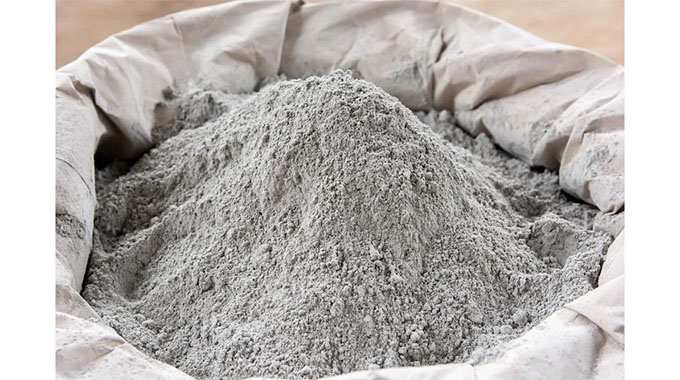
THE dramatic national development under the Second Republic is very well illustrated by the jump in cement use from 1 million tonnes in 2018 to 2,5 million tonnes this year, meaning that public and private construction of dams, bridges, interchanges, factories, commercial premises, houses and flats has risen two and half times.
However you look at it, 2,5 million tonnes of cement comes to a lot of concrete, mortar and plastering as Zimbabweans literally build a better future and modernise their country.
Supply still remains a problem, though, until more of the existing cement making plant is upgraded, new cement factories come on stream and there is more production of some of the raw materials.
The most critical material is clinker, that intermediate material made by heating in a kiln, often with coke which is another local raw material, crushed limestone with carefully measured quantities of clay, or sand, or fly ash or slag, or a combination of these simple materials.
All are available in profusion in Zimbabwe, but it still needs major investment to turn them into clinker that in turn is converted into cement in the second half of the manufacturing process that involves grinding to precise particle sizes.
Although the three existing cement makers in Zimbabwe can in theory produce 3,6 million tonnes of Portland cement a year, they are managing just 1,6 million tonnes a year at the moment, and even then have to import around 500 000 tonnes of clinker to add to their own production to reach the 1,6 million tonnes of cement after the clinker is finely ground with around 5 percent gypsum.
Major investment is in progress. A fourth manufacturer, Dinson Iron and Steel at Manhize, joins PPC Zimbabwe, Sino Zimbabwe and Khaya in commercial cement production next week after successful tests at the new plant.
Livetouch in Mberengwa comes on stream with a clinker plant producing 200 000 tonnes a year next month, helping to fill that gap for its cement factory in Kwekwe.
Disco is using the slag from its steel mill as a raw material for the clinker it needs to make cement, neatly converting waste that would otherwise pile up in unsightly mounds into a new source of revenue. As it already trucks in limestone for the steel mill, adding extra for the cement plant is a simple add-on.
Other investments in progress should see cement production rise to 5,6 million tonnes by the end of next year.
That should be enough to ensure local self-sufficiency with perhaps a bit for export, although a respectable part of the increased production will be needed for rising local demand.
Zimbabwe will be pushing up its demand quite fast. A glance at the capital spending programme in the National Budget presented last week sees accelerated progress on roads and water infrastructure in the State sector, plus the extra public-sector construction for schools, hospitals, universities and some of the extra housing required.
Demand for cement is also on the rise in the private sector both at corporate level, with its new industrial and commercial construction plus properly regulated major housing development, and at the individual level where ordinary Zimbabweans are prepared to build their own decent homes and extend what they already own.
There is also demand even with the average farming family adding a room or two a year to the homestead. That is a lot of cement when we have 3 million farming families.
The Government is aware of two problems as we continue all our building and physical development. The first is actual supply.
Licences are granted for imports for both cement and clinker, and with our present foreign currency position, the importers can pay for these without difficulty.
Last year, based on installed capacity at cement works, a duty surcharge was imposed on imports to encourage local production.
This has not really worked as actual production was way down on installed capacity, so the Government is now working on lifting that surcharge, at least for the time being until Zimbabwean clinker and cement makers are producing a surplus.
The Ministry of Industry and Commerce is aware that cement makers tend to close down near the end of the year for annual maintenance, and has stepped in to get them to organise a staggered shut down so local supplies continue to flow.
The Ministry is also working with Zimra to make sure imports can be cleared quickly at border posts.
This should be possible as cement can be easily identified, pocket weights checked and as a product is not really open to smuggling.
The second problem is the pricing, and retailers and others in the business working on scarcity pricing, adding a bit of extra profiteering to normal mark-ups.
The small and medium cement sellers are particularly prone to this, partly because they deal with middlemen and partly because they have when others do not.
Their prices are likely to be slightly higher in normal times, as they keep stocks and deal in small quantities, but that small-shop premium should be low.
The Ministry of Industry and Commerce will be fulfilling its role by keeping a check on the entire supply chain from cement factory to builder, and making sure that while the efficient can make an honest profit, it will clamp down on speculation and gouging.
As production ramps up, market forces will be able more and more to keeping pricing within limits, with just non-competitive practices blocked.
Zimbabwean cement makers, like most industrialists, will make more money as demand continues to grow in the country’s race towards decent levels of prosperity.