Online Reporter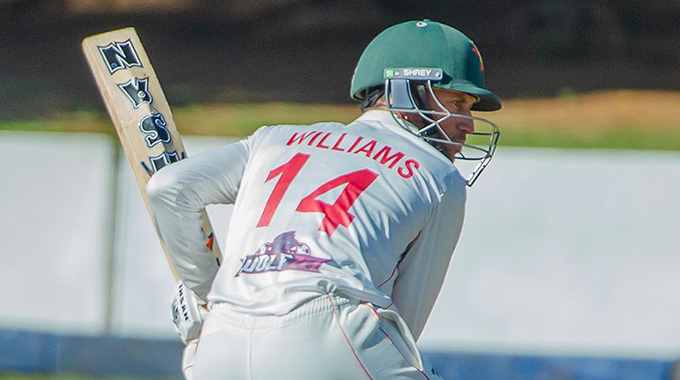
SEAN Williams is not just a name on a team sheet. He is a symbol of resilience, a veteran of Zimbabwean cricket, and one of the few players who has consistently carried the national side through its most turbulent years.
His recent admission of drug addiction and subsequent entry into rehabilitation is not a scandal to be exploited — it is a deeply human moment that calls for empathy, understanding, and national solidarity.
Zimbabwe Cricket (ZC) has confirmed that Williams will not be considered for selection and that his central contract will not be renewed beyond 2025.
This follows an internal investigation which revealed that the 39-year-old had been struggling with drug addiction and had voluntarily entered a rehabilitation programme. While ZC’s decision to prioritise professionalism is understandable, the broader national response must be one of compassion, not condemnation.
Addiction is not a character flaw. It is a disease — complex, insidious, and often invisible until it reaches a breaking point. It does not discriminate between the ordinary and the extraordinary, and it certainly does not spare athletes, no matter how disciplined or successful they may appear. If we, as a nation, could find it within ourselves to support Brendan Taylor after his well-documented struggles with substance abuse, then we must extend the same grace to Sean Williams.
Taylor’s story is one of redemption. After being banned for a drug-related offence, he returned to the game with dignity and purpose.
His journey back was not easy, but it was made possible by a community that chose to believe in rehabilitation over rejection. Why should Williams be denied the same opportunity? His service to Zimbabwean cricket spans nearly two decades.
He has scored over 8 000 international runs, captained the side with distinction, and remained loyal through periods of administrative chaos and sporting decline. His recent struggles do not erase that legacy — they add depth to it.
Across the sporting world, there are countless examples of athletes who have battled addiction and returned stronger. Tennis legend Andre Agassi admitted to using crystal meth during his career, yet went on to become one of the sport’s most respected figures.
England’s Ben Stokes took time away from cricket to address his mental health, only to return and lead his country to World Cup glory. Footballer Paul Merson overcame alcoholism and gambling addiction to become a leading voice on mental health in sport. These stories remind us that recovery is not only possible — it is powerful.
Williams still has much to offer. His experience, leadership, and cricketing intelligence are invaluable, especially as Zimbabwe prepares to co-host the 2027 ICC Men’s Cricket World Cup. In a team that continues to struggle with consistency and depth, his presence — whether as a player, mentor, or coach — could be transformative.
Zimbabwe needs Williams as much as Williams needs Zimbabwe. To cast him aside now would be to waste a resource we can ill afford to lose.
Moreover, his journey through rehabilitation could serve as an inspiration for others. It could help destigmatise addiction in sport and society, encouraging more athletes to seek help without fear of judgement. Williams has the potential to become not just a comeback story, but a symbol of hope for those battling similar demons.
Let us not forget that sport is about more than statistics and trophies. It is about humanity, perseverance, and the belief that people can rise after they fall. Williams has fallen, yes — but he has also taken the brave step of seeking help. That alone deserves our respect.
It is easy to cheer for a player when they are scoring centuries or taking wickets. The true test of our character as a sporting nation is whether we can stand by them when they are at their lowest. Sean Williams deserves our support, not our scorn. He deserves a chance to heal, to return, and to contribute once more to the game he has given so much to.
If we truly believe in the spirit of sport, then we must also believe in redemption. Let us not allow stigma to silence a story that could inspire. Let us not allow a moment of personal crisis to define a man who has defined Zimbabwean cricket for so long. Let us, instead, be the nation that lifts him up — because in doing so, we lift ourselves.