Online Reporter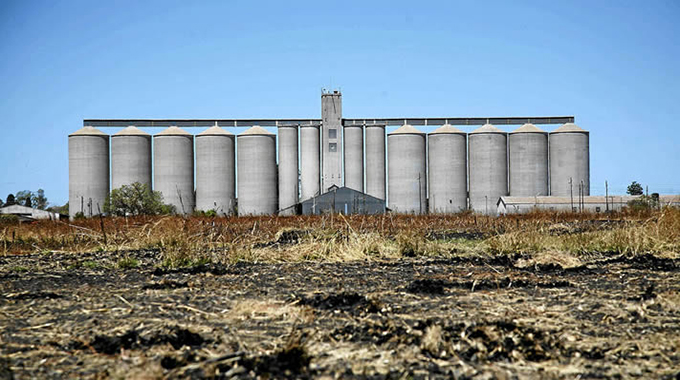
THE Food and Agriculture Organisation estimates that our country incurs post-harvest losses of up to 40 percent.
Because of poor storage systems, we lose between 20 and 30 percent of whatever we harvest, with the losses rising to 40 percent when including field, transportation and processing inefficiencies.
A combination of pests and diseases, poor crop handling and processing, high temperatures and humidity, and poor storage and transportation systems contribute to the economic losses and food insecurity.
The facts demonstrate that the losses that we incur are immense, but we are on the road to substantially reducing them.
The Grain Marketing Board (GMB) is building intelligent silos at 14 sites countrywide, which will store up to 750 000 tonnes of grain.
On Wednesday, President Mnangagwa commissioned one such facility in Mutare. The complex, which is powered by artificial intelligence (AI), has the capacity to hold 56 000 tonnes of cereals.
“The impact of the Fourth Industrial Revolution towards reshaping industries, economic sectors, and society as a whole cannot be overemphasised,” he said.
“It is, therefore, pleasing that as we navigate this unavoidable new normal, our ministries, departments, and agencies are harnessing the power of emerging technologies for the benefit of both current and future generations. To this end, these modern silos are equipped with digital monitoring systems, automated grain handling technologies, and advanced quality control laboratories.
“Such contemporary systems enhance grain storage efficiency, reduce post-harvest losses, and ensure national food safety through improved risk monitoring and globally acclaimed management standards. It is further commendable that the new features, such as built-in dryers, dust and irrelevant material extraction, as well as improved ventilation, make these modern facilities suitable for longer-term storage of grain.”
The granaries are clearly modern, bringing multiple, formerly standalone facets together, thus should make grain handling and storage at the 14 hubs more efficient. They will help in reducing the economic losses related to grain handling and storage while promoting national food security.
The Government, through the GMB, has set an example, which farmers as well as food processors must replicate at their properties so that the benefits accruing from the AI-powered infrastructure trickle down, right to where the food chain begins.
Yes, noting the features that the GMB silos have, setting them up at the farm level will come at a considerable cost.
However, the positives associated with the infrastructure far outweigh the costs. The investment boosts food security at the local level. Farmers would be able to store their grain for much longer periods, which would enable them to offload the produce onto the market at strategic moments of greater monetary gain for them. By building modern silos, farmers would be modernising their properties and adding value to them.