Chronicle Editor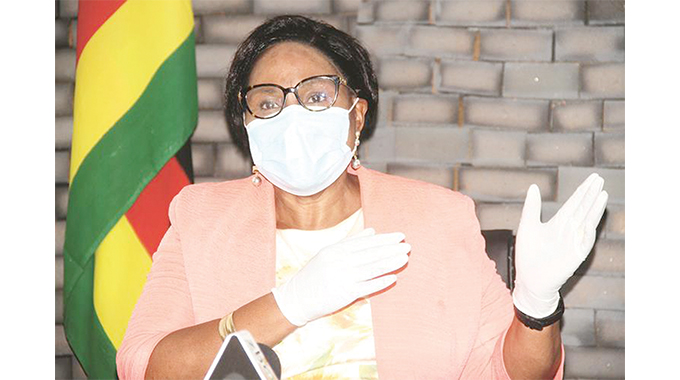
A 63 percent success rate in implementation of Government projects over two years is impressive if one considers the conditions under which the achievement was scored.
The economy is under illegal Western sanctions. As a result of the measures, development finance and foreign investment that ordinarily propel national projects in many countries are almost at zero in our country. Also, as a result of the sanctions, the economy isn’t performing too well.
However, when it came into office in 2017, the Second Republic set out to execute 1 388 projects, basically all of them being implemented using internally-generated resources with good support coming from China as well. By the end of last year, 868 of them had been completed with 520 ongoing. This translates into a 63 percent success rate, a commendable feat for a sanctioned economy.
As we report elsewhere on these pages today, Information, Publicity and Broadcasting Services Minister Monica Mutsvangwa told a post-Cabinet media briefing on Tuesday that the projects include construction of roads, dams, extension of hospitals, education and information access facilities. She stressed that Government is committed to finishing the projects to improve people’s livelihoods.
“Cabinet wishes to inform the public that as part of its efforts to fulfil its commitment to transparency and accountability, Government produced a compendium of all completed and ongoing infrastructural and other projects by province.
Out of a total 1 388 projects which were implemented countrywide by the Second Zimbabwe Republic during the period 2018 to 2020, 829 were infrastructural projects, while 559 were non-infrastructural projects. Of the projects implemented, 868 were completed, while 520 were ongoing,” said Minister Mutsvangwa.
“Of the 868 completed projects, 672 are infrastructural, and 196 are other projects, giving credence to the thrust of Government to emphasise on building infrastructure in order to create an enabling environment for socio-economic development.”
Notable projects include building of innovation hubs at the National University of Science and Technology and Midlands State University to encourage students and their lecturers to incubate ideas for possible commercialisation.
The Government has also widened parts of the Beitbridge-Masvingo-Harare-Chirundu Highway, expanded the Kariba Power Station and the Hwange Thermal Station which have helped increase power added to the national grid.
President Mnangagwa’s Government deserves a pat on the back for being so resourceful when just sitting back and crying sanctions, sanctions, sanctions could have been understandable.
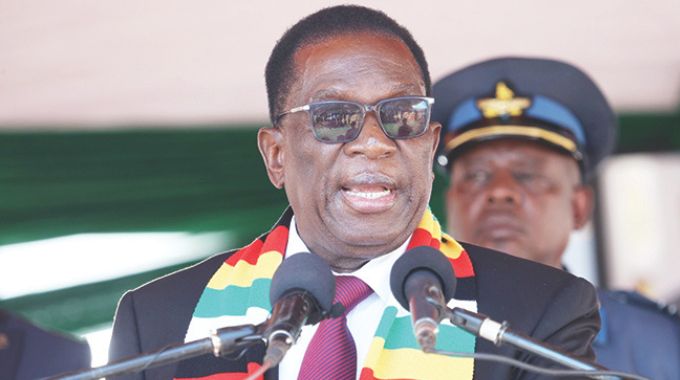
The President recently marveled at the success of the widening of the Beitbridge-Masvingo-Harare-Chirundu highway. He insisted that the success of the project that is being implemented by local companies, encouraged the Government to, in future, prioritise awarding tenders, previously a preserve of foreign investors, to local investors.
That must be the mentality of every Zimbabwean – to work very hard with what they have despite the challenges caused by the illegal Western sanctions. The national modernisation agenda would be much sweeter if it is realised on the basis of local skills and material resources. That achievement would indeed be Zimbabwean, indigenous as opposed to that which happens thanks to foreign skills and finance.
We look forward to the speedy completion of the 520 projects that are ongoing.
There are many more major projects on the way. Just last week, the President launched the second phase of the National Matabeleland-Zambezi Water Project (NMZWP).
That phase would entail the building of a 260km pipeline to move water from Gwayi-Shangani Dam to Bulawayo.
There would be the third phase under which a 120km pipeline from the Zambezi River to the dam would be built.
In addition, a master plan is being drawn for greater utilisation of the Tugwi-Mukosi Dam. Drafting of the plan would pave way for massive work and investments around the dam.
We want the second and third phases of the NMZWP as well as the projects around Tugwi-Mukosi Dam and many others elsewhere around the country to be executed using local resources just as the 1 388 that the Government has been working on since 2018.
Yes, support should be welcome from China, Russia and other friendly nations but if the illegal Western sanctions are maintained and resources from there withheld, we have all the optimism that infrastructural development and national modernisation efforts would continue and succeed.


 Online Reporter