Online Reporter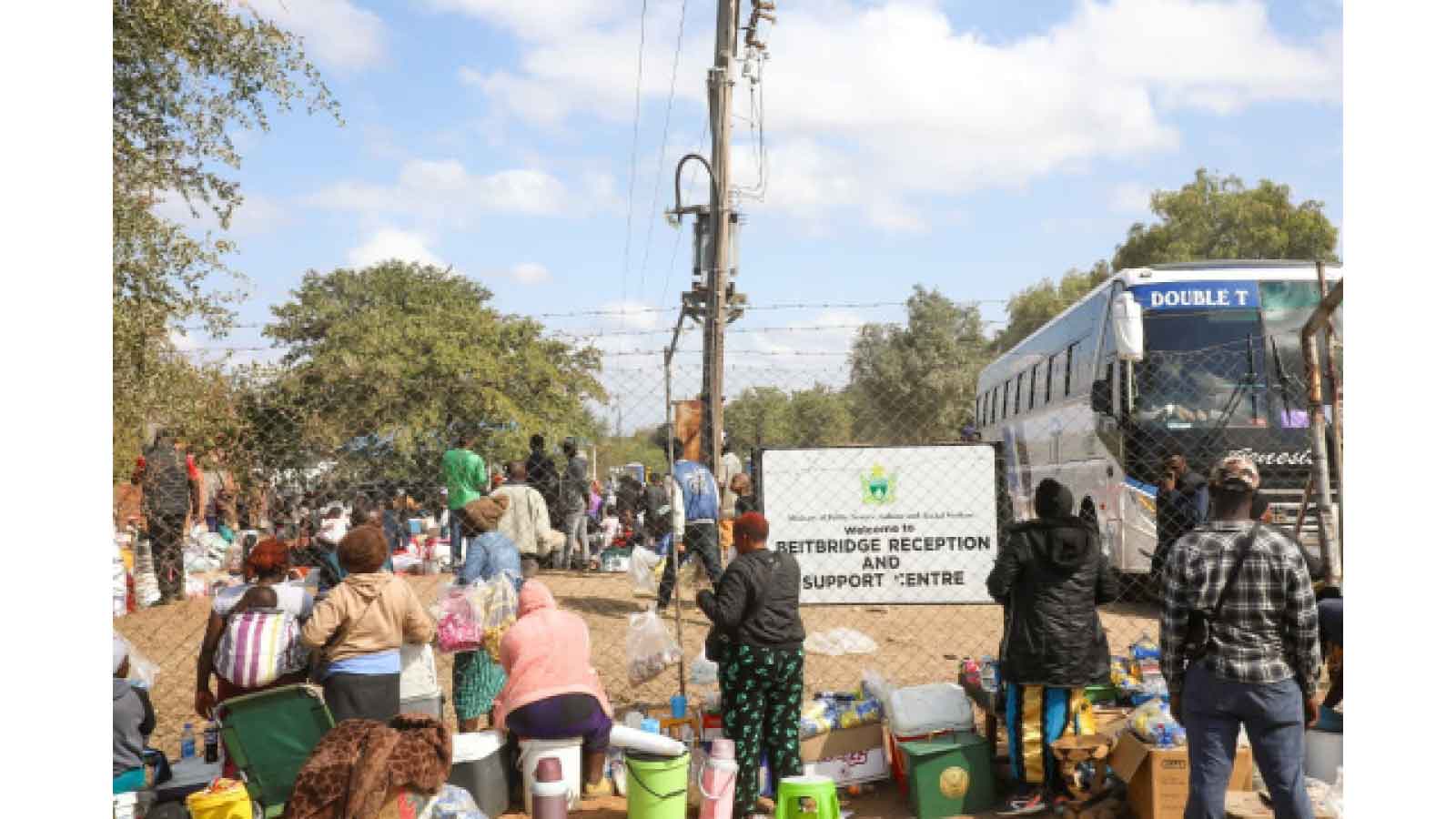
THE recent influx of Zimbabweans returning from South Africa has laid bare a reality that policymakers can no longer afford to overlook. The Beitbridge Reception and Support Centre, designed to handle about 1 000 people a day, has been processing up to 3 000 daily. That statistic alone should settle the debate about whether the facility requires upgrading. It does.
For more than two decades, the centre has quietly performed a critical national duty. It has received deportees, assisted vulnerable returnees, responded to humanitarian emergencies and provided a bridge between crisis and reintegration. Yet despite its importance, it remains a facility built for a different era and a different scale of migration.
The latest wave of returns from South Africa did not arise without warning. Episodes of anti-immigrant sentiment, deportations and economic displacement have become recurring features across the region. The question is no longer whether Zimbabwe will face another influx of returnees. The question is whether the country will be prepared when it happens.
Credit must be given where it is due. Government departments, local authorities and humanitarian organisations appear to have mounted a commendable response under extremely difficult circumstances. Health workers, immigration officials, social welfare officers, civil protection teams and development partners have worked around the clock to ensure that thousands of people were not left stranded.
But good planning and committed personnel can only compensate for inadequate infrastructure for so long.
When a facility built for 1 000 people is forced to accommodate three times that number, pressure inevitably begins to show. Accommodation becomes stretched. Health services become strained.
Water and sanitation systems are tested. Staff are pushed beyond normal limits. No country should wait for systems to reach breaking point before taking action.
What is happening at Beitbridge should be viewed as a national lesson in preparedness. The centre sits at Zimbabwe’s busiest border post and serves as the country’s humanitarian frontline. It is often the first place returning citizens encounter after days, weeks or even months of uncertainty, hardship and displacement. The conditions they find there matter.
A nation is judged not only by how it treats its citizens in times of prosperity, but by how it responds when they are vulnerable.
The experiences of recent weeks also highlight another reality. Migration is increasingly becoming a regional challenge requiring long-term solutions rather than temporary responses. Population movements caused by economic pressures, deportations, social tensions and other unforeseen crises are likely to continue. Zimbabwe therefore needs infrastructure that reflects this new reality.
The call for a permanent one-stop reception facility deserves urgent attention. Modern accommodation, expanded clinic services, improved water and sanitation infrastructure, adequate staffing and integrated Government services would not merely improve efficiency. They would protect human dignity and strengthen national resilience.
Importantly, investment in Beitbridge should not be viewed as a cost but as insurance against future crises. It is far cheaper to prepare for emergencies than to scramble for resources when they occur.
The country’s response to the latest influx has shown what is possible when Government institutions and humanitarian partners work together.
Yet it has also exposed the limitations of relying on a facility that has long outgrown its original purpose.
The message emerging from Beitbridge is impossible to ignore. Zimbabwe has a reception centre that has served the nation faithfully for years. What it now needs is a reception centre built for the realities of today and the challenges of tomorrow.