Online Reporter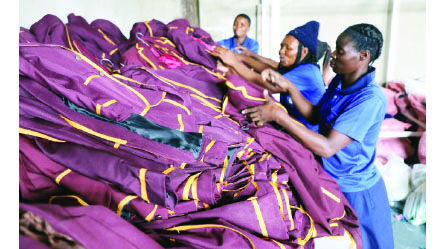
For years now, the opening of schools in Zimbabwe has been accompanied by the same weary argument: the fight over uniforms.
Each January and now each new term, parents brace themselves not just for fees and stationery, but for inflated, school-imposed prices that turn simple items of clothing into unaffordable luxuries.
What should be a straightforward requirement has become a long-running battle between families and some school authorities who insist on controlling where and how uniforms are bought, often at punishing cost.
This persistent conflict has bred mistrust and resentment, diverting attention from the real business of schools, that is teaching and nurturing children.
As the first term of 2026 begins on Tuesday, this issue once again sits at the centre of public frustration and must finally be addressed with the seriousness it deserves.
The Government has been clear and firm on one critical issue: parents must be free to buy school uniforms from any supplier of their choice.
This directive was issued to protect families from the uncompetitive and often exploitative pricing practices that have crept into some schools.
Where a blazer, a shirt or a pair of shoes, for example, is sold at double or triple the market price under the guise of “school requirements”, education becomes less about learning and more about exclusion.
Many parents, particularly in high-density suburbs and rural areas, simply cannot afford such costs and the result is either debt, humiliation or children missing school.
School authorities who insist on monopolising uniform sales are not only defying Government policy, but are also undermining the very principle of equal access to education.
Schools exist to educate children, not to run captive retail businesses, disguised as protection of the branding of their uniforms for identity purposes.
The same principle of fairness must apply to school fees and reports that some schools are increasing the fees without approval and rejecting the local currency are not progressive.
Any increase must be approved by the Ministry of Primary and Secondary Education, and schools have no legal or moral right to impose unilaterally decided hikes on parents.
In a country where many families depend on seasonal incomes, small-scale trading or informal jobs, sudden and unexplained fee increases are disruptive and deeply unjust.
Even more unacceptable is the practice of chasing pupils away from school for failure to pay fees. This not only humiliates children, but disrupts learning and deepens inequality.
Government policy is explicit: no child should be turned away from learning because of financial hardship. Schools must engage parents, offer payment plans where necessary and remember that their primary duty is to educate, not to punish.
Retailers, too, have a role to play in this sensitive period. The back-to-school season should not become an excuse for price gouging.
Stationery, textbooks, exercise books and school bags are not luxury items; they are essential tools for learning. Artificially hiking prices when demand rises is nothing short of exploiting parents and undermining the national goal of universal education.
Businesses that profit from education must understand that they are partners in national development, not opportunists feeding on desperation. Fair pricing and availability of goods help ensure that no child starts the term at a disadvantage.
As adults debate prices and policies, pupils themselves must remember that the first term is the foundation of the entire academic year.
It is the period when routines are set, topics introduced and expectations established. Those who start lazily often struggle to catch up later.
Seriousness, discipline and consistent study from day one make the difference between a rushed, stressful year and one that is steady and successful.
Learners should attend classes regularly, complete their work diligently, read widely and seek help early when they struggle.
For the Ministry of Primary and Secondary Education, this is also a moment that demands careful planning and firm oversight.
Beyond approving or rejecting fee structures, the Ministry must ensure that schools are adequately staffed, textbooks and learning materials are distributed on time, and infrastructure is ready to support effective teaching.
When schools follow policy, businesses act responsibly, Government enforces its directives and pupils commit themselves to learning, education becomes what it is meant to be: a pathway to opportunity, dignity and a better future for Zimbabwe.