Online Reporter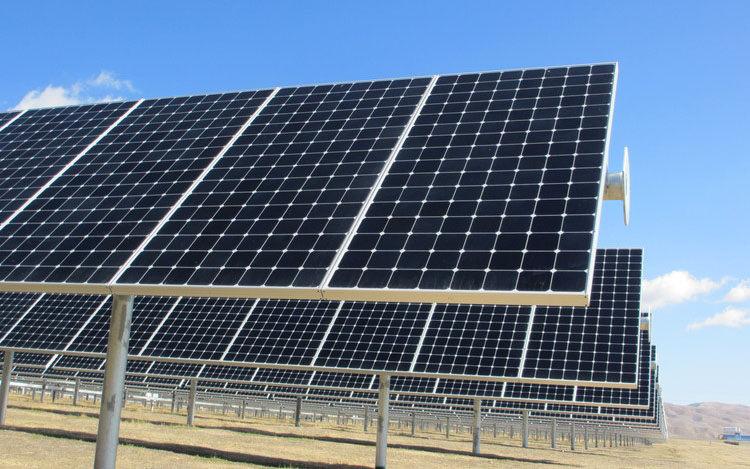
WHILE it has been a major policy drive by the Second Republic to have a secure electrical connection at all schools and clinics, progress has been sufficiently good that the provisional deadline of the end of this year can now be set.
The rise of modern and relatively inexpensive solar systems means that even those schools and clinics not yet connected to the national grid can now be wired up.
In any case, even in the most central of urban areas, having a solar back-up is a very good idea so that all the critical equipment and lights can continue running 24/7.
This has many important consequences. For a start, every clinic needs reliable electricity supply to offer something far more than just first aid and referral services.
Lights are an obvious requirement, but every clinic should also be offering vaccination services routinely, without having a special team coming in for a day with a cooler bag, and there are several modern medicines that need to be kept in a functioning fridge.
We would imagine that hot water supplies, and solar geysers are now an established technology of many years standing, can ensure clinics and patients are kept clean and washed far more easily.
Those maternity waiting areas, so critical in rural areas, where expectant mothers should be coming in a bit early instead of trying to find transport in the early hours of the morning as they go into labour, seem to demand lights, geysers and clean and easy cooking.
We have already hit 94 percent of all clinics that now have at least a basic electricity supply so getting to universal coverage should not be that difficult.
Extra efforts can then be made on upgrading supplies where this would be useful and generally improving the clinics so they can cope better.
We note, with approval, that the Ministry of Energy and Power Development is also thinking of the staff.
Some areas, generally the more remote rural clinics, can find it difficult to recruit health workers. Being able to promise adequate housing with a basic electricity supply would seem to be ending another rural-urban divide.
Modern education is ever-increasingly being made a lot more effective with modern technology, especially communications technology and internet connections.
During the Covid-19 crisis, it was noted that the rural-urban divide, and for that matter the gap between private and Government schools, was placing a lot of children at a disadvantage.
Teachers and pupils need access to the internet and materials that might only be in digital form. Even a decent school library can now be a digital collection of stored works, provided at far lower cost than printed copies of every background book needed to supplement basic text books.
And here even most urban schools need a digital library and internet connections.
Already 82 percent of all public system secondary schools are electrified, and 72 percent of the primary schools.
But with generally several primary schools feeding each secondary school, the remaining task to wire up all primary schools is the largest of the programmes to bring power to all schools and clinics. But progress has been so good that this cannot be long delayed.
Zesa has had a rural electrification programme since soon after independence and has been using that small levy we all have to pay when we buy electricity to cover the huge capital costs of extending the grid, often to scattered collections of consumers, even when business centres and major boarding schools are included.
Solar is fine for many purposes, including lights, refrigeration, communications, internet access and the like, and with solar water heating can slash the need for external energy sources.
But grid power is still needed for other heavy current items, such as cookers and stoves although practical types are already using liquefied petroleum gas and some have advanced into bio-digesters to get a decent methane supply, so bidding farewell forever to firewood.
Other Government programmes will be seeing the mini-service stations that can service scattered rural communities with fuel and gas, and this helps overcome the logistical bottlenecks that can be an expensive nuisance and where the traditional private sector is less than wonderful, and more innovative solutions are needed.
There is no single solution to ensuring that everyone can access electric power and be able to cook without having to chop down a tree, but the technology is continually evolving and becoming cheaper and so affordable.
This is why the target of all clinics and schools, with none omitted from the list, is now not just a practical solution to so many problems but has seen a large majority of clinics and schools already wired up.
So the target of getting the last powered up is so achievable that we can talk about just when this can be done, and be largely talking about how many months, not how many years.