Online Reporter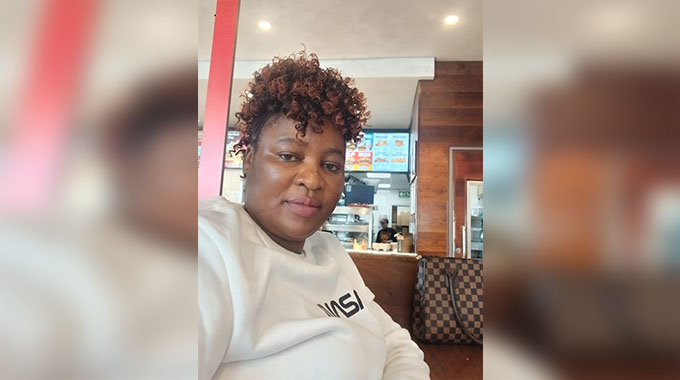
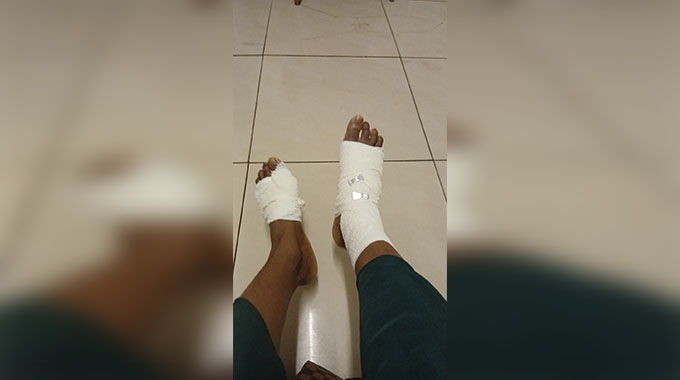
WHEN Susan Chiguvare’s feet were scalded by boiling water, it wasn’t just her skin that burned. It was the illegal borders that scorched her spirit.
Borders drawn on colonial maps and etched into minds and institutions. In that moment of agony, her greatest fear wasn’t pain; it was being seen, dragged, and discarded for daring to seek help in a land that should feel like home.
Our lead story on today’s front page is not just a story of one woman’s injury. It’s a mirror held up to a continent divided by colonial fences, where fear walks freely and compassion is cornered.
Operation Dudula’s crusade against migrants is not just a political movement — it’s a wound in the soul of Africa.
The borders that divide African nations today were not drawn by Africans themselves, but by European powers during the infamous Berlin Conference of 1884-1885.
This gathering, held in Berlin under the leadership of German Chancellor Otto von Bismarck, was not a meeting of African leaders, nor did it consider the continent’s rich tapestry of ethnic groups, languages, cultures, or historical territories. Instead, it was a strategic negotiation among European colonial powers to divide Africa like pieces on a chessboard — each move driven by imperial ambition, not human dignity.
At the heart of the conference was the desire to avoid conflict among European nations as they scrambled for control of Africa’s vast resources. The result was the partitioning of Africa into arbitrary borders, often cutting through ethnic communities, kingdoms, and trade routes that had existed for centuries.
Rivers, mountains, and straight lines on maps became borders. Many of these made little geographic or cultural sense. For example, the Somali people were split across five countries, and the Yoruba across Nigeria and Benin.
These artificial borders laid the foundation for many of the continent’s post-independence challenges: ethnic tensions, civil wars, and fragmented identities.
They also created a legacy of suspicion and restriction between neighbouring African states, where movement is often hindered by visa regimes and border controls that echo colonial divisions.
Most recently, the illegal borders have given birth to Operation Dudula, a self-hate cult that is dehumanising fellow Africans.
But in the shadows, light flickers.
The Tele Health Programme, a constellation of Zimbabwean healers, is stitching together what politics has torn apart.
No borders. No bureaucracy.
Just care. Just Ubuntu.
Their work is a whisper of the Africa we could be, an Africa where a nurse’s oath matters more than a passport, where a patient’s pain is met with healing, not hostility.
Where Johannesburg and Harare are not distant cousins, but beating hearts of the same body.
We must dream louder. We must build a borderless Africa, not just in policy, but in practice. An Africa where movement is not a crime, but a right.
Where solidarity is not underground, but celebrated.
Where no African fears being filmed while seeking help.
Because when one African suffers, we all do. And when one African heals, we all rise.