Online Reporter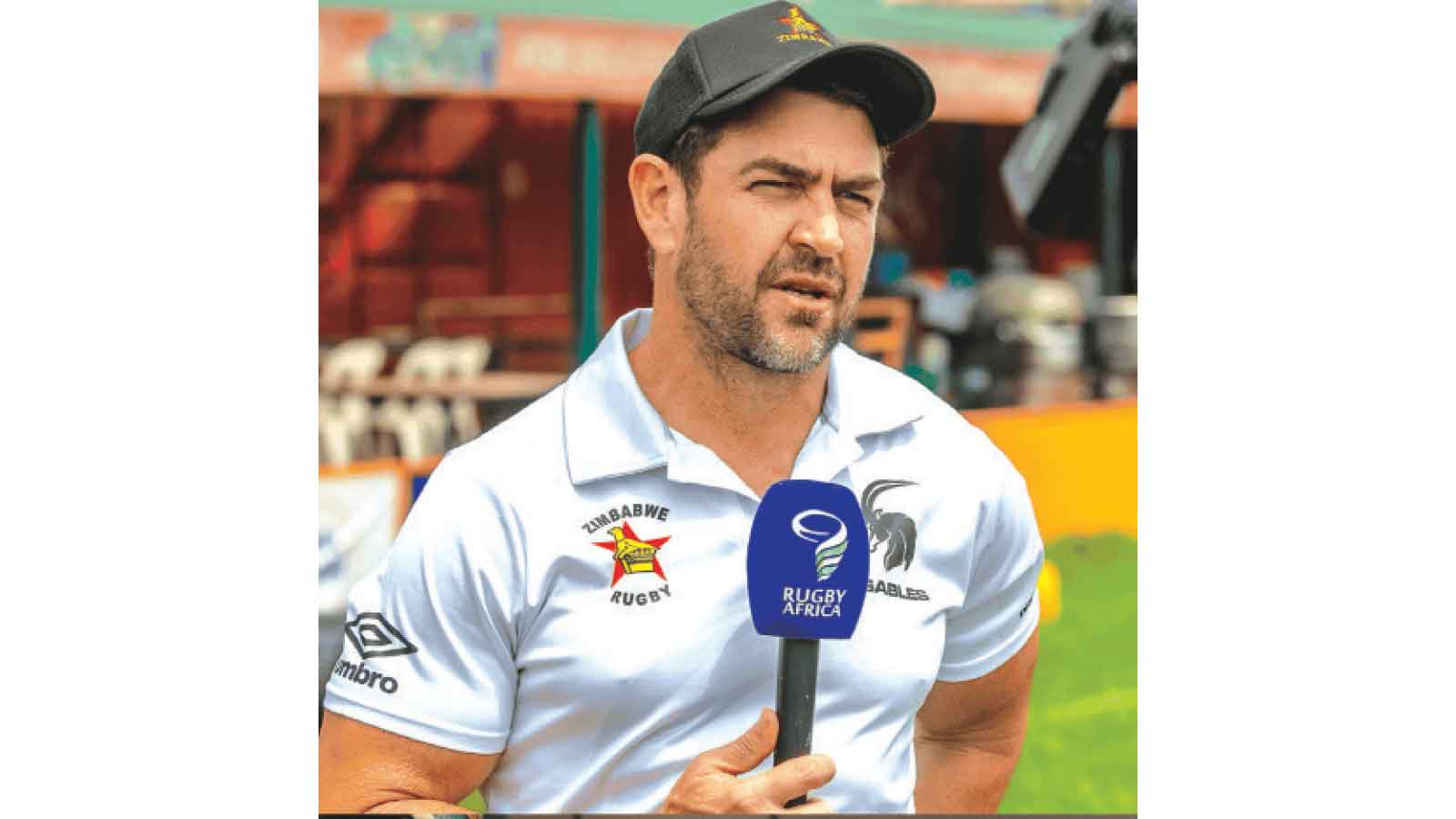
THERE is an old saying in sport that you never truly know your level until you play someone better than you.
Zimbabwe’s rugby Sables have just spent three weeks discovering exactly where they stand.
On paper, the results from the World Rugby Nations Cup in the United States may not appear encouraging.
Defeats to Tonga, hosts United States and Canada meant Zimbabwe returned home without a victory.
That, however, would be an incomplete reading of the tour. This was a tour of duty about the standard, never about the scoreboards.
Coach Piet Benade and his Sables had already achieved the biggest objective of the past three decades by qualifying for the 2027 Rugby World Cup in Australia.
That chapter is complete and a new one has now begun. The question is no longer whether Zimbabwe belong at the World Cup.
It is whether Zimbabwe can compete when they get there.
Those are two very different ambitions. Qualification earned the Sables a place at rugby’s biggest global tournament.
Competitiveness earns respect. The Nations Cup was, therefore, less an examination than it was a classroom.
It exposed the Sables to the pace, physicality, tactical awareness and game management that define rugby at the highest level.
Commendably, there were periods against all three opponents where Zimbabwe demonstrated that they could compete.
Against the United States, the Sables even led at half-time before the hosts’ experience and tactical discipline proved decisive.
Those moments should encourage Benade and his coaching staff. The final scorelines should challenge them and that is exactly what good preparation is supposed to do.
These fixtures have been invaluable for the Sables. There was a time when Zimbabwe’s international calendar was dominated by regional opposition.
Matches against neighbours such as Zambia and Botswana served an important purpose and helped keep the game active across the region.
World Cup preparation demands something different. There is a reason Tonga, the United States and Canada will also be at the Rugby World Cup.
They represent the standard Zimbabwe must now become accustomed to facing.
The objective is now to measure Zimbabwe against the level they will encounter in Australia.
You do not prepare for the world’s biggest rugby tournament by avoiding the world’s better teams. You prepare for the World Cup by playing World Cup rugby. That is why these defeats should not be viewed through the narrow lens of results alone and that is why it would be wrong to crucify Benade based on these three outcomes. They were investments.
Every moment when the Sables were forced to make decisions at a higher tempo than they are accustomed to at home and in the region, are experiences that cannot be replicated on a training field.
Nor can they be gained by comfortably defeating opponents who ask fewer questions.
The challenge now shifts from the players to the administrators. When the Sables qualified for Australia 2027, celebrations were entirely justified.
But qualification was never the destination, it was the invitation. The real work has always been what comes next.
The Zimbabwe Rugby Union’s (ZRU) Interim Management Committee (IMC) now have an opportunity to convert the lessons from the Nations Cup into long-term progress for Zimbabwean rugby.
We would like to believe that the tour has identified where the gaps are.
The response should not simply be another training camp before the next international window.
It should be a renewed commitment to strengthening the domestic game. Provincial structures must become more competitive and rugby should be heard of, seen and felt in places such as Banket, Karoi, Mvurwi, Marondera, Victoria Falls and Masvingo.
Club rugby must be prioritised and built on diligently.
Coaches and referees require continuous development. Having a globally recognised official in Precious Pazani should inspire and galvanise the leadership to act.
Women’s rugby deserves the same deliberate attention as the men’s game, while young players must see a clear pathway from school rugby to the Sables.
World Cups are not won by national teams that are not supported by ecosystems.
Zimbabwean sport increasingly appears to be embracing this philosophy.
Cricket has quietly strengthened its provincial structures and is beginning to reap the rewards at international level as it builds towards co-hosting the 2027 ICC Men’s Cricket World Cup.
Football has launched the Roots Impact Programme and the Munhumutapa Challenge Cup to ensure the next generation of Warriors and Mighty Warriors is developed through structured pathways rather than chance.
Rugby now has the same opportunity. The Nations Cup has shown the Sables what the next level looks like.
Now ZRU must ensure the domestic game is capable of producing players who can thrive at that level.
There is a tendency in sport to judge tours only by wins and losses. That would be a mistake here.
The Sables did not travel to the United States and Canada to protect an unbeaten record. They travelled there to discover the demands of World Cup rugby.
They returned home this week with answers, some of which will be uncomfortable but very valuable.
The Nations Cup was not a report card on Zimbabwean rugby.
Instead, it was the syllabus for the next 18 months.
If the lessons are embraced, Australia 2027 will not simply be remembered as Zimbabwe’s return to the Rugby World Cup after 34 years.
It could be remembered as the tournament where the Sables arrived genuinely prepared to compete.
That is the standard. And that is now the assignment for the ZRU.