admin
admin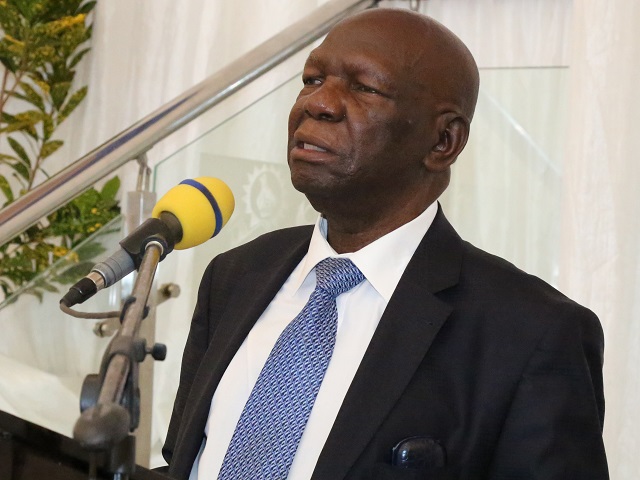
Feature, Tinomuda Chakanyuka
ABOUT 32 years ago, a group of friends routinely met at a local Bulawayo pub every monthend to brainstorm and debate on a wide range of socio-economic issues affecting Matabeleland region, of course, over a glass or two of the aptly named wise waters.
The drinks would often stimulate spirited debates, and true to the appellation the “wise waters” inspired wisdom in this clique of friends calling themselves the Committee of Friends. At that time, the clique hardly fathomed that one day their social discussions would mutate into action that would touch so many souls in the region.
It took one afternoon in August 1997, during a graduation ceremony at the National University of Science and Technology (Nust), to jolt the Committee of Friends into walking their talk.
During the graduation ceremony, the committee and rest of people from Matabeleland region noticed, with utter shock and dismay, that there were few, if any students at all from the region that were capped. On that day the Committee of Friends, came face to face with the reality and manifestation of the matters that they had often discussed and debated on, abstractly, at their “chill spot”.
The graduation ceremony attested to the serious science education deficiency that dogged the region then, and still does to this date and it was through that realisation then that the seeds of Science, Technology, Engineering and Mathematics (STEM) were sown.
“That provoked action and outcry for an intervention mechanism. We discussed this glaring disparity at our following monthly meeting and decided to organise a two-day conference at Elangeni Training Centre in Bulawayo to deliberate on the matter and proffer solutions,” said Mr Joshua Mpofu, secretary-general of the Committee of Friends Trust.
Officials from the then Ministry of Education, Sport and Culture, local politicians, the Vice-Chancellor of Nust then Professor Phineas Makhurane, heads of local schools, representatives from teachers unions, educationists and parents attended the oversubscribed conference.
The convention, in a Damascus-moment fashion, saw the purpose of the Committee of Friends Trust, then a mere social club, taking a whole new dimension, invoking in them a renewed sense of responsibility for their community.
Mr Mpofu said, “At that two-day conference, the Committee of Friends was empowered to champion the cause of science education in Matabeleland. The rationale being that notwithstanding the fact that Nust offers degrees in other fields too, it was broadly speaking, a science-based university”.
By the end of the conference the Committee of Friends Trust had been transformed from a social club to an organisation with a specific task — to champion the cause of science education in the Matabeleland region. In 2011 the Committee of Friends was registered as a Trust with the main objective of improving science education in the region.
“The committee set out to conscientise the people of Matabeleland on the usefulness of learning Science and Mathematics.
We want to encourage local authorities to take practical steps in support of the teaching of science in schools in their localities.
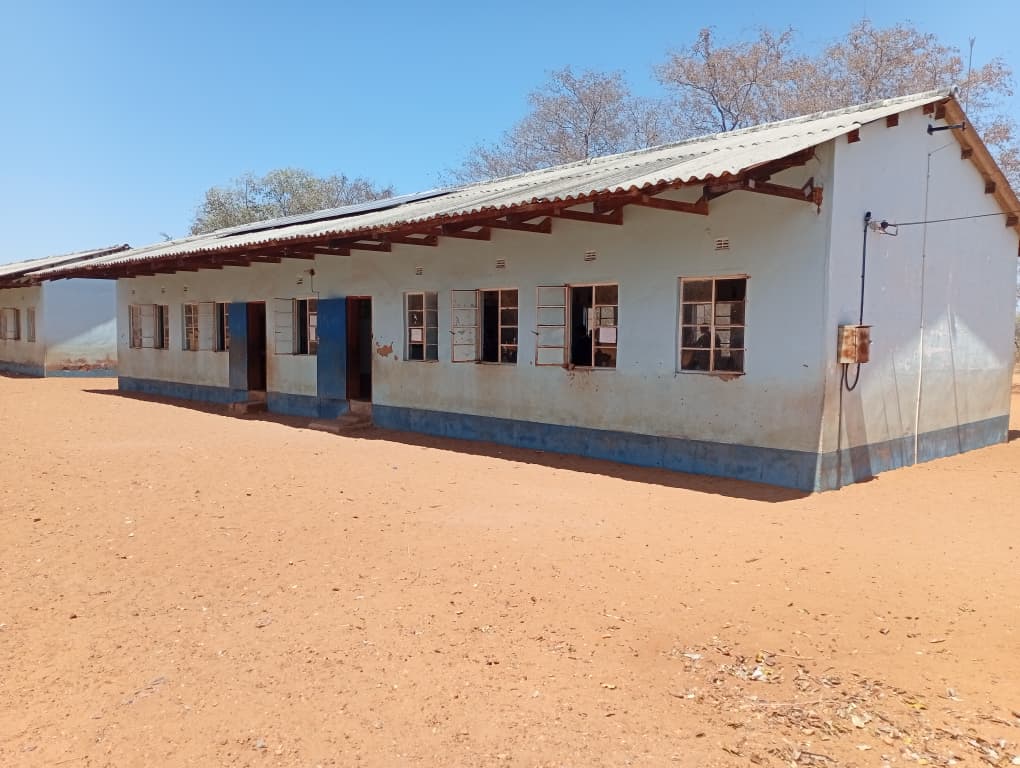
“We are also set out to encourage local communities to build laboratories at their schools and recommend those communities for assistance with laboratory fittings and furniture, laboratory equipment, Science and Mathematics textbooks to development partners,” said Mr Mpofu.
To that end the Committee of Friends Trust has, since its establishment and throughout its transformation, assisted a number of schools in Bulawayo, Matabeleland North and South provinces. The Trust has recorded notable achievements over the years which include working with the Bulawayo City Council on the construction of four laboratories at three Government schools and one church school in the city.
“By this act, the city fathers enabled us to concentrate in rural Matabeleland. We worked with local communities in rural areas to build laboratories at their schools. We were impressed and encouraged by the response,” said Mr Mpofu.
The first phase of the Trust’s operations between 1997 and 2006 saw them assist 17 schools in Matabeleland North Province and another 17 in Matabeleland South with Science equipment, Science and Mathematics text books.
In 2013, marking the second of phase of operations, The Committee of Friends Trust presented 170 copies of O-level Biology text books, 235 copies of O-level Physical Science text books to 30 schools across the region.
The following year the Trust handed over 174 copies of O-level Biology text books and 154 copies of O-level Physical Science text books to the same schools. Some of the schools that benefited include Mabhikwa and Fatima High Schools in Matabeleland North Province’s Lupane District. Recently the Trust handed over 80 Advanced Level science books to Mabhikwa High School in Lupane.
Mr Mpofu said passion for sciences and fervour to see children in the region excel in sciences was the driving force behind their operations.
“I was a Science teacher myself. Most of the people we started the Trust with have a Science background. So we all understand the importance of sciences in the development of an area. If we want the region to develop we have to start at schools, teach sciences properly, ensuring that we have qualified teachers, enough text books, laboratories and equipment,” said Mr Mpofu, a holder of a Bachelor of Science Degree in Physics.
The Trust is chaired by former Nust Vice-Chancellor Professor Makhurane, with Mr Mpofu a former Science teacher, headmaster of Northlea High School and deputy regional education director of Matabeleland South as secretary-general and Mrs Vivian Ncube a community development expert as the treasurer. Prince Peter Zwide Khumalo, Mrs Vivian Dube, Mr Jethro Siziba, Mr Edgar Moyo and Mrs Venelia Mhlaba make up the rest of the board of Trustees. The Trust work has not been spared its fair share of challenges, chief among them being lack of resources. As Mr Mpofu explained, the Trust relies on well-wishers to source science equipment and text books. He said the state of the economy has compromised the capacity of many of their partners to continue supporting their cause.
“Like everyone else the economy has not been good to us. We rely on our partners who are equally affected by the economy.
Of course we have to keep soldiering on with our cause,” he said.
With age catching up with most members of the Trust, Mr Mpofu said they were now looking at passing on the baton to younger people who they believe share similar convictions as the rest of the Trust members.
“There are a lot of young men and women out there who believe in our cause and have the capacity to carry on with the work. We would love to see them come on board, bringing in new and fresh ideas,” said the former educationist.
Going forward, Mr Mpofu reveals, the Trust envisages establishing a scholarship fund for students from poor backgrounds who cannot afford paying school fees. The work by the Committee of Friends Trust, though it started earlier, dovetails into the Government Science, Technology, Engineering and Mathematics (STEM) initiative which seeks to promote science education in the country. STEM is premised on the belief that sciences are the backbone of industrialisation, hence if the country hopes to revive the economy emphasis should be put on producing more science graduates.
According to the World Bank paper on Developing Science, Mathematics, and ICT Education in Sub-Saharan Africa, economic growth for countries in the region should be anchored on developing Science, Mathematics and ICT (SMICT) in secondary education.
The paper exposes a number of huge challenges in SMICT education in Sub-Saharan Africa, among them poorly-resourced schools, large classes, a curriculum hardly relevant to the daily lives of students, a lack of qualified teachers and inadequate teacher education programmes.
“SMICT subjects should be part of the core curriculum in both junior and senior secondary cycles,” the paper recommends.
German-born theoretical physicist Albert Einstein once opined that “The sole purpose of education is to open the way to thinking and knowing, the school is an outstanding organ for the people’s education and it must serve that end exclusively.”
@irielyan


 Online Reporter