admin
admin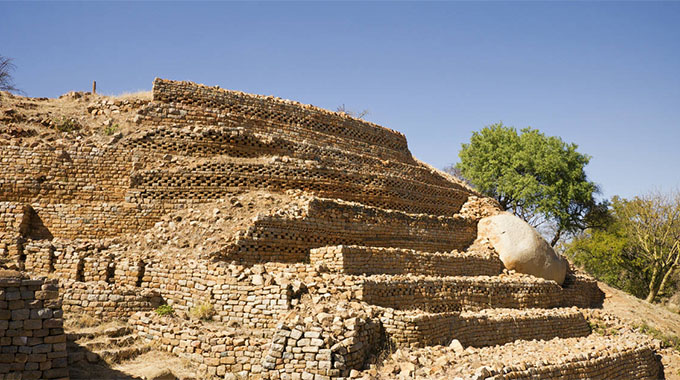
Bulawayo Bureau
AN eight-member local stakeholder committee has been established to help manage Khami World Heritage Site which is threatened by poaching, pollution and mining activities.
The committee was elected yesterday during the Khami World Heritage Site development plan meeting attended by various players.
The committee was drawn from Bulawayo City Council and Umguza Rural District Council as well as Government departments, local community , the media and players in the tourism sector.
Khami Ruins which is a world heritage site is run by the National Museums and Monuments of Zimbabwe (NMMZ) and the committee will operate independently but in liaison with the heritage site’s management.
The committee consists of Bulawayo City Council Engineer Dumani Gwetu, Umguza Rural District official Ms Lynder Mpahosa, Environmental Management Agency Bulawayo provincial manager Mrs Sithembisiwe Ndlovu, NMMZ’s Ms Dorothy Madamba, local resident Mr Blessing Makamu, Chronicle reporter Nqobile Tshili and an official from the Ministry of Mines and Mining Development whose name was not immediately established.
Some of the challenges that emerged during yesterday’s deliberations include that mining activities occurring near the site could have structural impact when blasts are being done at a nearby granite mining company.
It was resolved that the Ministry of Mines and Mining Development should conduct an investigation on how the blasts could impact the structure of the house of stones. The roads issue was topical again as stakeholders felt that the site remains unmarketable especially due to the poor road network leading to the site.
On the other hand, firewood poachers were a menace in the area while ritualists were also causing pollution to the heritage site. The eight member committee has been tasked to come up with solutions to some of the problems.
In an interview after the meeting, Khami World Heritage Site manager Mr Todini Runganga said the setting up of the local stakeholders committee was very important in the next phase of preserving Khami Ruins.
“This is a very important milestone in the management of Khami World Heritage Site that for the first time we now have Khami Local Stakeholders Committee to coordinate the stakeholder activities and stakeholder interests in the protection of Khami World Heritage Site.”
By and large this will protect the site and take the management of the site to a better level,” said Mr Runganga.
He said they want to tap into the expertise of the committee considering that they are drawn from various technical fields.
Mr Runganga said broader societal issues seem to affect the running of the heritage site.
“You will find that there are issues to do with road access, for tourists to access it the roads need to be accessible and at the same time the communities also need the road. The pollution issues affect Khami but they also relate very well with the community. So, the coming up of the committee is going to bring all our issues together as a bigger community not only for Khami and not only for the local community but brings us together in addressing the issues,” he said.
Mr Runganga said the management and restoration of the site is partially funded by the African World Heritage Fund.
“This is an institution that is based in South Africa which has a mandate of protection of World Heritage sites in Africa and to support nomination of African sites on the World Heritage History,” said Mr Runganga.
Heritage expert and National University of Science and Technology research fellow Dr Simon Makuvaza said the establishing of a local committee was a step in the right direction in the preservation of Khami World Heritage Site.
“It is very relevant because it is going to address Khami World Heritage Site. The issues which this committee will address are not only affecting the World Heritage Site. As we have seen throughout this afternoon and the previous meeting, we have noted that these issues do not only affect the World Heritage Site,” said Dr Makuvaza.
“But they do affect neighbouring communities as well as high density areas like Pumula South, Nkulumane as well as emerging locations within the area.”
He said the committee is expected to address pollution, mining issues as well as firewood poaching matters.
“We have in fact empowered this committee to take the management issues forward in an attempt to address all those issues,” he said.
Bulawayo City Council (BCC) employee who was elected into the committee, Engineer Gwetu said it was necessary for the community to understand that it has a role in the preservation of the heritage site.
“This is a beautiful step, it is very progressive and productive considering the world heritage status that was given to Khami Ruins. The onus is upon us as the stakeholders involved and in close proximity to the site that we cherish and maintain to the standard which was awarded to it,” said Eng Gwetu.
“Togeher we can work to preserve the status because once they are conscientized, once they identify that they are part of the this, the issues that we have a challenge with such as poaching of firewood will then be mitigated.”



 Online Reporter