Vusumuzi Dube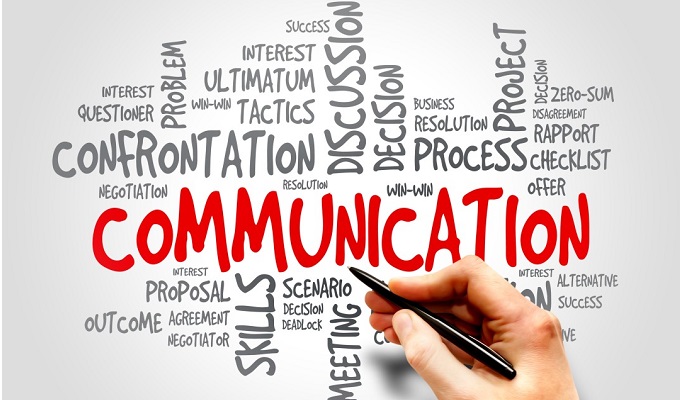
Ranson Madzamba
As the year 2024 is coming to an end, it is that time, a number of organisations, Government Ministries and Departments included, start to conduct strategic planning workshops for the year 2025, the coming year. Organisations would be exploring their targets, achievements, challenges all in a bid to fulfil their visions and goals.
Well, various CEOs and heads of organisations employ different management skills. The majority of them value communication and advocacy and put it at the core of whatever they intent to do to achieve their goals vis a vis their mandate.
The notion here is loud and clear, communication is power. It has the authority to destroy and build, no wonder why the media (The channels of communication) are referred to as the fourth estate. They act as the mirror and window upon which policy makers tap a lot in terms of decision making.
The Government’s mantra of leaving no one and no place behind can be enhanced fully, only if we continue placing communication and advocacy as an essential and crucial priority. Communication and Advocacy is thus, a crucial ingredient required for the realisation of an Upper Middle-Income Society come the year 2030 (Vision 2030).
In this Artificial Intelligent (AI) infested world, communication and advocacy of an organisation has to be premeditated. We are now in that world were citizen journalism is posing to be a major challenge to the mainstream media in as far as information dissemination is concerned.
The new media technologies are allowing a number of individuals to set various agendas some good and some bad for the developmental discourse of our country. This is indeed a rising quagmire that requires various systems in place.
It is against this background that a number of organisations are now up scaling up the operations of their Communication and Advocacy Departments.
The Communication and Advocacy department does public relations for the organisation. It communicates on behalf of the organisation. It one way or the other markets the activities of the organisation to both internal and external stakeholders. It becomes an authentic source of news for an organisation.
So, you can plan and plan as an organisation but as long as you do not have a proper way or strategy on how you would want to engage with your major stakeholders you will definitely not make it.
Communication and Advocacy has the capability to create, maintain, develop, and strengthen the interaction between an organisation and its stakeholders. It leads to satisfied customers, well-motivated employees, a positive reputation or even innovative and creative strategies for the organisation.
Communicating with an organisation’s external stakeholders is meant to promote overall knowledge and awareness of the organisation, its markets, products, services among the different external stakeholder categories.
All communication to external stakeholders should be anchored on this premise and aimed at making the stakeholders feel involved and not alienated. The establishment of community radio stations by the Zimbabwean Government is indeed the best way to have everyone on board, fulfilling the mantra, leaving no one and no place behind in the developmental discourse of our great nation.
In today’s corporate world, the success or failure of any organisation hinges on public perception. The opinions of key organisation stakeholders, such as shareholders, investors, consumers or members of the community in which the organisation is based are all crucial to the long-term success of an organisation or company.
Organisations should identify and analyse their stakeholders, their influences and interests in the organisation so that they understand their information needs, the specific position they have on issues or activities and what kind of communication strategy that can be used to maintain, support or counter opposition.
It is important to do stakeholder mapping and analysis in order to provide current information to different stakeholders and gain relevant information needed for an organisation to run its business effectively.
Communication is thus an essential component for any organisation to prosper in its endeavors.
It is thus the work of a communication and advocacy department to make sure all your stakeholders as an organisation give in or have an appreciation of your endeavors at all levels.
The Government of Zimbabwe, through the Public Service Commission (PSC), having realised how crucial communication is for the attainment of an Upper Middle-Income Society and a better prosperous Zimbabwe, created and is still creating Communication and Advocacy departments in various Ministries. This is indeed the way to go in this new media world.
As organisations, Government Ministries and Departments plan for the year 2025, they must also strategically plan on how they would want to communicate to their stakeholders for their competitive advantage.
Ranson Madzamba is the Acting Director Communication and Advocacy for the Youth Empowerment, Development and Vocational Training and a Communication and Advocacy PhD scholar.



 Online Reporter