Online Reporter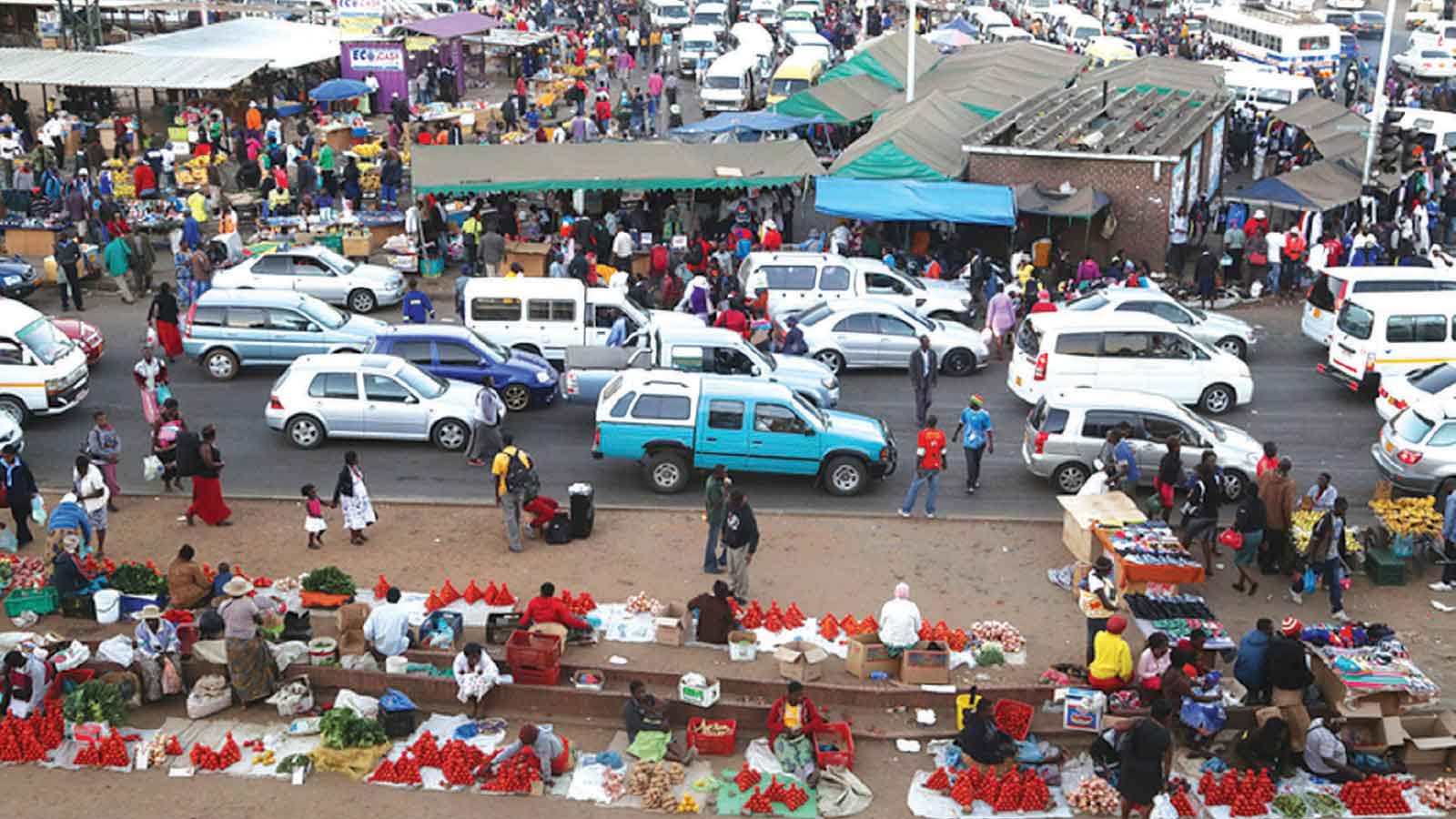
COMMUNION with Bishop Lazarus
Cynics are not merely people with a different opinion; they are a distinct and rather sad species strangely constructed and to be pitied.
Their souls, it seems, have a congenital defect: they are allergic to the very idea of progress.
Bishop Lazi was reminded of this peculiar affliction last week. No sooner had the campaign to rid our cities of lawlessness and disorder begun than the chorus of the perpetually aggrieved began its predictable wail.
They ostensibly mourned for the “poor vendors”, even as they shared videos on their social media platforms of a reborn Addis Ababa, a city that has undergone a similar upheaval associated with transformation over the past four years. You see, Addis Ababa now rivals any Western capital, with its gleaming towers and pristine avenues, proof of what vision and resolve can achieve.
But somehow our cynics seem to conveniently forget, or perhaps they do not even know, that Addis Ababa’s own spectacular rebirth began with the very same birth pangs of upheaval and disruption that we are experiencing now. To them, the messy, painful and glorious process of birth is an abomination.
They would rather the patient remain forever pregnant with potential, decaying from within, than endure the contractions that lead to new life. However, thank God, Harare, a jewel that was allowed to spectacularly decay ever since it fell into the hands of the opposition in 2000, is finally being reclaimed.
The Bishop is also reminded of the words of former US President Theodore Roosevelt, who, in his famous speech “Citizenship In A Republic”, delivered at the Sorbonne in Paris, France, on April 23, 1910, perfectly captured the wretchedness of this breed.
“The poorest way to face life is to face it with a sneer. There are many men who feel a kind of twister pride in cynicism; there are many who confine themselves to criticism of the way others do what they themselves dare not even attempt,” he said.
“There is no more unhealthy being, no man less worthy of respect, than he who either really holds, or feigns to hold, an attitude of sneering disbelief towards all that is great and lofty, whether in achievement or in that noble effort which, even if it fails, comes to second achievement. A cynical habit of thought and speech, a readiness to criticise work which the critic himself never tries to perform, an intellectual aloofness which will not accept contact with life’s realities — all these are marks, not as the possessor would fain to think, of superiority but of weakness. They mark the men unfit to bear their part painfully in the stern strife of living, who seek, in the affection of contempt for the achievements of others, to hide from others and from themselves in their own weakness. The role is easy; there is none easier, save only the role of the man who sneers alike at both criticism and performance.”
Of course, our local cynics are indeed those who “dare not even attempt” the work of national renewal.
They are “unfit to bear their part painfully in the stern strife of living”.
They hide in their own weakness, sneering at the performance of others from the safety of their digital pews, offering nothing but a “readiness to criticise work which the critic himself never tries to perform”.
They are, as Roosevelt so brilliantly put it, strange creatures with short memories and even shorter courage. But we shall not be deterred by their sneers. The work of rebuilding Harare, brick by brick, is a noble effort.
And to those who would mock it, Bishop Lazarus will offer a simple prayer: May the good Lord grant you the strength to one day put down your phone and pick up a brick.
The beginning of birth pangs
And let us be brutally honest with ourselves, for honesty is a virtue the cynics despise: disruption is not merely an unfortunate by-product of rebuilding; it is the very engine of it.
There is no renewal without rubble.
There is no resurrection without a crucifixion. There is no omelette without breaking an egg. This is woven into the very fabric of creation. The cynic, in his comfortable armchair, imagines that cities can be reborn without dust, that nations can be transformed without tears, that a new Zimbabwe can emerge without the painful cracking of the old shell.
The Scriptures are replete with this truth.
Did not the Psalmist sing, “Those who sow with tears will reap with songs of joy.” (Psalm 126:5)? The sowing is painful. The tears are real. The soil must be disturbed, the seed must be buried, the farmer must wait in the discomfort of uncertainty. But the harvest comes.
In John 12:24, Jesus said: “Very truly I tell you, unless a kernel of wheat falls to the ground and dies, it remains only a single seed. But if it dies, it produces many seeds.”
Tied by fate
Zimbabwe and Ethiopia apparently seem to be tied by fate in ways that are both profound and poetic. Consider the timeline.
Abiy Ahmed, the current Prime Minister, rose to power in 2018, just as President ED was settling into office in Harare.
Two leaders, two nations, two reform agendas launched at almost precisely the same moment in history. Interestingly, Ethiopia has driven almost the same reform agenda as Harare, albeit without the encumbrances of Western sanctions that have hobbled our own march. It has transformed its capital.
From 2022, it embarked on a beautification programme of Addis Ababa to match its vaulting aspirations, and it has paid off handsomely.
The Corridor Development Project, launched by the Addis Ababa City Administration, has given the city landscaped medians, pedestrian-friendly walkways, cycling lanes and beautiful public squares.
Friendship Square now graces the riverside, integrating leisure with environmental health.
The Meskel Square Redevelopment has transformed a congested traffic hub into a vibrant multi-use public square with underground parking, event spaces and green areas.
Unity Park has been extended.
In essence, the city has become a testament to what vision, resolve, and yes, disruption, can achieve. All these milestones are a manifestation of an economy that has been growing at a remarkable pace. Over the past five years, Ethiopia’s economy has maintained strong average annual growth of roughly 6 to 7,6 percent.
It has become one of the fastest-growing economies on the continent.
It is a distinction that it shares with Zimbabwe, which has been the fastest-growing economy in SADC and one of the fastest growing economies on the continent.
And together these two are the only African countries that are presently wheat self-sufficient.
The only different is the fact that Zimbabwe, emerging from more than two decades of economic regression, had to take a much longer route to development.
We had to first reconstruct our highways, rebuild the foundations shattered by years of economic sanctions, restore the arteries of trade and commerce before we could even think of beautifying the heart of our cities.
We had to walk before we could run.
We had to crawl before we could walk.
But now, the foundations have been laid.
And so, the focus has naturally turned to the cities. What we are seeing in Harare was always going to be inevitable.
It is the natural next step in a journey that began when the Second Republic took office in 2018. Those who think that a few recalcitrant vendors will stop the wheel of progress in the capital are sorely mistaken.
The wheel is turning. The egg is broken. The omelette is being made.
This, however, is not a war against vendors.
It is a war against disorder and chaos.
It is a war against the culture of normalising the abnormal, a culture that developed over the past two decades as the country atrophied under the weight of sanctions.
We had become a nation that accepted filth as a fact of life, that shrugged at chaos as though it were our birthright. We had forgotten what a clean street looked like, what an orderly market felt like and what a functioning city could be.
But no more. The war against disorder has only one winner, and it shall be order.
The war against chaos has only one victor, and it shall be decency.
We are unlearning the habits of decay.
We are relearning the disciplines of greatness. And we shall not be deterred by the sneers of those who have never built anything, never risked anything, never sacrificed anything for the common good.
So let the cynics clutch their phones and share their videos of Addis Ababa.
Let them weep their crocodile tears for the vendors. Let them mourn the passing of the chaos they had come to call normal.
We have a city to rebuild. We have a nation to renew. We have an omelette to make.
And as we break the eggs, as we endure the disruption, as we bear the discomfort of the present for the glory of the future, let us remember the words of the apostle Paul: “Therefore, if anyone is in Christ, the new creation has come: The old has gone, the new is here!” (2 Corinthians 5:17).
The old Harare is gone. The new Harare is coming. And it shall be a city on a hill, a light to the nations, a testament to what a people — the descendants of the great Mutapa Empire — can achieve when they refuse to be defined by their cynics and choose instead to be defined by their faith.
It shall be done.
Bishop out!