Vusumuzi Dube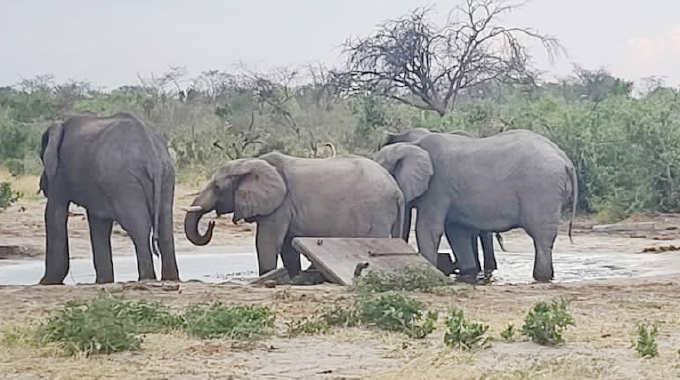
As human-wildlife conflicts increase in Zimbabwe, the government is promoting the use of innovative methods to reduce the challenge and strengthen co-existence in affected areas.
One of the initiatives being explored is the application of chilli around fields to deter elephants from entering and destroying crops. Chilli is a hot pepper of a group of cultivars noted for their pungency.
In partnership with conservation agencies, the government is exploring the initiative in Binga in Matabeleland North province where human-wildlife conflict is a perennial problem.
The district is home to diverse wildlife species, including elephants, lions, leopards, and many others.
Other areas include Tsholotsho district in Matabeleland North, Mbire in the Mid-Zambezi Valley in Mashonaland Central, the South Eastern Lowveld in Masvingo and Manicaland provinces.
Site Coordinator for the Sustainable Wildlife Management (SWM) program, Maxwell Phiri, said human-wildlife conflict is an increasingly important issue in conservation and community-based wildlife management in Zimbabwe.
The SWM program operates in three Binga wards, namely, Sinakoma, Sinampande and Sinansengwe where it works closely with communities to promote sustainable wildlife management and coexistence between people and wildlife.
To support the Binga community’s goal of reducing human-wildlife conflict, the SWM program is working with government Ministries, communities, local leaders and the Binga Rural District Council to explore new ideas for deterring elephants.
“One of the strategies we are employing to mitigate human-wildlife conflict is using chilli as a deterrent for elephants, ‘’ said Phiri.
“We have adopted the chilli strings method used in other countries in Southern Africa.”
The chilli initiative involves hanging chilli-infused strings across known elephant routes near cultivated areas to deter their entry into fields. This has proved successful with smallholder farmers in the three wards as elephants are being put off by the smell of the fuel-immersed chillis.
Since the innovative approach was adopted, the smallholder farmers have witnessed elephants diverting their movement from the villages. “The human-wildlife conflicts in Binga are indeed serious, with significant economic, social, and environmental impacts on both local communities and wildlife populations,” Phiri said.
“Addressing these conflicts requires a multifaceted approach, involving wildlife management, community engagement, and sustainable development strategies to balance the needs of humans and wildlife in this ecologically diverse district.”
New Ziana



 Online Reporter