admin
admin
Sukulwenkosi Dube-Matutu, Matabeleland South Bureau Chief
COMMUNITY leaders have called on Government and its partners to recognise indigenous knowledge systems when crafting solutions to mitigate climate change effects.
Indigenous knowledge systems are a method of traditionally predicting weather patterns. The custodians of indigenous knowledge systems are traditional leaders, village elders and traditional healers among others.
Gwanda Ward 22 councillor, Mary Mpofu said there was a need for climate experts to integrate modern technology and the traditional practices which were used to detect weather patterns. He said disregard for tradition has brought severe climate impact on communities.
“We should go back to the old traditional ways where the elders could predict through wind direction, moon, animal behaviour and the patterns of the rains. The disregard for rain-making ceremonies and traditional practices is contributing to the weather calamities that we are facing. We shouldn’t only rely on meteorological information but we should integrate it with indigenous knowledge systems.
“This can help communities to adequately prepare for either drought or good rains. We have elders in our communities who have the gift of predicting weather patterns and we should use them. They were of great help in the past when they were being recognised and they can help us even today,” she said.
The councillor of Ward 13, Miclas Ndlovu, said traditional methods coupled with modern ways could bring relief to communities.
He said there was a need for climate smart technology to be enhanced such as solar energy so that there can be less cutting of trees. Clr Ndlovu said there was also a need for villagers to be capacitated with inputs to rear drought resistant animals such as goats and chickens. He said there was also a need to protect mopane worm areas. Clr Ndlovu said some mopane worm areas should be reserved for locals while another portion can be opened to outsiders.
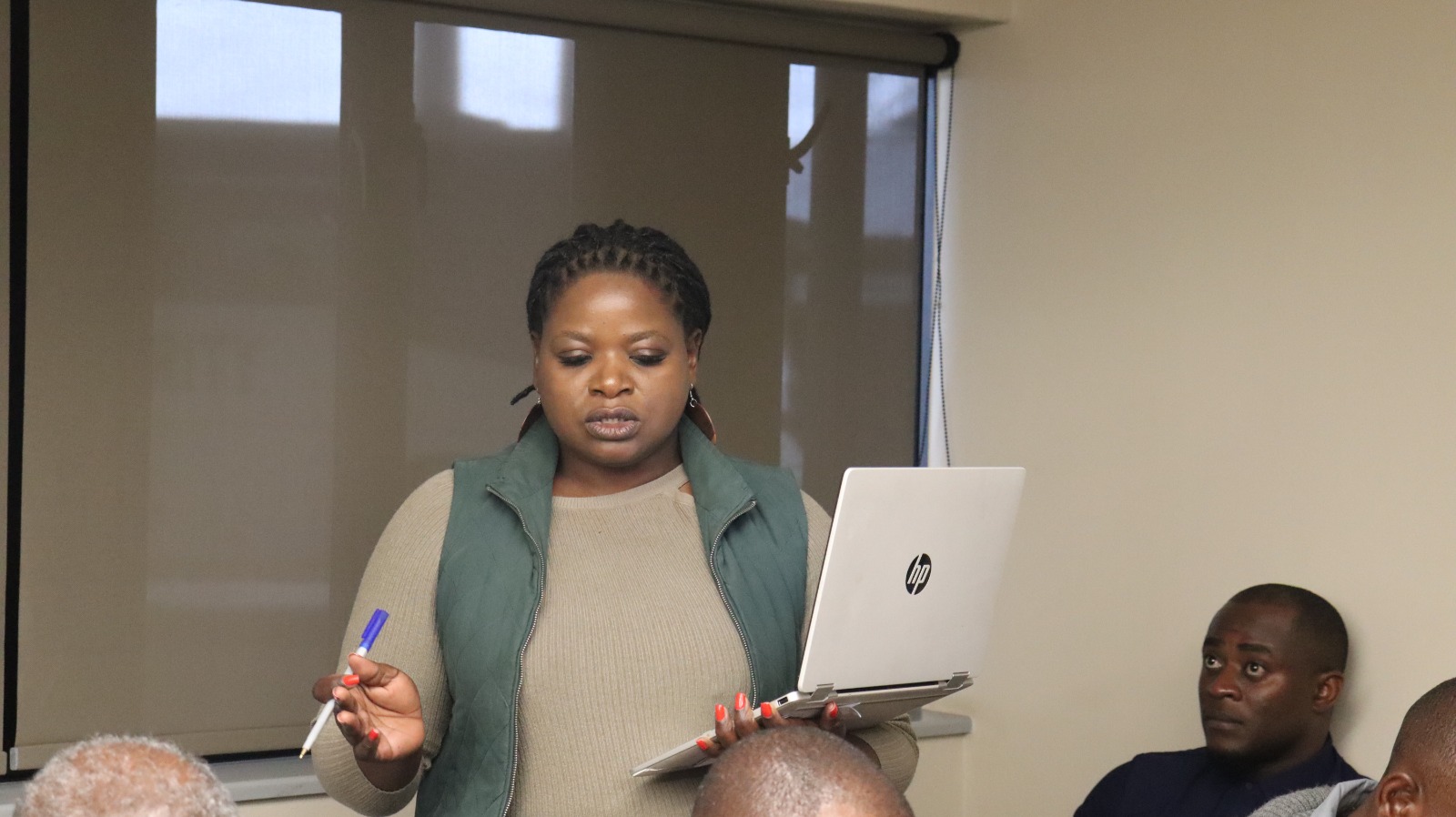
Speaking recently during a feedback meeting to review the Climate Security Guidance note on localising the climate, peace and security action in Gwanda, Voices in the Vision of Africa (VIVA) director and peace and security expert, Mr Nqobile Moyo said they have developed a guidance note which is a tool kit that will be used by communities and various stakeholders to address peace and climate change issues.
He said two wards were identified in Gwanda for data collection.
Mr Moyo said the programme followed a bottom-up approach where responses to climate change are informed by communities. He said they engaged villagers in Ward 13 and 22 who shared the climate change problems and proffered solutions.
His organisation, Mr Moyo said, documented an overview of all 24 districts in Gwanda rural.
“We realised that the meeting points between climate change and peace and security issues are exacerbating each other. Some of the fragilities and conflicts or challenges that we have at community level are being worsened by climate change impact and effects. A lot of climate change programmes have a top to bottom approach where decisions are made at national or global level and then imposed at grassroot level,” he said.
Mr Moyo said his organisation’s approach was that communities discuss the issues and then his organisation documents and together with the community analyse the information.
“The final document that we produce is then used by various stakeholders so that they have an appreciation of the challenges which are peculiar to each community and how the community wants them addressed in relation to peace and climate change issues,” he said.
Climate change specialist Dr Keith Phiri said the findings have shown that there is now a shift from usual farming activities as people are turning to mining as a coping strategy to climate change.
He said most of these activities are illegal. Dr Phiri said a lot of young people were now involved in mining while others are into cross border trading.
“Drought creates food challenges at household level which has forced youths in Gwanda to engage in illegal mining as a coping strategy.
We also see some women also taking part in mining. Floods have also brought strain to families as they have caused loss of property such as homes, livestock and crops. There is also competition for grazing land and access to water which has caused conflicts at village level,” he said.–@DubeMatutu


 Online Reporter