Chronicle Editor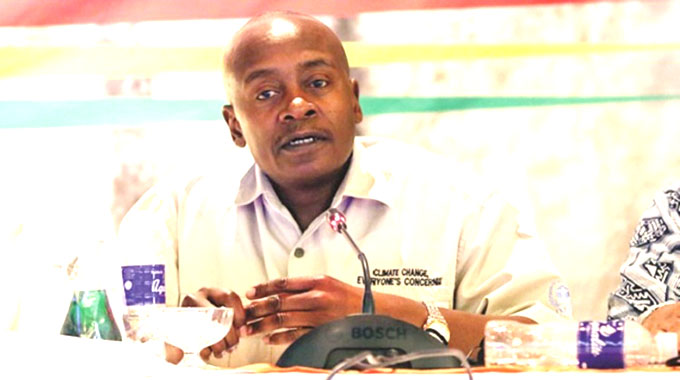
Vincent Gono, News Editor
SIXTY EIGHT-year-old, Mr Elisha Moyo of Chief Negari in Mwenezi District, Masvingo Province carries his hands on his back and walks away from his fields with a resigned stride.
With each step, he looks like he is resisting falling headlong.
One can easily read the inner pain from his wizened face. His once flourishing maize crop had turned brown like the earth that it rested on.
He had become one of the successful village farmers after he resigned from work at a leading household utensils manufacturing firm in Bulawayo.
The surplus from his subsistence farming plot in the communal land was supplementing his pension and life was not too difficult for him and his small number of dependants that comprises mostly grandchildren.
This year, however, things did not go as per plan. The last real rains were received in January and farmers quickly put some top dressing fertiliser and the crop turned a promising dark and shiny green, with a virgin gaiety that made Mr Moyo visit his fields every day.
“Just seeing the crop every day and walking in the field became a habit. It was something that I could not resist. It was therapeutic to me. The crop was so promising, it reminded me of the bountiful harvest that I had been getting for the past two years when I adopted Pfumvudza/Intwasa,” he said.

He said the dry conditions were felt more in February that used to be a wet month.
“Each day the sky was blue and blank. It gazed at us with a tired yawn. The sun will rise with a vengeance of a haunting spirit. It would lick every drop of morning dew with unrestrained glee while giving nothing to nourish the brown earth in return.
“The wind was dry. Devoid of humidity. It looked like it was blown from a furnace and it affected the crop in quick motion. The fertiliser that we had applied in January was to provide the fuel for the sun’s rays to roast the once eye catching lush green crops. And soon everything turned brown, immature and defeated, the crops gave in to the demands of the scorching sun,” he said.
Mr Moyo added that their only hope now lies in the Government and its partners, with President Mnangagwa having declared that no one was going to die of hunger, a statement that was followed with the current food distribution exercise in affected communities.
The situation in Mwenezi is a microcosm of the macrocosm. It is a sad reflection of the weather patterns in most parts of the country and in Southern Africa in particular.
The region’s communities have come face-to-face with the realities of climate change induced El Nino weather conditions that are associated with prolonged dry spells that usually result in food insecurity. In Southern Africa, countries such as Lesotho, Namibia, Zambia, Zimbabwe, Mozambique, have all been affected by El Nino, with a few pockets under irrigation expected to provide a temporary relief to the bigger chunk of the countries’ communities.
What is stressing is that their communities and their economies are largely agrarian and they depend mostly on rain-fed agriculture.
The countries have also been dependent on each other in terms of food supplies, but the current situation is one that might force them to look a little far beyond their geographical boundaries.
And being third world countries, they have a small financial muscle to deal with the adverse effects of climate-induced food insecurities, affecting much of their rural-based populations, making the need for collaborative efforts with other countries more demanding.
Mindful of that need for collaboration resulting in a cross-pollination of ideas, the National Adaptation Plan (NAP) Global Network, in collaboration with the Government of Zimbabwe, recently brought together policymakers and climate experts from 15 countries across the globe, to share experiences and create synergies on how they can adapt to climate change as well as build resilience within their communities, to minimise effects of the global phenomenon.
The peer learning forum whose theme was, “transitioning from planning to implementation in the national adaptation plan process” was held in the resort city of Victoria Falls. It also explored ways in which countries could mainstream climate change in their economic planning and budgeting. Participants acknowledged the importance of coming together, saying countries could no longer afford not to share information on various strategies they were putting in place to adapt to the effects of climate change.

Mrs Aria St Luis from Grenada said the process of coming together and creating synergies, was the best way to deal with the effects of climate change.
She added that the peer-to-peer learning forum allows the opportunity for policymakers and experts from different countries to listen to what other countries have been doing to deal with impacts of climate change.
Mrs St Luis said what was important and interesting, was that the world had everything it needed to deal with the effects of climate change and coming together to share resources and knowledge was one of the critical factors in dealing with adaptation.
Head of Secretariat for the NAP Global Network, Mr Orville Grey buttressed the need for global collaboration in dealing with the effects of climate change.
He added that the forum was an ideal opportunity for countries to partner and transform their systems to be able to plan with climate change in mind.
He said it was through the NAP process that countries drive coordination, set policy priorities, mobilise resources, allocate support and track progress in achieving their adaptation goals.
Director, Climate Change Management Department in the Ministry of Environment, Climate and Wildlife Mr Washington Zhakata said collaboration was important in dealing with the impacts of climate change which were becoming more apparent. He said Zimbabwe recognised the increasing effects of climate change and was moving from raising awareness on adaptation to developing and implementing adaptation plans and policies as well as prioritising and enhancing the resilience capacity of its communities.



 Online Reporter