admin
admin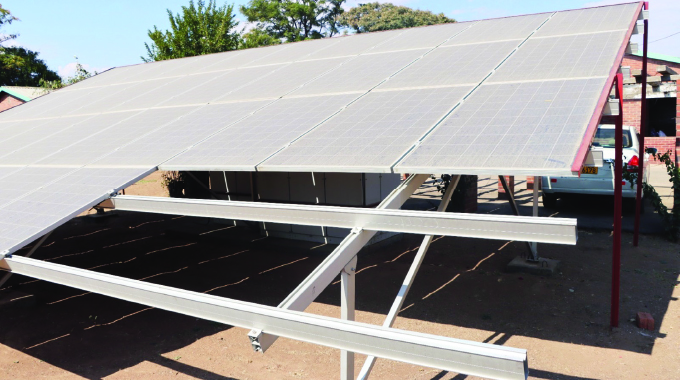
Rumbidzayi Zinyuke in Bulawayo
Communities under rural areas have united to protect the equipment and infrastructure being installed at health facilities by the Government against vandalism and theft to ensure they continue getting quality health care service.
Through the Solar for Health project, the Ministry of Health and Child Care in partnership with the United Nations Development Programme (UNDP) and the Global Fund, invested into solar systems for at least 1600 health facilities across the country.
To date 1044 solar systems with power output ranging between 5 kilowatt and 350 kilowatt have been installed, ensuring continuous power supply for the health centres.
However, some of the solar panels and batteries have been stolen or vandalised leading to the creation of community health centre committees.
Matabeleland South provincial medical director Dr Andrew Muza said a multi-stakeholder approach had helped to reduce incidents of theft.
“We have had some cases of vandalism and theft but we have been working quite well with other stakeholders that include provincial development committee members, police and the security sector to help us to contain the situation. We have improved security at our centres coupled with training and reorientation of security guards at health centres in collaboration with police.
“We also have health centre committees at community level who work with health care workers at that level to help provide security at our facilities,” he said.
These committees had opted to second some members of the community to provide security at the clinics.
One such committee has been operational at Mawabeni clinic for more than a year and it has worked.
Umzingwane district ward 5 councillor Mr Elijah Nkala said the participation of the community in providing security at health centres was a way to grow their sense of ownership of such projects.
“This solar system at Mawabeni has been very useful to the community because the clinic needs to have constant power so that we can get quality services. After we realised that vandals and thieves were targeting the infrastructure, we sat down as a community along with our traditional leaders in ward 5 and ward 3 to discuss ways of protecting our solar system and we decided to have community members who would provide security,” he said.
Mr Nkala said the community was also contributing towards the payment of those who were providing security at the health centre. In Masvingo, provincial medical director Dr Amadeus Shamu said incidents of theft had been reported in some facilities hence they had encouraged communities to play an active role in making sure the facilities were protected.
Health facilities in urban areas have not been spared by vandalism and theft. To mitigate this, some facilities have erected perimeter fences to provide extra security using the Public Sector Infrastructure Projects (PSIP) funds.
At Pelandaba clinic in Bulawayo, at least three solar panels were stolen but, according to the authorities, the remaining panels had been reinforced and a security guard posted there to provide 24-hour security.
Bulawayo City health services director Dr Edwin Sibanda said the UNDP had also started replacing the stolen components.
“Some panels and batteries were stolen but thanks to our partners some have been replaced. We have tried to improve the security and lighting around these infrastructures to reduce the incidences of theft and vandalism,” he said.


 Online Reporter