Online Reporter
Fairness Moyana in Victoria Falls
THE Government is working to strengthen laws for managing plastic waste and is exploring various measures, including extended producer responsibility schemes as part of efforts to combat pollution.
Globally, an estimated 11 million tonnes of plastic waste leak into aquatic ecosystems annually while micro-plastics accumulate in soils through sewage and landfills, largely due to the use of plastics in agricultural products.
Zimbabwe contributes its fair share to these global figures, generating over 300 000 tonnes of plastic waste each year, accounting for approximately 18 percent of the country’s total annual waste.
In a speech read on her behalf by Mr Edward Samuriwo, director of Environment and Natural Resources, during the belated World Environment Day celebrations held yesterday at Chamabondo Primary School in Victoria Falls, Minister of Environment, Climate and Wildlife Dr Evelyn Ndlovu called for affirmative action in combating plastic waste pollution.
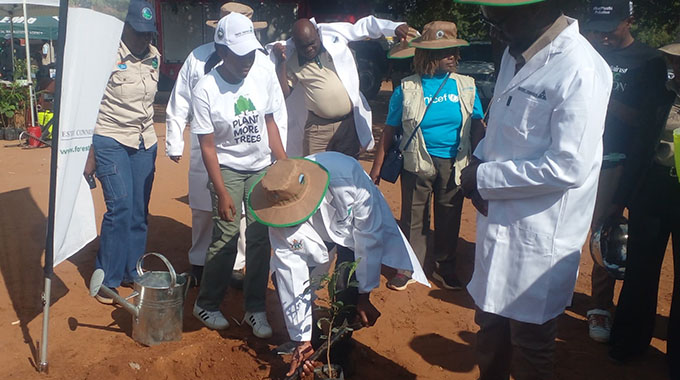
“Therefore, the time to unite and act against plastic pollution is now or never. As Government we are committed to strengthening policies and regulations to manage plastic waste more effectively. This includes promoting the principles of a circular economy, reducing the production and consumption of unnecessary single-use plastics, improving waste collection and sorting systems and investing in recycling infrastructure and innovative alternatives,” said Dr Ndlovu.
She said her ministry was also exploring measures such as extended producer responsibility schemes, where manufacturers should be held accountable for the end-of-life management of their products.
“We are also enhancing enforcement mechanisms to ensure compliance with existing environmental laws. Let me reiterate that industry has a critical role to play in redesigning products and packaging to minimise plastic use, particularly problematic single-use items and to ensure that plastics are recyclable or made from recycled content.
“Investing in sustainable materials and production processes is not just an environmental imperative, it is a pathway to long-term economic viability and innovation.”
This year’s celebrations served as a precursor to Zimbabwe’s hosting of COP15 on the Convention of Wetlands next month. The event emphasised the importance of tackling plastic pollution, safeguarding wetlands through sustainable practices, and empowering youth as environmental stewards.
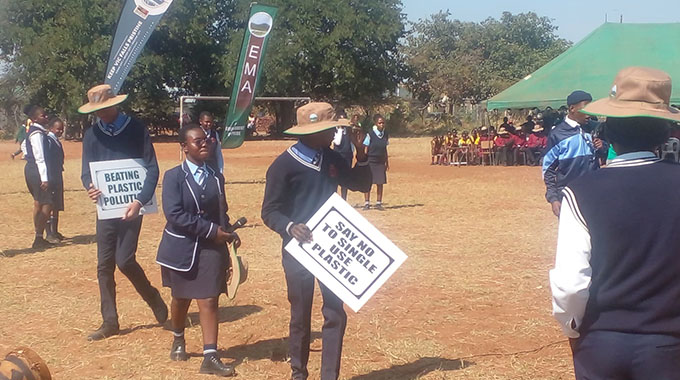
Wetlands remain crucial biodiversity hotspots, underpinning water security, tourism, and local livelihoods. These vital ecosystems, including marshes, swamps, and vleis, act as the lifeblood of the landscape, performing a wide range of ecological and social functions.
In Zimbabwe, wetlands play a vital role in ensuring water security, supporting agriculture, providing essential resources for communities and sustaining rich biodiversity. Yet, these precious ecosystems face growing threats, with plastic pollution emerging as a major culprit. Plastic waste that finds its way into wetlands smothers vegetation, blocking the sunlight and oxygen that plants need to thrive. Larger plastic debris clogs water channels, disrupting natural water flow and sometimes causing flooding or drying out of critical wetland areas.
Dr Ndlovu acknowledged that plastic pollution poses a serious threat, but emphasised that it is not too late to tackle these environmental challenges. She highlighted that solutions are within reach, including community clean-ups, sharing knowledge, and leveraging technology and resources in collaboration with regional and global partners.
“It is against this background that I then call upon all of us, communities and individuals, to be at the heart of this fight. Simple actions, multiplied across the nation, can have a profound impact. Reducing our personal consumption of single-use plastics, properly disposing of waste, participating in clean-up campaigns, and advocating for change are powerful tools.
“Education and awareness campaigns are vital to foster a culture of environmental stewardship and responsible consumption.”
This year’s World Environment Day comes in the backdrop of a meeting scheduled for Geneva in August where countries are set to meet again to continue negotiating a global treaty to end plastic pollution.
Yesterday’s commemorations, funded by Unicef, kicked off with a 5km march from the city centre to the venue.
The event featured exhibitions from a range of stakeholders, including the parent ministry agencies, Forestry Commission, Environmental Management Agency, Zimparks, Zimbabwe Environment Lawyers Association, Friends of the Environment, Pristine, City of Victoria Falls, Nyaradzo, tour operators and various companies.