Online Reporter
Point Blank
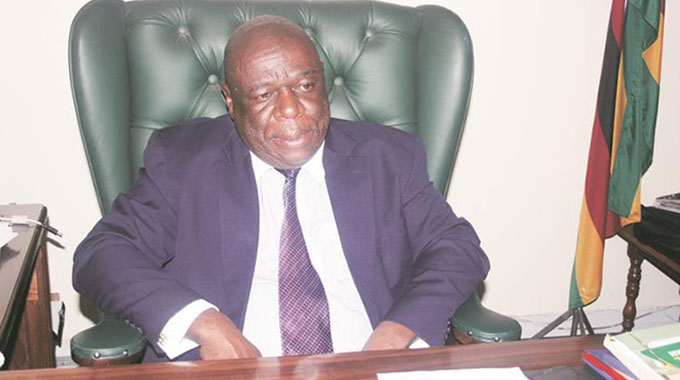
Parliament recently held public consultations on the Climate Change Management Bill, which essentially introduces a comprehensive legal framework to strengthen the country’s response to climate change. It also seeks to integrate adaptation and mitigation into all sectors, as well as establish institutional and financial mechanisms to coordinate action and domesticate international obligations. SADC Parliamentary Forum (PF) media and communications manager DR MOSES MAGADZA last week interviewed Speaker of the National Assembly ADVOCATE JACOB MUDENDA, who indicated some of the themes that came up during the public hearings, including the invaluable support provided by Sweden through the SADC PF SRHR (Sexual and Reproductive Health and Rights), HIV and AIDS Governance Project, which strengthened outreach and brought a rights-based, gender-responsive lens to the consultations.
******************
Q: What strategies did Parliament use to ensure public hearings for the Climate Change Management Bill were inclusive and accessible to all citizens, including those in remote and marginalised communities?
A: Parliament adopted a deliberate “Parliament-to-the-people” approach to ensure that no community was left behind. Public hearings were held in all the 10 provinces, with dedicated outreach visits to remote districts, growth points, informal settlements and areas under traditional leadership.
Parliament worked closely with local authorities, traditional leaders, faith-based groups and civil society so that mobilisation efforts were trusted and the discussions reflected local realities.
To remove language and accessibility barriers, Parliament provided interpreters for local languages, sign language interpretation and plain language summaries of the Bill. Large-print materials were made available for participants with visual impairments. The institution also utilised diversified participation channels. Citizens could contribute through walk-in oral submissions, written inputs, call-ins, WhatsApp messages, SMS and voice notes. In this way, people could choose the participation method that best suited their circumstances.
Q: What were the most common issues or themes raised by citizens across the provinces regarding the Bill?
A: Across all provinces, citizens consistently emphasised the need for a just and fair transition, particularly for communities whose livelihoods depend on coal mining, especially in the Hwange (Cross Mabale) and Victoria Falls city areas. Many expressed concerns about job security and the social protection required during the transition.
Energy security and affordability were also dominant themes.
While participants supported renewable energy, they stressed that the shift must not compromise the affordability and reliability of energy supply. Rural communities advocated for support for rooftop solar, mini-grids and other off-grid solutions.
Farmers and rural residents highlighted the escalating impact of drought and water scarcity. They called for strengthened investments in climate-smart agriculture, irrigation systems, water harvesting and the maintenance of critical water infrastructure to safeguard food production.
Communities also raised concerns about disaster preparedness, particularly with respect to floods, storms and wildfires. They called for stronger early warning systems and clearly funded responsibilities for municipalities.
Health concerns featured prominently, especially regarding heat stress, air pollution and vector-borne diseases.
Citizens urged Parliament to ensure the Bill supports stronger linkages between climate action, local clinics and sexual and reproductive health and rights (SRHR) services. Finally, many communities demanded greater accountability and transparency in climate financing, including ring-fenced climate funds, anti-corruption safeguards and simpler pathways for communities to access climate finance.
Inclusion was a recurring theme, with calls for stronger youth representation, protection of indigenous knowledge and respect for land rights.
Q: The public hearings were supported by Sweden through the SADC PF SRHR, HIV and AIDS Governance Project. How significant was this collaboration in facilitating the consultations?
A: This collaboration was highly significant and genuinely catalytic. It enabled Parliament to extend its outreach to remote areas that are often hardest to reach and most vulnerable to climate change impacts.
The support provided essential logistical resources and beyond logistics, the project helped strengthen the quality of the consultations by promoting a rights-based, gender-responsive and health-conscious lens consistent with the mandate of the SADC PF SRHR, HIV and AIDS Governance Project.
This ensured that climate, gender, youth, public health and SRHR considerations were integrated into the engagement process. The partnership also included capacity-building sessions for Members of Parliament and staff, enhancing their ability to facilitate complex discussions.
Q: How will the feedback from citizens influence the final drafting and content of the Bill?
A: Citizen input will directly inform amendments to the Bill on a clause-by-clause basis. Parliament is preparing a comprehensive public participation report, together with a published comments-and-responses matrix, to ensure full transparency and traceability in how the feedback shapes the legislation.
Adaptation provisions will be strengthened, including clearer obligations for national and provincial adaptation plans, improved early warning systems and increased investment in municipal resilience. Although citizens recognise the importance of both mitigation and adaptation, many emphasised adaptation as Zimbabwe is a relatively small global emitter yet highly vulnerable to climate impacts.
Governance structures will also be clarified.
This includes defining roles for national, provincial and local authorities, and establishing a diverse Climate Council that includes civil society, labour, business, the youth and indigenous representatives. Enhanced parliamentary oversight will ensure accountability. Inclusion safeguards will be further reinforced, such as gender-responsive and disability-responsive measures and stronger protections for indigenous communities, including free, prior and informed consent.
Q: What lessons has Parliament drawn from this national consultative process, particularly regarding citizen engagement in legislative frameworks?
A: The process revealed that meaningful participation requires intentional planning and adequate resourcing from the outset. We learned that hybrid engagement models combining in-person hearings with telephone, digital and written inputs are now essential for reaching diverse groups.
Clear, fair protocols for managing these different channels will also be crucial in future consultations.
A key lesson is the need for “closing the loop” by ensuring that communities are shown clearly how their contributions influenced the legislative process.
This transparency is vital for building public trust.
The process also highlighted the need to strengthen Parliament’s own internal capacity. Members of Parliament and staff benefit greatly from plain language briefs, climate science orientations and facilitation skills to manage complex and sometimes emotional public dialogues.
Finally, the public hearings demonstrated the value of coordinated engagement across parliamentary committees and levels of Government to avoid policy contradictions and ensure alignment between climate, energy, finance, health and Local Government sectors.