peter
peter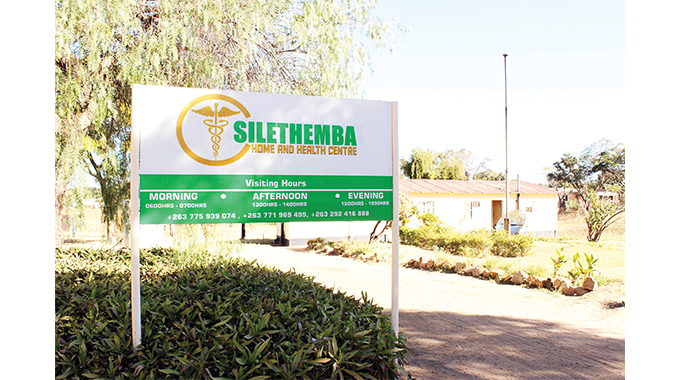
Robin Muchetu, Senior Reporter
CARE homes and facilities are a new trend that communities are warming up to. They have become a place of comfort for the elderly who need extra care while the economically active go about their day-to-day lives.
However, issues around how they are run and their cost have been top of the list for people who enlist the services of care homes. Sunday News visited Silethemba Home and Health Care in Mpopoma suburb where the elderly, infirm, and even young but in need are cared for. The home is run by Mr Edward Muringani the Managing Director and Dr Beauty Muringani the Technical Director.
The home has the capacity to hold 100 patients and is manned by professionals in the form of doctors, nurses, and nurse aides that assist in caring for the elderly. Dr Muringani said they started off by offering laboratory services in Bulawayo.
“We started as Kei Medical laboratory which is generally a medical laboratory where tests are done. What motivated us to do what we are doing now is that we used to receive a lot of patients from outstations like Tsholotsho, Nkayi, and some of these patients would be tired and hungry after having traveled overnight or very early with nowhere to go. They are referred to hospitals in the city and further referred to us for tests. As the directors of Kei Laboratories, we decided to find a place where these elderly patients would come and recover and rest as they conduct all their tests and treatment before returning to their stations,” she said.
Dr Muringani said they saw the need to house patients that were coming into the city for treatment and other services and not being admitted into hospitals.
“The idea was then born to have a care hospital and over time we were approved by the Bulawayo City Council under special approval to operate and we are registered as a hospital. The reason we registered it as a hospital and a care home was to reduce the movement of patients from one place to another. The people we admit here for care, if they fall ill, we have doctors and nurses that attend to them in the comfort of the facility as opposed to other care facilities where you have to pick up the patient and find hospitals or doctors to treat them then return them to the home, we do it all at one place,” she said.
Dr Muringani said some of the patients that are admitted only want palliative care such as cancer patients or HIV-positive patients that will have defaulted on their treatment and need to be nursed back to health, counseled, resuscitated and eventually discharged.
“We do not admit every sick person, we want those that have no one to care for them adequately back at home after they are discharged from hospitals or are very old in general and need care. Some, we actually refer to other old people’s homes and we also get referrals from the same homes if they have a sick elderly patient that needs to be nursed back to health,” she said.
Dr Muringani said many families are faced with such circumstances whereby an elderly patient is discharged but they are not in a position to offer adequate care due to work commitments and they have to find alternative care.
The care home and hospital also takes in young patients from 18 years old who need care as long as families can meet requirements. Dr Muringani said they are registered as a training school too and train their own nurse carers because they want them to meet a specific standard.
“We have a certain standard that we want which is different from what other training schools are offering. We copied the British system of care and caring for an ill elderly patient is very difficult so you need a dedicated carer to carry out this kind of job.
“Nurse caring is more specialised because the profession requires one to be thorough, no one wants their relatives to get bed sores while they are recovering, patients need to be very clean and dry always. Even if a person is to pass away, we want them to have been in a respectable state so care is vital. When I walk into wards, I want to see cleanliness all over. This is however sometimes difficult when a patient is at home where sometimes there is no monitoring, in some cases the patient spends the day in unchanged diapers, and they are not eating well,” said Dr Muringani.
She said some patients need two hourly turns if they are immobile and they ensure that it is done religiously, monitoring that may be lacking in the home.
“We try to have all the patients outside as much as possible so that they are refreshed unlike in the home, there is a tendency to keep the ill person indoors all day which is not healthy,” she said.
Dr Muringani said people who have been exposed to care work abroad now understand the concept of having the elderly and infirm being admitted to facilities like theirs, hence the gradual uptake of the services.
“Those with exposure understand this concept and many more are beginning to warm up to the idea. At times the patient refuses to live at the care home but their families will not be in a position to care for them adequately. Others are those that come and request their relatives to come back home saying they can care for them alone. They still feel that nursing homes are places where you dump your aged and sick relatives so we do a lot of counseling for them to understand the importance of having the patient admitted to a facility,” added Dr Muringani.
Silethemba Home and Health Centre also has services that they provide for patients outside the institution
Dr Muringani said there is a need for more institutions that take in the elderly.
“If people welcome the idea more, I think we need more of these institutions because they are helpful to people a lot. The concept has changed from the other homes that are in existence and we are also working with medical aid societies and we accept those as long as the plan you signed up for has the carer package.
“Our fees fall within the medical aid regulations, we abide by the Tariff Code, we are not asking for anything outside of that, what we do ask for is diapers for the patients if they need them and medication that they take.”
A survey done by the Sunday News revealed that care homes and institutions that care for the aged, ill, and incontinent cost between US$300 and $1500 per month. @NyembeziMu



 derick.khumalo