Ivan Zhakata
Herald Correspondent
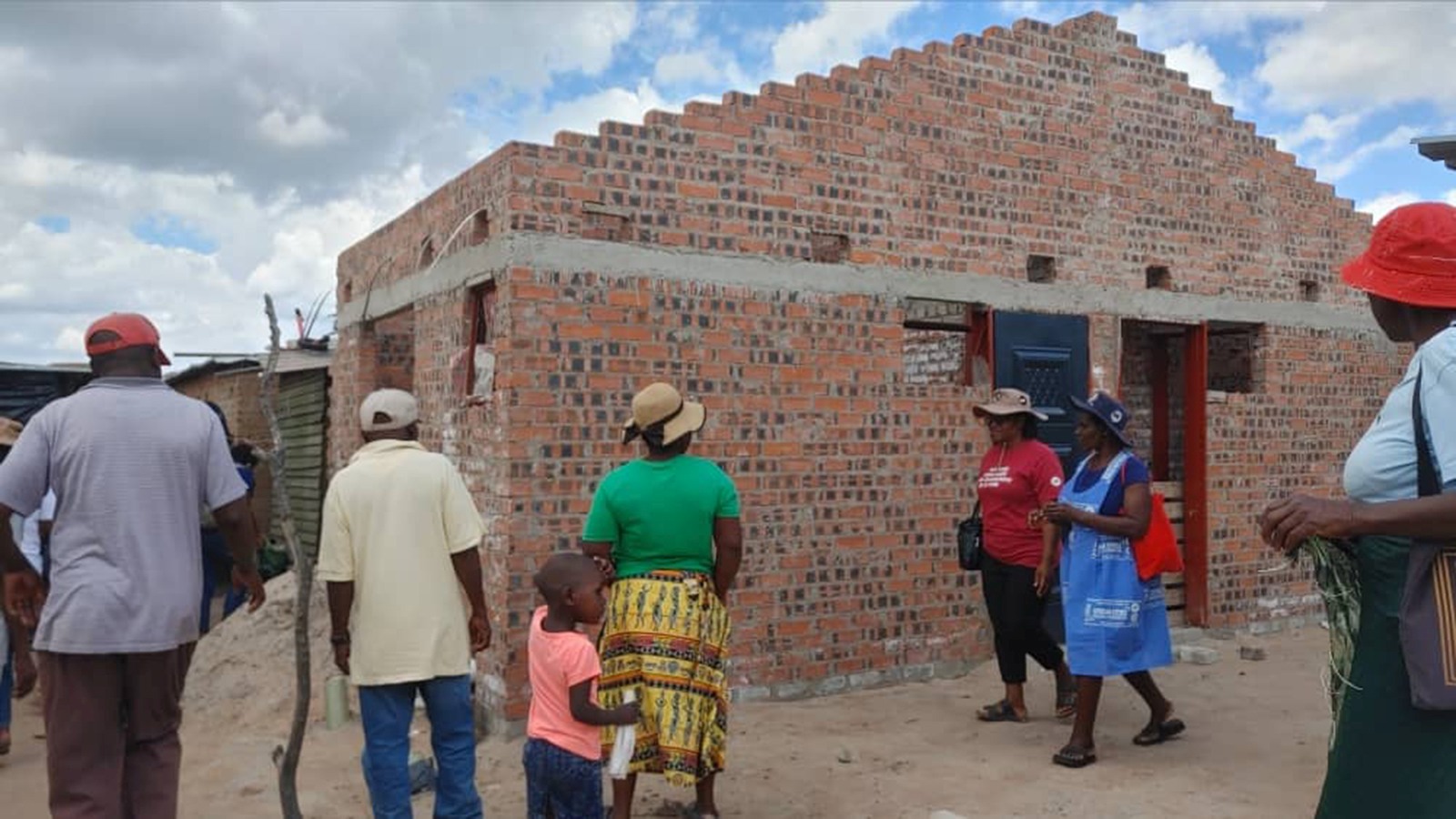
A total of 121 families have been permanently relocated from flood -prone informal settlements to a planned neighbourhood in Tafara as part of a community – led relocation initiative to deliver homes to people living in slums.
The relocation is a core component of the Informal Settlement Climate Change Action (ISCCA 1) programme, administered through the Harare Slum Upgrading Partnership.
The partnership, a formal collaboration between the Zimbabwe Homeless People’s Federation, the City of Harare and the NGO Dialogue on Shelter, was established in 2010.
Speaking during a tour of the new neighbourhood in Tafara, Mr Evans Banana, programme coordinator for Dialogue on Shelter, said fixing the social contract was not an event but a process.
“We create platforms where city officials and organised communities meet, share and understand each other,” he said.
The families were moved from informal settlements in Gunhill and other areas where in-situ upgrading was deemed unfeasible due to flooding and land constraints.
Each family was allocated a residential stand in the Tafara greenfield development, with housing plans formally approved by the City of Harare to accommodate multiple households per property.
Beneficiaries confirmed the transfer of ownership and the stark contrast between their previous and current living conditions.
“I never thought I could own a stand, but through saving with the federation and the support of this initiative, I now have a home I can call my own,” said Mrs Agnes Hondo, a former resident of the Dzivaresekwa slum known as Geneva.
Ms Joyce Thembo, relocated from a Gunhill squatter camp, said the move had provided critical stability.
“It has changed everything for my family, providing safety and stability,” she said.
Mrs Stella Chitsa, previously of the Crowborough informal settlement, also confirmed her new status as a property owner in Tafara.
The model was first proven in the Dzivaresekwa Extension area, which Mr Banana said was evidence of the partnership’s long-term efficacy.
“Before, it was flooding and unimproved housing, but now there is reticulated infrastructure – water, sanitation, roads – and communities are contributing towards electricity installation,” he said, adding that interim community-built facilities have since been replaced with permanent city infrastructure.
The media tour was facilitated by the African Cities Research Consortium (ACRC), which said the initiative was a working model for community-led urban development.