dyton mupawaenda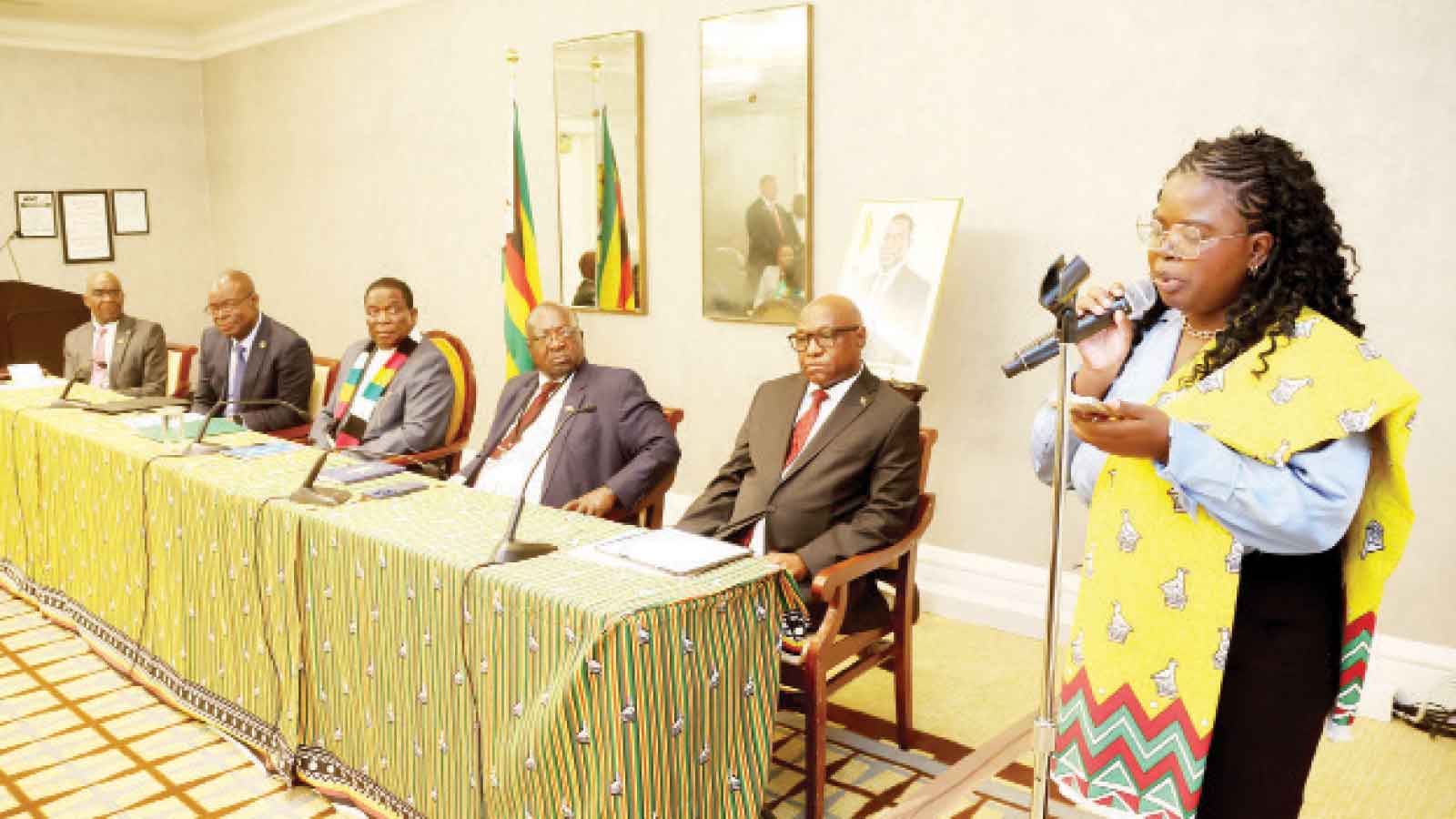
Wallace Ruzvidzo in NEW YORK, USA
ZIMBABWEANS living across the United States of America have expressed their commitment to contributing to the country’s development beyond Diaspora remittances, which now exceed US$2,4 billion annually.
They conveyed these sentiments during the Zimbabwe Diaspora Interface, which was headlined by President Mnangagwa here on Sunday night.
A representative of Zimbabweans working within the United Nations system, Dr Amson Sibanda, said the Diaspora community was ready to deploy the knowledge and expertise acquired abroad towards Zimbabwe’s development.
He said resources could be mobilised to finance projects in which the Diaspora could participate back home, while appealing to President Mnangagwa to direct his administration to ensure that viable projects and effective investment mechanisms were put in place.
Zimbabweans working in the New York financial services sector, represented by Ms Maud Chifamba, who became the youngest university student ever enrolled in Africa at the age of 14 in 2012, said Africans possessed high levels of literacy and should, therefore, have access to affordable gateways to global opportunities, ultimately enabling them to contribute to the development of their home countries.
“About 5 million Zimbabweans live abroad, but that is not brain drain, that is brain circulation. Home is home (and) whatever we gain here, we will bring it back home, we just need solutions that work,” she said.
Ms Chifamba said she was encouraged by Government’s renewed commitment to creating platforms through which Zimbabweans with skills acquired abroad could contribute meaningfully to national development.
“Zimbabwe already has the solutions. And (looking at) this gathering, the Government is ready to engage with Zimbabweans. We just need to come to the floor, create a steady flow to stay on, and we will take all those solutions to the world,” she said.
ZANU PF US’ representative Cde Simbarashe Zvada commended President Mnangagwa for what he described as progress in Zimbabwe’s development and congratulated him on the country’s election to the United Nations Security Council for the 2027 to 2028 term.
He said Zimbabwe’s international role was growing alongside developments at home, while noting that the country’s upcoming tenure on the Security Council would place it among nations entrusted with responsibilities relating to international peace and security.
“Your Excellency, as your mantra says, we see it through all the country’s developments under your leadership.

Delegates at the Diaspora interface with President Mnangagwa in New York.
“The world sees it and reposts Zimbabwe with a huge responsibility for world peace over the next two years.
“The bold steps you undertook are geared not only for the restoration of our economy, but also to reaffirm our dignified and national identity,” said Cde Zvada.
He also pledged continued support for the Second Republic, saying the ZANU PF USA District had maintained its organisational structures and expanded its representation to include a fully established youth wing.
“Your Excellency, the USA Diaspora District remains steadfast in supporting your vision. For years,- we have strengthened solidarity in the diaspora.
“Our USA District is comprised of men’s wing and women’s league (and) we are happy to report that for the first time since the formation of the USA District we now have a full-fledged youth wing, which is a testament to your vision of including the youth as we continue to mobilise and build our beloved ZANU PF,” said Cde Zvada.
A professor at Yeshiva University, Joseph Panzarella, said Zimbabwean students in the United States represented more than their individual academic pursuits, describing them as embodying hope, determination, perseverance and resilience.
“When you look at Zimbabwean students in the United States, you see more than just faces, you see hope, desire, determination, perseverance, and an unbreakable spirit,” he said.
A Zimbabwean student at the university, Mr Tinashe Muyambo, said he was ready to contribute towards the country’s attainment of an upper-middle-income economy by 2030.
“We have expertise to share and technology to bring home.
“I understand that your Government is building platforms to connect diaspora skills with opportunities at home.
“I want to be a part of that effort and begin working with your Government today, not next year, today,” he said.
Mr Muyambo said he was committed to applying the knowledge acquired abroad to Zimbabwe’s development in an increasingly technology-driven global environment.
“I will contribute what I’ve learned about using AI in medical research.
“Nyika inovakwa nevene vayo, vari mhiri kwemakungwa (who are abroad)” he said.
Chairman of the December 12 Movement, Cde Omawale Clay, meanwhile, said the acquisition of professional skills by young Zimbabweans abroad should go hand in hand with a strong appreciation of their identity, heritage and national origins.
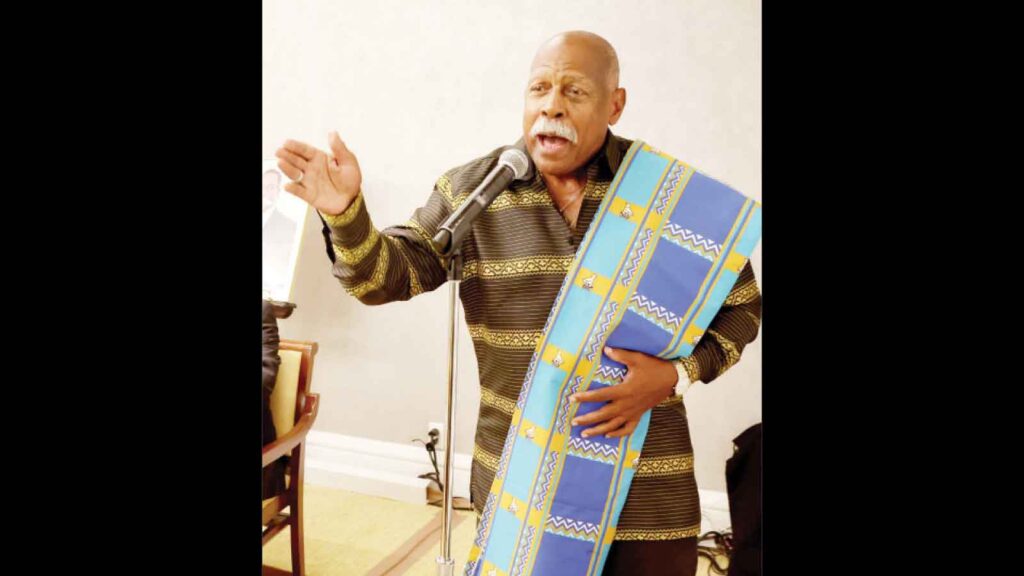
December 12 Movement chair Cde Omawale Clay makes his presentation at the colourful event.
He said expertise in areas such as technology, medicine and engineering would have greater significance when coupled with an understanding of the communities and country from which the skills had emerged, as well as the broader purpose those capabilities should serve.
Mr Clay also drew attention to the sacrifices made during Zimbabwe’s liberation struggle, urging young Zimbabweans to familiarise themselves with the country’s history and recognise the contribution of those who fought for independence.


 Online Reporter