Online Reporter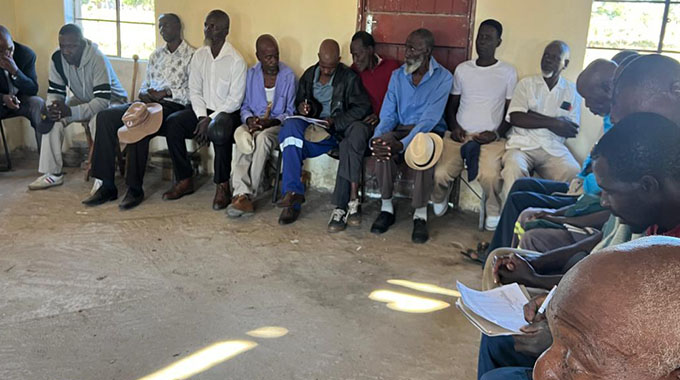
Sukulwenkosi Dube-Matutu
THE National Aids Council (NAC) has ramped up efforts to combat HIV/Aids and other chronic ailments among men through the implementation of the behaviour change community motivators’ model programme.
The programme, already active in Umzingwane, Insiza, and Matobo districts, is spearheaded by dedicated behaviour change community motivators.
NAC Matabeleland South provincial programmes coordinator, Mr Wilfred Ngwenya, emphasised the critical role of targeting men and young boys in the broader fight against teenage pregnancies, early child marriages, and child exploitation.
“This programme is having a significant impact in communities. We are seeing many men being referred to hospitals through this initiative. We want community members to abandon behaviours that may endanger their health,” Mr Ngwenya stated.
“This programme is crucial in the fight against child sexual exploitation, child marriages, and teen pregnancies, which remain high in Matabeleland South Province.”
The male engagement programmes aim to encourage men to embrace HIV prevention, testing, and treatment options. Each district involved has 20 behaviour change community cadres who conduct dialogues with 20 men over a three-month period and hold individual sessions with 16 men monthly.
Umzingwane district also has 17 behaviour change community motivators specifically targeting adolescent boys and young men, who are often the sexual partners of adolescent girls and young women.
This year alone, the programme has reached 1 546 men, with 330 of them being referred for HIV testing. In total, 60 behaviour change care motivators have been trained in various HIV-related topics.
“Among our response initiatives is the peer-led model, which is being implemented in Gwanda District, targeting workplaces, tertiary institutions, mines, irrigation schemes, prisons, and informal traders,” Mr Ngwenya explained.
“Twenty peer-led mentors were trained, with an expected case-load of 25 participants per mentor. The training imparted skills to conduct HIV/Aids sessions with their mentees, and to screen, register, and enrol mentees at high risk of contracting the virus.”
NAC has also intensified the Sista2Sista (S2S) Model, a girls’ club for adolescent girls and young women aged 15-24 years. This initiative provides young women with comprehensive educational knowledge on critical issues affecting their communities, such as gender-based violence, HIV/Aids, and sexual reproductive health. The project is active in Beitbridge, Bulilima, Mangwe, Matobo, and Umzingwane.
“There are 16 mentors in each of the districts where the Sista2Sista programme is being implemented. Each mentor has two clubs with 25 girls per club. At the moment, the programme has an enrolment of 4 000 girls,” Mr Ngwenya noted.
Matabeleland South’s HIV prevalence rate stands at 17,3 percent, significantly higher than the national rate of 10,49 percent.
More than 100 000 people out of the province’s population of approximately 750 000 are living with HIV.
All districts in the province have a prevalence rate exceeding the national average.
Bulilima, Mangwe, Matobo, and Gwanda districts have rates higher than the provincial average, with Bulilima recording the highest at 22,5 percent, followed by Mangwe District at 21,6 percent.