Chronicle Editor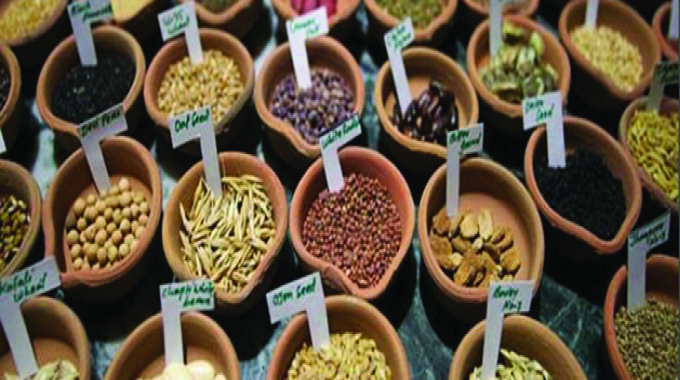
Muchaneta Chimuka, Harare Bureau
WIDOWS are generally put in a disadvantaged bracket, especially in African communities. The situation is viewed “insurmountable” when there are more dependants. However, Loveness Khumalo (64) seems to have unlocked the secret to be happy and content.
Despite her being widowed with eight children under her care, they have never gone even a single day with no food. Her household is food secure.
Living in Umzingwane District, Matabeleland South Province has never been a walk in the park. Being in an arid region and with climate change effects at hand, she and her community used to rely on donor handouts.
Their hybrid seeds used to suffer prematurely due to droughts since they relied on a rain-fed agriculture system which is common not only in Zimbabwe but the whole Sadc region.
Meanwhile, to climate-proof the agriculture practices by Khumalo and other smallholder farmers in Zimbabwe, the Government in partnership with various non-government organisations joined hands to encourage the propagation of traditional small grains (millet, cowpeas, sorghum and many others).
These seeds are drought-resistant and tend to be economic since they require fewer-to-none of the expensive production inputs. This has led to the establishment of the US$25 000 Community Seed Bank (CSB) in most provinces that act as backup storage for the seeds that were at the brink of extinction after people were shunning them in favour of hybrid seeds.
Agricultural experts say plant genetic materials facing extinction in the region include labour-intensive crops such as Bambara, green gram, sesame, round potato (Zulu potato) and a wide range of indigenous maize, sorghum and millet varieties.
CSBs have since changed the script for the local communities.
“Through the use of CSBs and adoption of small traditional grains, my life has been transformed. Using the proceeds from selling my produce, I managed to build a four-roomed house and even sent my children to school with some having reached tertiary level,” said Khumalo.
In Umzingwane only, over 100 smallholder farmers have joined this transition. According to Lizzy Gonye, a village head in Domboshava, Mashonaland East Province, seeds stored in seed banks last longer compared to those kept in poor quality containers at home.
“Preserving seeds in these seed banks has proven to be of high quality but in a natural space. Above all, the seeds are not genetically modified meaning they are nutritious and of no health harm if consumed,” she said.
To promote accelerated propagation of traditional seeds, the Government of Zimbabwe has implemented a swap programme through seed fairs where farmers meet and have an opportunity to get seeds they do not have and share theirs.
Farmers have also been encouraged to establish household seed banks as well. Mrs Ropafadzo Guni of Mudzi District in Mashonaland East has over six seed banks. She, however, lamented the lack of clear rules and regulations, conflicts of interest, limited capacity to manage the gene banks, lack of knowledge about crop diversity, poor market systems and infrastructure.
To see a significant improvement in the area of free trade among Sadc member states, Agritex officers stated that obstacles can be overcome through capacity building, the establishment of clear rules and regulations and the provision of financial and technical assistance.
A lead farmer from Chimukoko Community Seed Bank, Mudzi Mr Patrick Mutepeya said he has managed to buy livestock, built a seven-roomed house and paid lobola to his wife using proceeds.
Mr Onismus Chipfunde the Head of Genetic Resources and Biotechnology Institute (National Genebank) in the Department of Research and Specialists Services under the Ministry of Lands, Agriculture, Fisheries, Water and Rural Development in Zimbabwe said Gene banks can also help in research and education.
“Seed banks can be used for scientific research and education and help in the preservation of the cultural and heritage value of traditional crops,” he said.
Fatima Kanyumba (54) of Malawi, a divorced mother of three with disabilities says small grains farming has transformed their livelihoods.
“All my children use wheelchairs and we used to beg on the streets but relief came after I started utilising seeds from our local seed banks,” said Kanyumba.
She grows sorghum, millet, traditional vegetables and local maize which she value-adds and sell at her small shop. She went on to drill a borehole and as such she no longer uses water from the river for her domestic use.
In Malawi, there are many seed banks run by local non-government organisations and some by the Government working with smallholder farmers.
Patrick Okori a principal scientist, groundnut breeding and country representative, International Crops Research Institute for Semi-Arid Tropics (ICRISAT) in Malawi said farmers are mobilised into groups and trained, to improve access to seed thereby increasing their productivity, profitability and food security.
Story continues on www.chronicle.co.zw
“The Community Seed Bank, provides a framework for farmers to produce and access seeds of improved crops within their communities. It also supports easy access to knowledge and market spaces. We have established community seed banks in Kongwa, Kiteto and Iringa districts in
Tanzania but it is important to train farmers and extension staff on seed production and management for success stories,” he said.
Tanyaradzwa Tenesi the Research Technician — Genebank Accelerated Crop Improvement at the Icrisat in Matopos Research Station, Bulawayo said their research has been key to the achievement of the SDG2 whose target is poverty reduction.
“Our scientific research is designed to increase both nutritional quality and quantity of food available through numerous interventions such as the development of high-yielding and nutrient-dense dry land cereals and legumes among many others.
“We help smallholder farmers transition from subsistence farming to surplus farming and make farming more profitable through various approaches such as capacity building, market linkages, value addition among others,” she said.
The programme is also replicated in Botswana, with gene banks largely community-based and operate in a similar manner as those in Zambia and some of them provide financial and technical assistance to farmers as well as accessing markets and other resources for them.
Dr Justify Shava the Head of Sadc Plant Genetic Resource Centre (SPGRC), in Zambia said the bloc is stepping up long-term efforts to conserve germplasm collections and develop new varieties resistant to climate change and other threats such as pests and diseases.
Dr Shava said: “The region has collected over 63 000 different accessions of crops which form the core sources of food for communities in Sadc. The accessions are safely stored in various genebanks in the Sadc region with some duplicated at the regional gene bank in Lusaka and the Svalbard
Global Seed Vault in the Svalbard Archipelago in the North Pole as a risk mitigation measure for the Sadc region.
“The Sadc regional genebank, at the Sadc Plant Genetic Resources Centre (SPGRC) is the facility responsible for co-ordinating the plant genetic resources conservation and sustainable utilisation in the Sadc region.”
He said, plant breeders often need quick access to seed banks to develop new varieties in case of natural disasters and other risks and uncertainties.
“To date the Sadc Plant Genetic Resources Centre (SPGRC) is home to 19 555 accessions of germplasm of 145 different species which are the major sources of food for the people of the Sadc region.
“These accessions are in the form of orthodox seeds (plants that produce seeds capable of being stored away from their parent plants). They are being stored under controlled conditions at temperatures of negative (-) 18 degrees Celsius. Sadc Member States are also keeping some more germplasm in their national genebanks and to date the region has a total of 63 000 accessions collected from farmer’s fields and preserved at various centres in the Sadc Member States,” he said.
Tanzania, South Africa and Eswatini also have NGOs doing work in the same area although the projects are still growing as they work closely with communities and government extension workers.
On average, over 40 million people have been estimated to be food insecure every year by the Sadc Regional Vulnerability Assessment Programme over the past five years.
In response, all Sadc Member States are implementing the seven Malabo Declaration commitments that are translated in seven thematic areas of performance: re-committing to the principles and values of the CAADP process; enhancing investment finance in agriculture; ending hunger in
Africa by 2025; reducing poverty by half, by 2025, through inclusive agricultural growth and transformation; boosting intra-African trade in agricultural commodities and services; enhancing resilience of livelihoods and production systems to climate variability and other related risks; and strengthening mutual accountability for actions and results.



 Online Reporter