daniel chigunwe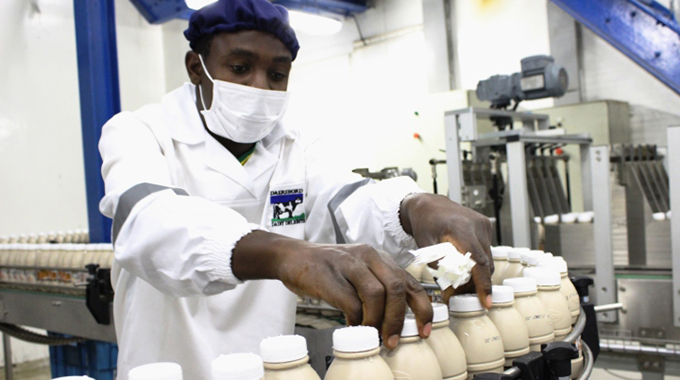
Nelson Gahadza
Zimbabwe’s operating environment remains complex hence companies are focusing more on cost rationalisation as production costs remain high.
The companies contend that the environment has been arduous, characterised by high inflation, currency volatility, electricity shortages and disrupted global supply chains.
Several monetary policy interventions, particularly regarding local currency, interest rates and money supply management were enacted in response to the escalating inflationary pressures.
However, according to analysts the recent depreciation of the ZWL shows government measures have failed to sustain as the policies have not been as effective as the authorities would have wanted.
Dairibord Holdings, a manufacturer and marketer of quality milks, foods and beverage products in its 2022 financials said erratic supply, high cost of quality water and electricity are expected to persist, increasing the cost of production and disrupting operations.
“Cost containment and cost reduction through improved productivity and efficiencies are a key focus area to improve profitability,” said group chairman Josphat Sachikonye.
In this regard, he said management will continue to engage in strategic partnerships and explore initiatives for alternative energy models and efficient production methods.
Sachikonye said the negative consequences of extended lead times throughout supply chains, delays in disbursements from the foreign currency auction system and increased wages exerted pressure on costs and margins.
“Inconsistent supply of quality water and power negatively affected production and increased manufacturing costs,” he said.
However, notwithstanding the turbulent operating environment, the group recorded positive volume growth compared to prior year largely as a result of maintaining focus on diversifying and expanding product portfolios, implementing affordable pricing models and consistent review of the route-to-market strategies.
“All these efforts were further aided by ongoing investments in increased manufacturing capacity and capabilities,” said Sachikonye.
He said volume growth in 2023 will be underpinned by recently completed capital investment projects which include a third maheu (Pfuko) line, a drinking yoghurt (Yoggie) line and a third blow moulder for Steri milk bottles.
In addition, a new chilled water plant was installed at the Harare Rekayi Tangwena factory to optimise production capabilities.
Diversified farming, mining and implements group Zimplow said the operating environment remains unpredictable hence management will follow through on sustaining the key initiatives undertaken during 2022 that include extracting the efficiencies and synergies in the new structure, to deliver more sustainable results.
“Significant cost savings are expected after full implementation of the restructuring process and the Group restored to peak business levels,” the company said.
The Group through its strategy aims to position itself as a one stop shop for equipment, parts and service.
Resource group RioZim said power supply remains a major threat to the group’s operations therefore is focusing on back-up power generators across the mines albeit this will be at a significantly high operating cost.
“In the medium to long term, the group continues to pursue its pipeline power projects, with particular focus on solar energy, which will be a lasting solution to the power challenges for the mines,” said chairman Saleem Beebeejaun.
He said the future prospects of the group are underpinned on the successful performance of the BIOX plant at Cam & Motor mine and the 500tph plant at RZ Murowa once all the necessary teething challenges are addressed.
However, notwithstanding the positive contributions of these two projects to the group’s production, Beebeejaun said the Company continued to suffer from acute power supply challenges, which significantly weighed down the group’s efforts to increase production volumes.
RioZim indicated foreign currency challenges and exchange rate distortions also continued to negatively impact the group’s profitability.
According to the Confederation of Zimbabwe Industries (CZI) the operating environment has significantly affected business cash flows, threatened business viability and competitiveness of the local products at a time imports are gaining foothold in the local market due to dollarisation.
Similarly, the cost of production has shot through the roof with most producers running on diesel powered generator sets which require significant forex outlay.
Capacity utilisation in the sector has dropped as most businesses cannot operate on the usual number of shifts due to power cuts, this means that productivity no longer matches fixed costs of running plant and machinery.
Significant time is lost when there is no power during daytime. This also takes into consideration the fact that generators cannot be run continuously without rest.
Producers are struggling to meet supply deadlines for the local and export markets, which poses a threat to well-developed export markets and foreign currency earnings.



 Online Reporter