Online Reporter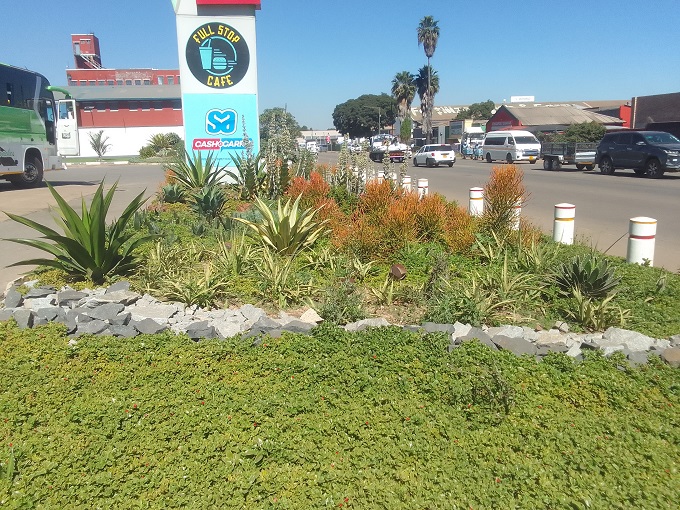
Andrew Mangwarara
THIS week, we feature pictures from a service station in the Workington industrial area, aptly named Extreme.
The images showcase a beautiful succulent garden and an area with artificial or synthetic turf, complemented by nice palms in the background.
With the advent of technology, various materials can now be manufactured and some of them can replace natural grass for greening purposes.
This week, we delve into the pros and cons of using artificial turf versus sticking with natural grass.
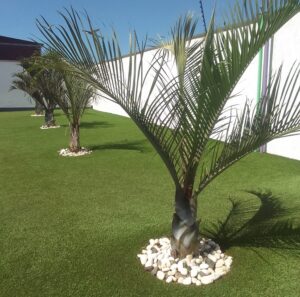
Artificial turf, or man-made grass, offers several advantages.
It is a low-maintenance option, freeing up one’s time for other tasks.
It also presents a visually appealing alternative, providing a year-round green surface with minimal effort.
Artificial turf eliminates the need for regular watering, typically associated with natural grass, as well as the need for fertilisers and pesticides.

However, the initial installation costs are naturally high, similar to purchasing carpet, and the turf will eventually need replacement after a number of years.
On the other hand, all that glitters is not gold.
The notion that synthetic turf is low maintenance is not entirely true.
When leaves, sticks and other seasonal debris fall onto it, they will not decompose as they would in a natural ecosystem.
Instead, you will need to rake, sweep or even vacuum your lawn, which presents its own challenges.
Wind-borne weed seeds will still take root and germinate on synthetic turf.
This means you will still need to weed your lawn, requiring extra care since you cannot mow them down or dig them out without creating patches or holes on the turf.
Furthermore, synthetic turf harbours dust, pet waste, hair and other harmful
bacteria-ridden substances that would normally be broken down by soil
microbes.
Instead, the bacteria will sit and accumulate on the surface, being transferred around by feet, playing children and pets.
In fact, studies have shown that people are more likely to contract fungal infections (staphylococcus aureus) from playing on synthetic turf fields than on conventional grass.
Synthetic turf is also known to have drainage issues, which can cause unforeseen pooling of water around properties and negatively impact the replenishment of the underground water table.
Inevitably, synthetic turf will reduce the health of the soil biome, which is the foundation of a healthy landscape.
Without regular water, exposure to sun and the constant supply of various chemicals, soil microbes will suffer.
These often-overlooked microbes are crucial for nutrient uptake by plants, the breakdown of organic matter, water movement through the soil, soil density, compaction, erosion control and a host of other beneficial functions.
Synthetic turf also contains numerous harmful chemicals.
Since it is made of various petrochemicals, such as ground-up tyres, it is inherently highly flammable.
It is often treated with flame retardants, further adding to the list of chemicals it contains.
On average, synthetic turf sheds about 8 percent of its blades per year, effectively releasing contaminated microplastics into the air, soil, waterways and oceans.
Because synthetic turf does not contain water or absorb light for photosynthesis like natural grass, it retains heat and can reach temperatures of 70°C-80°C.
These high temperatures can burn your skin if you walk or lie on the turf and will eventually cause the artificial turf to melt, releasing toxic gases into the air.
Finally, synthetic turf is very expensive to instal and will need to be replaced once it melts, becomes discoloured or wears out, resulting in further expense.
Many people choose synthetic lawns for their perceived drought tolerance or low maintenance but fail to realise the unforeseen costs they will incur for that evergreen, petrochemical-based landscape.
Fortunately, there are many excellent lawn alternatives available today, such as native grasses, clovers, yarrow, thyme and other low-maintenance plants.
If you would like to be featured in our green-up campaign, contact us on the number above. Feedback: [email protected] or [email protected]



 Online Reporter