malvernmugadzikwa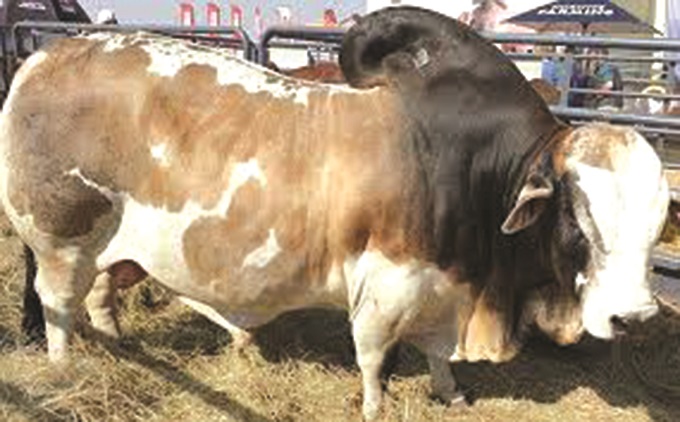
Word From The Market
Chipo Tachiona
ZIMBABWEAN farmer Mr Collen Tafireyi recently shattered records when he outbid and bought a Boran stud bull for a whopping R8 million (US$444 000) at an auction in Mpumalanga, South Africa.
Mr Tafireyi, a Boran breeder from Hwedza in Mashonaland East province, emerged victorious in an intense bidding war against other Boran enthusiasts from across the continent.
This is a remarkable achievement for not only Mr Tafireyi, but also Zimbabwe, as it shows the country’s seriousness in rebuilding the national herd, which has been battered by drought and diseases outbreaks over the years.
In the past few years, Zimbabwe has lost more than half a million cattle to tick-borne diseases, among them theileriosis, better known as the January disease. This loss has had a huge impact on people’s livelihoods.
An excited Mr Tafireyi was quoted by the Chronicle saying: “This was not about the price. It was about getting what I value most — the biggest and best Boran stud in Africa. I want to be among the best Boran breeders on the continent. I want to be known for the best quality cattle genes in Africa and beyond.”
That is ambitious but achievable.
In Kenya, where the Boran stud bull is a native, many farmers have switched to raising this type due to its ability to withstand the tough environmental conditions associated with climate change.
The breed’s disease resistance has significantly reduced veterinary costs, and its efficient feed conversion has made beef production more economical. As a result, these farmers have seen improved profitability and sustainability in their cattle farming operations. More so, the stud bull is efficient at converting feed into body mass, even when fed low-quality forage, as is currently the case in Zimbabwe due to erratic rains.
This efficiency leads to better growth rates and higher meat production, with relatively lower feeding costs.
The Boran is known for producing high-quality beef, with good marbling and flavour. This makes Boran beef desirable in the market, potentially leading to higher prices and better profitability for farmers.
Many farmers might wonder how a normal farmer can fork out such a fortune to purchase a bull. But serious cattle breeders can understand where Mr Tafireyi is coming from.
The investment will benefit not only him, but Zimbabwe’s entire cattle sub-sector.
Below are some of the traits of a stud bull, as compared to a village bull.
The stud bull and village bull are two different types of male cattle that serve distinct purposes in cattle breeding.
Understanding the differences between the two can help farmers and breeders make informed decisions when it comes to selecting the right bull for their herd.
A stud bull, also known as a breeding bull, is a carefully selected and genetically superior male bovine, used for breeding purposes.
The selection of these animals is guided by their genetic characteristics, which include traits like exceptional fertility rates, remarkable growth potential and robust resistance to diseases. The primary objective is to ensure that these desirable traits are transmitted to their progeny, ultimately enhancing the overall quality and health of future generations.
Some key features of a stud bull
Pedigree and registration: Stud bulls often come from well-documented bloodlines and are registered with a breed association, ensuring their lineage and genetic makeup are known
Genetic superiority: These bulls possess desirable traits such as high fertility, excellent conformation and strong performance records, making them ideal for producing high-quality offspring
Breeding soundness: A stud bull undergoes a thorough breeding soundness examination to evaluate its reproductive ability and overall health.
Controlled breeding environment: Stud bulls are typically used in a controlled breeding environment, such as through artificial insemination or natural mating under supervision
Village bull
A village bull, on the other hand, is a male bovine that may not have the same genetic superiority or documented pedigree as a stud bull. Village bulls are often used in small-scale or traditional farming systems, where they serve a generalised role in the community.
Some key features of a village bull
Undocumented lineage: Unlike stud bulls, village bulls often have an unknown or poorly documented family history, making it challenging to predict the genetic quality of their offspring
Variable genetic traits: Village bulls may exhibit a broader range of genetic traits, some of which may not be ideal for herd improvement
Limited breeding control: Village bulls may be allowed to roam freely within a village or community, resulting in less controlled breeding and potentially lower-quality offspring
In summary, stud bulls are selected for their genetic superiority and play a crucial role in herd improvement through controlled breeding programmes. Village bulls, while serving a purpose in small-scale farming systems, may not provide the same level of genetic improvement, due to their undocumented lineage and less controlled breeding environment.
Based on such individual investment, coupled with other various initiatives being implemented by the Government, Zimbabwe’s cattle farming industry is on a rebound. This will go a long way in improving food security, livelihoods and economic stability for mostly rural communities.
Chipo Tachiona is the director of Farmyard Investments. Word From The Market is a column produced by the Agricultural Marketing Authority (AMA) to promote market-driven production. Feedback: [email protected] or WhatsApp +263781706212.



 Online Reporter