Online Reporter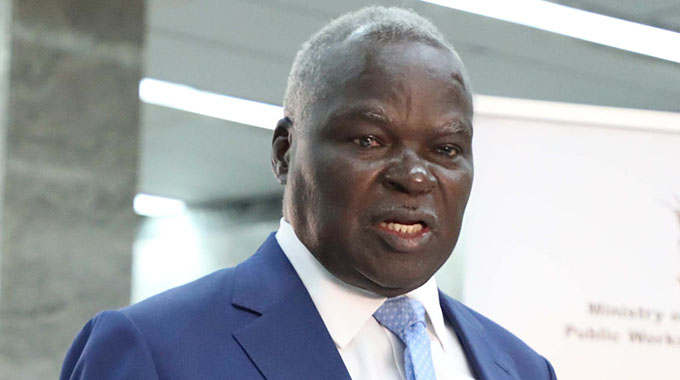
Rutendo Nyeve
ZIMBABWE is working on regulatory changes to establish a competitive local electricity exchange, which will allow more private-sector investments in both generation and transmission of power while selling directly to customers of their choice.
This will mark a pivotal shift in the country’s energy landscape.
Energy and Power Development Minister, July Moyo, said this on Friday while officially opening the 64th Southern African Power Pool (SAPP) management committee meeting held in Victoria Falls.

SAPP was created in August 1995 at the SADC summit in South Africa when member states (excluding Mauritius) signed an Inter-Governmental Memorandum of Understanding for the formation of an electricity power pool in the region under the name of the SAPP.
Ministers responsible for energy then signed the Revised Inter-Governmental Memorandum of Understanding on 23 February 2006 with focus on allowing private sector players to become members of SAPP.
Speaking at the meeting, Minister Moyo said the proposed regulatory changes are part of Zimbabwe’s broader strategy to liberalise its energy sector and attract private investment.
Under the new framework, he said power producers will have the freedom to supply electricity to any customer, fostering competition and potentially lowering costs for consumers.
This move follows the liberalisation of the retail sub-sector, where power producers can already choose their customers.
“Riding on the successes of the SAPP, Zimbabwe is working on making regulatory changes for us to be able develop a competitive local electricity exchange where electricity producers will be able to sell to any customers of their choice through a competitive market,” Minister Moyo said.
“So far, the retail subsector has been liberalised with power producers being able to supply customers of their choice,” he added.
The minister commended SAPP for its continued role in regional energy integration and economic stability.
With 12 member countries, SAPP has facilitated the trading of electricity across borders, helping to mitigate power shortages and stabilise energy prices in the region. Over the past decade, SAPP’s competitive markets have traded 14 546 gigawatt-hours (GWh) of electricity, resulting in an exchange of USD 986 million among member utilities.

Minister Moyo emphasised the importance of SAPP in addressing the region’s energy challenges, including the current generation capacity shortfall of approximately 4 000 megawatts (MW).
He said that SAPP’s regional electricity market has been instrumental in meeting power shortfalls in SADC countries, particularly during periods of low hydropower generation due to climate change.
By facilitating cross-border electricity trade, SAPP has also created a platform for member countries to earn foreign currency through the export of excess power. This has been particularly beneficial for countries like Zimbabwe, which have faced currency shortages and economic instability.
“The increase in energy trading on the regional competitive markets will allow the SAPP Coordination Centre to generate enough income, which in turn will reduce the burden on member utilities,” said Minister Moyo.
As Zimbabwe moves forward with its regulatory reforms, the country is also looking to leverage SAPP’s platform to enhance its energy security and economic stability.
The establishment of a competitive electricity exchange is expected to attract more private investors, particularly in renewable energy projects, which are gaining traction across the SADC region.
Minister Moyo urged SAPP members to continue cooperating with private power developers and to explore opportunities in the competitive electricity market.
The 64th SAPP Management Committee Meeting saw amplified calls for continued regional collaboration to address the challenges of energy supply, climate change, and economic development.
As Zimbabwe takes bold steps to reform its energy sector, the country is poised to play a leading role in shaping the future of energy in Southern Africa.
Currently, the SAPP has 12 member countries represented by their respective National Power Utilities organised through SADC. The organisation now has three membership categories namely National Power Utility, Operating Member and Market Participant.
— @nyeve14.